Why Home Care Workers Aren’t Guaranteed Minimum Wage
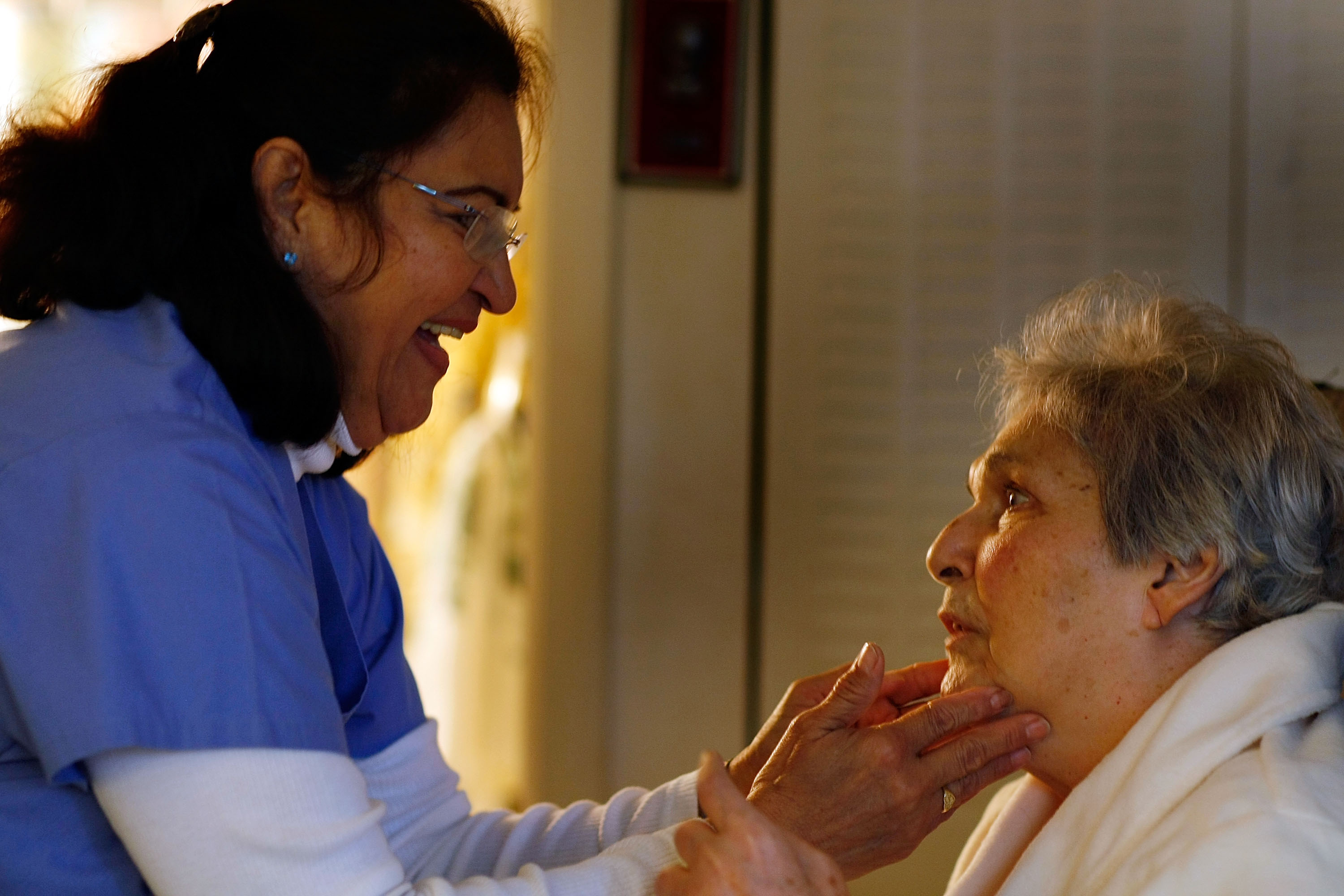
Joe Raedle / Getty Images

The reasons home care workers aren’t guaranteed minimum wage and overtime go back decades..

Recently, the Obama Administration announced plans to change Labor Department rules so that home care workers–personal care aides and home health aides–are guaranteed federal minimum wage and overtime pay.  Right now, states are allowed to decide if they want to include this class of worker under their own minimum wage and overtime laws.  Many have opted not to.  Since the rules change announcement, we’ve mapped which states offer these protections to home care workers, and which don’t.  Most recently, we broke down a study looking at the economic benefits and drawbacks of requiring higher pay for many of these workers.

This issue has led to a key question among some of our readers: Why aren’t home care workers guaranteed minimum wage and overtime when their colleagues in hospitals and nursing homes are?

The answer goes back a long way, but there are two key dates to remember: 1938 and 1974.  In 1938, President Franklin Roosevelt signed the Fair Labor Standards Act (FLSA) into law.  The FLSA was sweeping legislation that, among other things, established the federal minimum wage, overtime laws, and abolished child labor.

Now fast-forward to 1974.  Congress amended the FLSA to cover “domestic service workers.”  So now, almost anyone working in a home–like a housekeeper, butler, or cook–would be guaranteed minimum wage and overtime, too.  But Congress also included an exemption for workers providing “companionship services” to people too young, old, or sick to take care of themselves.  The idea was, parents shouldn’t have to pay babysitters or occasional caregivers minimum wage and overtime.  And as the Carsey Institute’s Kristin Smith explains in her report “Lack of Protections for Home Care Workers: Overtime Pay and Minimum Wage,” it mostly seemed to work just fine, until more women joined the workforce:

“The large scale movement of women into the paid labor market has brought sweeping change to the structure of family life and who cares for family members.  One consequence of this phenomenon was the development of a category of paid workers–the home care worker–to provide care that had previously been performed by women in the home.  Today, our society depends, in part, on the caring labor of many paid professionals to supplement the paid family care of the elderly and disabled adults.”

In other words, in 1974, a lot of housewives used to take care of their old or sick relatives for free.  But as their daughters increasingly joined the workforce, it left a giant gap in care–which home care agencies were happy to fill.  Now there are about 1.7 million home care workers, and many of them aren’t making minimum wage or getting overtime pay.  So the Obama Administration wants to change the Labor Department’s rules to cover these workers.  And if the change goes through, it will cost $4.7 million a year over the next decade, according to statistics Smith cited from the Department of Labor.


Comments

  • Lia Smith

    The exemption still applies–it seems that when an industry starts to create jobs–suddenly it is at fault–but have you ever considered that the costs of overtime will be deflected back to our sick, disabled and senior population? Women can work now because home care is affordable–when the exemption is lifted families will have to leave the workforce to care for their own parents and children again–the exemption still holds for neighbors and family members who are paid for caring for others–lifting the exemption will also apply to them. in California we are NOT exempt from minimum wage–and our workers are paid above that. Those that are currently supporting themselves by working 12 hour shifts will be cut to 8 hour shifts–and they will definitly need assistance–We believe there is a compromise–but ellimanting the exemption all together would do more harm then good. To say we business owners are just greedy is ridiculous–we are in business–just like anyone else–the costs will NOT affect us–they will affect the consumer–and the worker–like they always do.But no one is writing articles about that! Lia Smith

  • Andy

    Lia is absolutely correct. Those who depend most upon home care will be hurt the most by this proposal. Home care companies will not allow their caregivers to work overtime because the company’s clients will not be willing (or able) to pay for it. And how can they pay for it? Home care is already cost prohibitive for a significant number of Americans. When the cost of live-in care triples (as it must per the proposal) virtially no Americans will be abe to afford it. If a consumer can not or will not pay for a service then the job provideding that service will not exist.

    Due to the incredible cost of care, this proposed change will force the home care woker and those most in need to care into the undergound economy where both the worker and paitent are exposed to terrible risks.

  • Kenbarlow05

    If legislation or changes to regulations do not bring companions under section 6 & 7 of the FLSA then there should be a more restrictive definition of the duties a companion may perform. Companions should not be allowed to perform any medical procedures such as clearing airways, feeding tubes, give medication etc. Companions should only provide companion duties such as reading, talking, walking, watching tv etc.

  • Onestrangelisa

    I’m for an improvement on Fair Labor Standards. I recently spoke with the wage and hour division about hours worked off the clock that my employer requires for “reporting”. I have to clock in and out for any client to document hours; but it was explained that anything extra requested off the clock is exempt from being paid by my employer.

    And, my “companionship services” include meal prep, homemaking skills, and general cleaning. To quote, “The idea was, parents shouldn’t have to pay babysitters or occasional caregivers minimum wage and overtime.” Well, I’m employed by a company, so that’s different.

About StateImpact

StateImpact seeks to inform and engage local communities with broadcast and online news focused on how state government decisions affect your lives.
Learn More »

Education