Why Being Called A ‘Boomtown’ Isn’t Good For Boise
Molly Messick / StateImpact Idaho
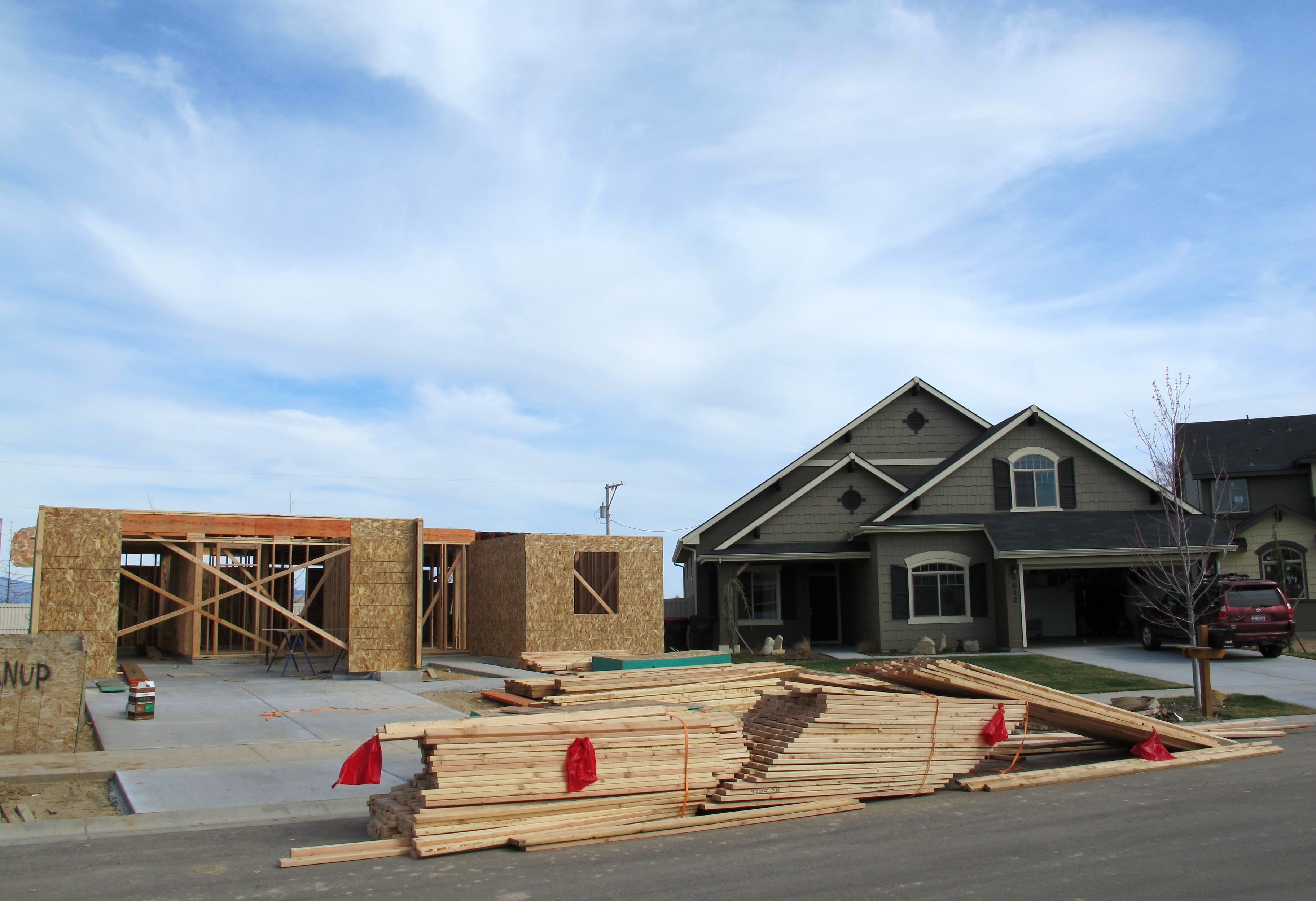
In April, nine homes were under construction at one of Coleman Homes' developments outside of Boise.
Boise’s local NBC affiliate, KTVB, reported on a handful of recent rankings that put Idaho’s biggest city among those whose housing markets are making a come-back. The TV station (and one of the recent rankings) use the term “boomtown” to describe what’s going on with Boise real estate.
By definition, Boise isn’t a boomtown. At best, Boise’s housing market might be seeing a “boomlet,” but even that term is a stretch.
It’s true, real estate in Boise is showing improvement. StateImpact has been reporting on that turn-around for the last eight months. But it’s important to understand what’s causing the shift. There aren’t droves of out-of-towners moving to Boise, as suggested by the phrase boomtown. The Boise metro area grew 1.8 percent between 2010 and 2011, according to Census data. Idaho’s total population grew less than a percentage point during that same time period, the smallest annual growth since 1988.
Related
Posts

The start of Boise’s real estate turnaround has to do with supply and demand, says Metrostudy regional director Eric Allen. “Our production in the market has been so low for so long, for the last three to four years, that we’ve moved through all of the good inventory,” Allen says. “So if someone wants to buy a new home, they have to build it because there isn’t a lot of inventory to choose from.”
KTVB also reported short sales, or homes in the foreclosure process, are “almost non-existent.” Yes, Idaho’s foreclosure rate has dropped. But, as we reported last week, nearly a quarter of all houses sold in Idaho in the first four months of this year were in some stage of foreclosure.
Allen says most homebuyers aren’t interested in the distressed properties that are still on the market in the area. The good ones have been picked over. What’s left, he says, are homes that require a lot of work.
The bigger question might be: is being a boomtown really a good thing, anyway? As Allen observes, booms aren’t stable. “The description of a boom market is something that all of a sudden blows up really fast and will have to recover at some point,” he says. “Production is picking up. We’re at a sustainable level. We’re selling most of the homes we’re building right now. I think the trends we’re seeing are more sustainable than what a boom situation would do for the market.”