Now that Black Friday is almost over and you’re letting all that turkey and stuffing digest, take a look back at the stories that got the most clicks and comments this week.
Ten Idaho Lawmakers Sign Norquist’s Anti-Tax Pledge: One of the people being blamed for the supercommittee’s failure (often by Democrats, and on occasion by Republicans), is Grover Norquist. He’s a longtime lobbyist who runs the group Americans for Tax Reform. Norquist is known for getting hundreds of lawmakers from around the country to sign a pledge promising never to raise taxes. Ten of Idaho’s lawmakers have signed on.
The Future of Idaho’s Unemployment Benefits Uncertain: 25,000 Idahoans are currently receiving unemployment insurance benefits, that number could be cut in half unless federal emergency unemployment benefits are extended at the end of the year.
Idaho in Top Ten for Cuts in Mental Health Spending: As advocates for people with mental illness will point out, Idaho hasn’t had a great track record of funding services for the state’s mentally ill. “I think the shocking part is we spend $44 per capita on mental health, and the national average is $122. So we’re about a third of the national average,” said Doug McKnight, president of the Idaho chapter of NAMI. Moreover, Idaho remains the only state without a local suicide prevention hotline.
Idaho’s Unemployment Rate Moves in a Positive Direction: Idaho’s unemployment rate ticked down to its lowest level in nearly two years last month. But many counties across the state face rates in the double-digits. We created an interactive map to better visualize the state’s unemployment picture.
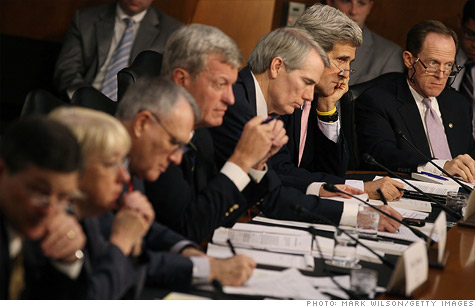
As you’ve probably heard by now, the Joint Select Committee on Deficit Reduction’s negotiations failed this week. Dubbed the supercommittee, it was charged with finding at least $1.2 trillion in debt savings over the next decade. Now the political finger-pointing is well underway.
One of the people being blamed for the supercommittee’s failure (often by Democrats, and on occasion by Republicans), is Grover Norquist. He’s a longtime lobbyist who runs the group Americans for Tax Reform. Norquist is known for getting hundreds of lawmakers from around the country to sign a pledge promising never to raise taxes.
On the heels of the bipartisan supercommittee’s announcement that it failed to reach an agreement to cut $1.2 trillion in federal spending, Idaho’s governor decided to weigh in. Governor C.L. “Butch” Otter’s opinion piece, with the headline “Leaner, More Focused Government Must Be Our New Normal”, has already appeared in Roll Call and has been distributed to media across the state. Here’s what he has to say:
How can a largely rural western state of roughly 1.5 million people – a state whose Republican credentials are matched only by its almost contrarian sense of independence – possibly set an example of responsible governance for the rest of America?
In Idaho, we did it by reassessing the proper role of government in people’s lives. We did it by identifying what our Constitution and laws require government to do and eliminating much of what they don’t. We did it by instituting zero-base budgeting and bringing business principles to government. We did it by making tough choices and difficult adjustments early in the economic downturn. And we did it by being cautious, prudent, and yes, conservative with taxpayer dollars in order to live within the people’s means. Continue Reading →
StateImpact Idaho is beginning to look at the effects of the $34 million Medicaid cut that the Idaho Legislature passed last session. Related to that, a new report from the National Alliance on Mental Illness (NAMI) tallies the state-by-state changes in general fund appropriations for state mental health agencies since 2009. According to the report, Idaho is among the ten states that have made the greatest cuts, by percentage, since that year.
As advocates for people with mental illness will point out, Idaho hasn’t had a great track record of funding services for the state’s mentally ill. “I think the shocking part is we spend $44 per capita on mental health, and the national average is $122. So we’re about a third of the national average,” said Doug McKnight, president of the Idaho chapter of NAMI. Continue Reading →
Here’s a look back at our most viewed, shared and commented stories of the week.
In Rural Idaho, the Recession Changes One Town’s Fate: Idaho is one of a handful of states where the unemployment rate has gone up since the national recession ended more than two years ago. Numbers have soared to their highest levels in rural places, among them Camas County in central Idaho. This summer, local unemployment approached 17 percent. That’s a number that has left Fairfield, population 416 and the only town in Camas County, struggling for survival.
Jobless in Idaho: A Former HP Employee Struggles Through Years of Unemployment: Nathan Bussey began working for Hewlett-Packard before he’d even graduated from college. He was still a student at Boise State University when he started out in the tech support call center in 1999. By 2005, he’d landed a job as a technical consultant, working on printer installations for Fortune 100 companies all over the country. Then, in 2008, he got bad news. He, like many others on his team, was being laid off. Continue Reading →
Click on the map for an interactive view of county-by-county data
Idaho’s unemployment rate last month ticked down to its lowest level in nearly two years. The Idaho Department of Labor reports the seasonally adjusted rate dropped two-tenths of a percent to 8.8. The national unemployment rate for October was 9.0 percent.
There are still at least 66,400 Idahoans without jobs, that’s down from 73,600 a year ago. Idaho Department of Labor spokesman Bob Fick says those figures don’t include people who have stopped looking for work or who have part-time jobs but are wanting to work full-time.
Fick says it’s slightly unusual to see a drop in the unemployment rate between September and October, because that’s typically a time when seasonal employees are dropped from payrolls and join the job hunt. “Employers reduced jobs by only 900, typically, it’s substantially more than that,” Fick says. “During the expansion from 2002 to 2007 the average was 1,800 jobs lost between September and October.” Continue Reading →
Idaho’s Department of Labor Director, with support of the Governor, is urging Congress to let federal unemployment benefits expire on December 31. That news broke at the beginning of November.
Now, new estimates released this week by the non-partisan Congressional Budget Office suggest increasing benefits for the unemployed could be the best policy for short-term job growth. USNews.comreports tax breaks for businesses and infrastructure spending aren’t likely to boost short-term growth.
“According to estimates released Tuesday by the CBO, increased unemployment aid could, over the course of 2012 and 2013, add 0.4 to 1.9 dollars to the GDP per dollar spent, by far the largest increase for any of the options studied by the CBO. Reducing employers’ payroll taxes could add up to 1.3 dollars. The effect for reducing business’ income taxes, meanwhile, is 0.3 dollars at most. For infrastructure spending, it’s 0.7 dollars.” – USNews.com
Emergency unemployment benefits are set to expire at the end of the year, unless Congress passes its bill to extend the federal program for another year. The Hillreports Congress is expected to pass the extension, albeit the process is uncertain. Continue Reading →
Nathan Bussey lost his job with Hewlett-Packard three years ago.
Name: Nathan Bussey
Age: 33
Unemployed since: 2008
“I had only been engaged with my wife for about a month when I found out I was getting laid off.”
The Idaho Department of Labor estimates nearly 70,000 people in the state don’t have jobs. That doesn’t include thousands more who are underemployed or have stopped looking for work. This is the latest story in our “Jobless in Idaho” series, following several Idahoans in their search for work.
Nathan Bussey began working for Hewlett-Packard before he’d even graduated from college. He was still a student at Boise State University when he started out in the tech support call center in 1999. By 2005, he’d landed a job as a technical consultant, working on printer installations for Fortune 100 companies all over the country. Then, in 2008, he got bad news. He, like many others on his team, was being laid off.
Through a series of laws, the federal government has offered an additional safety net for workers who have been laid off. Extended unemployment benefit programs are in addition to individual state programs. In Idaho, someone who is laid off from their job — through no fault of their own — can qualify for up to 26 weeks of state unemployment insurance benefits. But because of the steep national unemployment rate, and the lack of jobs available, the federal government offers benefit extensions up to 73 weeks for jobless Idahoans. The maximum state and federal benefit in Idaho is 99 weeks. Continue Reading →
Laid-off workers in Idaho can collect up to 26 weeks of state unemployment insurance benefits. Here are some of the requirements needed in order to qualify for receiving benefit payments:
You must be totally or partially unemployed through no fault of your own (if you’re fired or quit, you can’t qualify for benefits).
Be a U.S. citizen or legally authorized to work in the U.S.
Establish monetary entitlement to benefits by having sufficient earnings in the base period: You must have worked and been paid wages for employment in at least two of the quarters in your base period. You must have been paid at least $1,872 in wages in one of those quarters. The total wages paid in your base period must equal one and a quarter times your highest quarter wages.
You must be available for full-time work.
You must be able to perform full-time work.
You must be willing to actively seek full-time work.
Benefit payments to unemployed Idahoans vary based on salary and years in the workforce. The Department of Labor uses two calculations to determine the benefit amount and the duration of the benefit. It’s different for every person. The minimum benefit is $72 per week for ten weeks. The maximum benefit is $336 per week for 26 weeks.
About StateImpact
StateImpact seeks to inform and engage local communities with broadcast and online news focused on how state government decisions affect your lives. Learn More »