Florida

Putting Education Reform To The Test

Topics

How Florida Teachers Are Evaluated, Paid

Background

Fifty percent of a teacher’s evaluation is based on a formula called the Value Added Model. It predicts how students should score on the state’s standardized exam – the FCAT, and rates teachers based on how well their students measured up to the predicted FCAT score.

The other 50 percent of a teacher’s evaluation comes from principal observations by school principals.

By 2014, teachers evaluation will determine how much teachers get paid and whether they keep their jobs.

The first bill Gov. Rick Scott signed into law, SB 736 rewrote how teachers are paid and retained across the state.

Here’s what has changed:

  1. Rating teacher performance. The law requires districts to rate teachers and administrators annually, according to a legislative analysis, with half of their score based on student Florida Comprehensive Assessment Test Performance over a three-year period.Read more »
  2. How teachers are paid. New hires will no longer have to climb the decades-long seniority ladder to earn the highest salaries. Now, the highest-rated teachers can earn the top salaries just a few years out of college. Highly-rated teachers already working can opt out of the merit pay system — but if they switch districts they would be paid on their performance, according to a United Teachers of Dade Q & A. Teachers will also no longer be guaranteed additional pay for advanced degrees.
  3. Job security. New hires will no longer enjoy long-term contracts, but instead must be rehired on an annual basis. Those already teaching are again exempted from the new law, but teachers who switch districts would then move to annual contracts.
  4. Political motivations. Lawmakers approved the law, in part, to reinforce a $700 million federal Race To The Top grant, according to the legislative analysis. Districts will use half that grant to design, implement and fund the first three years of their performance pay systems.
  5. The goal. Reformers believe boosting pay will draw better quality teachers to the field, and that better teachers will produce better student results.

Latest Posts

Florida Department of Education Asking You To Evaluate Teacher Evaluations

The Florida Department of Education is drafting rules surrounding the way Florida teachers and school administrators are evaluated. DOE is holding a series of workshops this week seeking input on the teacher evaluation system as well as the value-added model, or VAM. Teachers will be able to give DOE their opinions about the new system, which bases […]

Town Hall Tonight: Join The Discussion With Florida Lawmakers

Tonight’s the Town Hall on Session 2013, live from Fort Lauderdale. Florida legislative leaders and journalists from the Miami Herald and WLRN Radio will discuss the big issues lawmakers plan to tackle during the 60-day session that begins Tuesday, March 5th. The event is hosted WLRN and The Miami Herald and is sponsored by Global Integrity. […]

State Analysis Says Teacher Evaluation Data Rates “Effective”

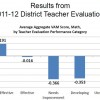
Students in math classes taught by the state’s highest-rated teachers made 19 percent more progress than the average student. For students taught by the highest-rated reading teachers, student scores improved 8 percent more than the average student. Students of the lowest-rated reading teacher’s made 36 percent less progress than the average student. While students of […]

Florida Schools Get ‘A Lot Of Flexibility’ Designing Teacher Evaluations

Teachers shouldn’t expect an apples-to-apples comparison when looking at new state-required evaluation scores. That’s because evaluations will vary — not just between charter schools and regular public schools — but between public school districts. Mike Kooi, Executive Director of the Office of Independent Education and Parental Choice, has been trying to set the record straight […]

Charter Schools Say Their Teachers Will Be Evaluated The Same As District Teachers

The way charter school teachers are evaluated has become a source of conflict for teachers and for lawmakers in Tallahassee. The question isn’t whether charter teachers have to be evaluated under state law – they do. Just like traditional public school teachers, they will eventually have to follow the standards set by the law passed […]

Florida Senate President Says Teachers Shouldn’t Expect An Even Playing Field

Supporters say the charter school bill that has a good chance of passing Florida’s Republican controlled Legislature this year will better regulate charters and expand choices for parents. One thing the bill won’t do is require the same evaluations for charter school teachers as traditional public school teachers. Charter schools which do not participate in […]

Teachers Question Why Proposed Pay Raises Come Before Teacher Evaluations

Sarah Gonzalez / StateImpact Florida 5th grade teacher Beverley Dowell says she hopes the Governor “isn’t trying to buy teacher votes” when he suggested every full-time teacher in the state get a pay raise before their evaluation results come in. Most districts won’t start identifying, and potentially removing, low-performing teachers from their schools until next […]

How A C-Rated School Can Be Full of Effective Teachers

Last month Senate president Don Gaetz raised eyebrows when he questioned the accuracy of Florida’s new teacher evaluations. The evaluations are based on a complex statistical formula which weighs Florida Comprehensive Assessment Test scores and other factors to calculate how much a teacher influences student learning. The evaluations will eventually contribute to how much a […]

Lawmakers Get Update On Teacher Evaluations And The Student Success Act

A Florida House panel heard an update today on teacher evaluations and the state’s implementation of the Student Success Act, also known as Senate Bill 736. The Florida Legislature passed the law in 2011 that changes the way teachers are evaluated and paid in an effort to improve student learning in K-12. The law is […]

About StateImpact

StateImpact seeks to inform and engage local communities with broadcast and online news focused on how state government decisions affect your lives.
Learn More »

Economy
Education