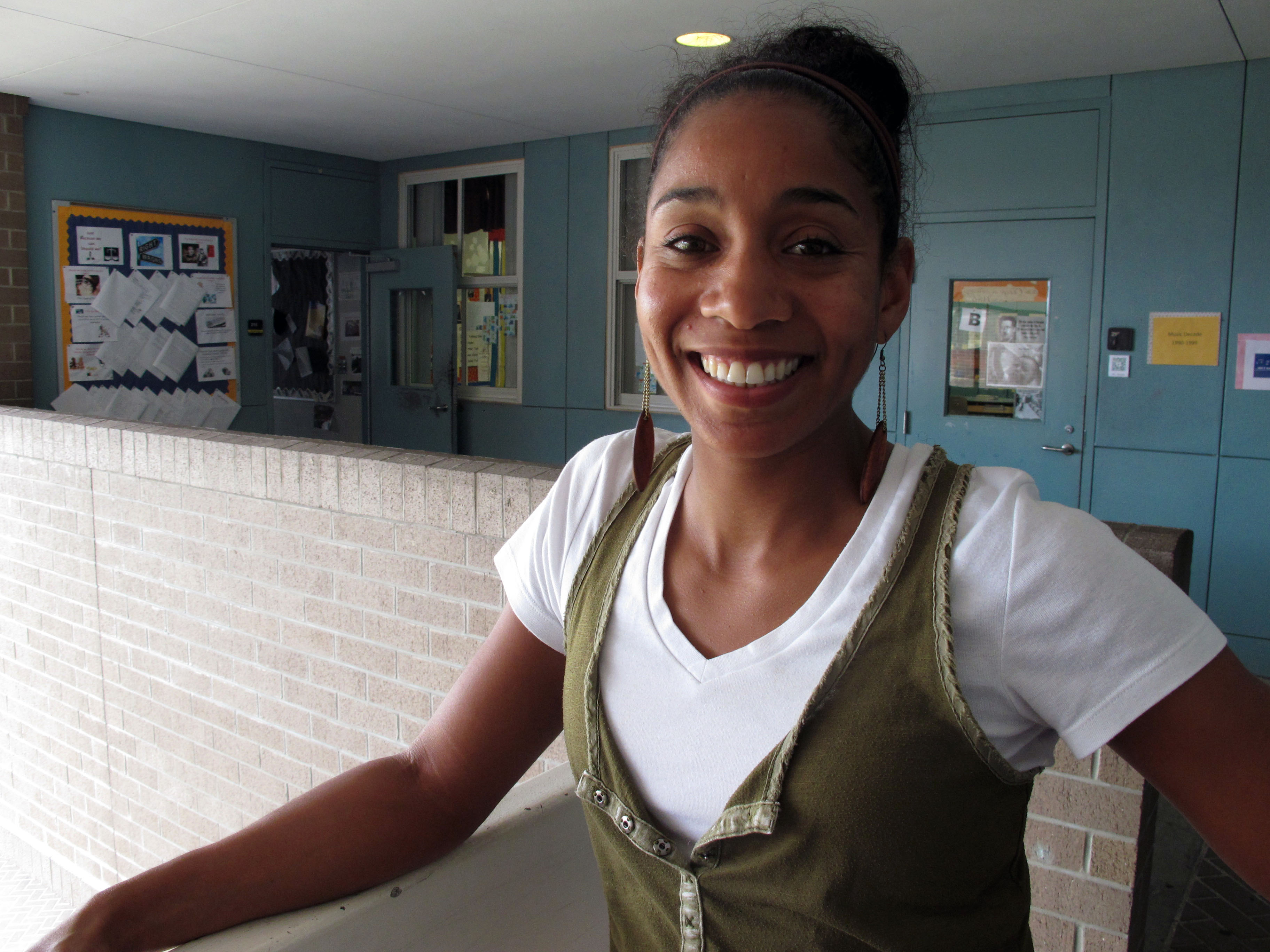
Roland Park K-8 Magnet School science teacher Jaraux Washington.
Jaraux Washington is a science teacher at Tampa’s Roland Park K-8 Magnet School for International Studies. So it’s not surprising she turns to biology for a metaphor to describe teaching.
“Especially in seventh grade you understand that this is a process,” she says, “and sometimes you’re the planter and sometimes you’re the waterer and sometimes you get to see the harvest.”
Today is the start of Teacher Appreciation Week, and Washington is one of many teachers participating in a social media campaign to clear up misconceptions and tell the public what the job is really about. It’s called #TeachingIs.
#TeachingIs 12+ hour days , teaching, coaching, cheering, planning…….no overtime or time and a half. Getting paid in seeds sown
The North Carolina-based Center for Teaching Quality is leading the campaign. The non-profit helps teachers share good practices and encourages and trains teachers to be leaders without leaving the classroom.
We spoke to three Florida teachers participating, asked them to read and discuss their thoughts.
Sir Patrick Stewart is the chancellor of a university.
The actor Sir Patrick Stewart is best known in the United States for his roles on stage and on screen. But you might be surprised to learn that the man who played Captain Jean-Luc Picard is chancellor of the University of Huddersfield, a 20,000-student university in England.
Stewart was in South Florida this past week for Going Global, an international higher education conference sponsored by the British Council.
Unlike university heads in the U.S., British university chancellors hold more of a representative than an administrative position. It’s a role Stewart takes seriously.
“I made a condition at the time that I was not interested in being a celebrity status symbol for the university, I wanted to be as active as possible,” says Stewart.
Stewart himself finished school at 15 years old. When he later started acting, he found himself surrounded by bright, well-educated artists. He did end up attending drama program, but he was self-conscious about his own schooling—which made the Huddersfield opportunity all the more meaningful.
“This invitation was significant to me because I had no higher education whatsoever,” he says.
Stewart sat down with StateImpact Florida to talk about how one teacher influenced an entire career:
And watch him recite a bit of one of his favorite Shakespearean verses, as well as address what line of the Bard’s Florida is most like: Continue Reading →
Florida lawmakers approved a bill clarify high school graduation requirements based on what year a student entered ninth grade.
Last year the Legislature approved a bill which overhauled Florida’s high school graduation requirements. The bill maintains a standard diploma and created two new diploma tracks; a scholar track for students considering competitive universities; and a career-focused track for students who want to earn industry certifications before graduation.
But the bill created some confusion about what graduation requirements applied to which students.
Students entering grade nine before the 2010 – 2011 school year: Four credits in English/ELA; four credits in mathematics, which must include Algebra I; three credits in science, two of which must have a laboratory component; three credits in social studies of which one credit in World History, one credit in U.S. History, one-half credit in U.S. Government, and one-half credit in economies is required; one credit in fine or performing arts, speech and debate, or practical arts; one credit in physical education; and eight credits in electives.
Mayra Rubio was 3 months old when she moved to Homestead with her brother and parents from Guadalajara, Mexico.
After she graduated from South Dade Senior High, she realized she could not afford the out-of-state tuition for public colleges and universities. Undocumented students do not get the opportunity to pay in-state tuition rates.
Mayra Rubio
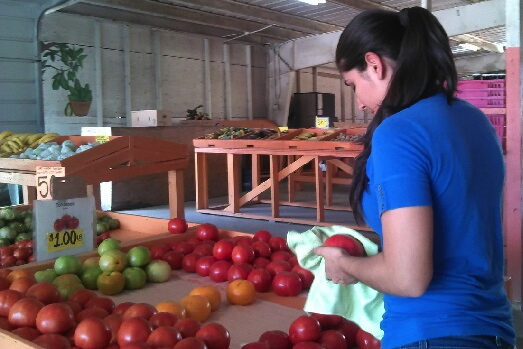
Mayra used to work on her father's farm when she couldn't afford to be a college student. Now that she attends Miami-Dade College, she still offers to lend a hand at the fruit stand her father manages.
So instead, Mayra worked with her father in the fields and groves of South Miami-Dade County. She picked and packed avocados and mangos.
“I would see my friends move on [and] pursue their dreams,” she says. “I felt stuck, like I wasn’t moving anywhere.”
Florida lawmakers have been debating allowing students like Mayra to pay in-state college tuition rates for public colleges and universities. The Senate is passed an amended version of the bill Thursday. It goes back to the House–which passed an earlier version–one more time. Continue Reading →
Starting at age 16, students in England take between 15 and 20 big exams each year. If they do well, they’ll get another round of exams the following year. Do poorly, and students aren’t likely to get into the university of their choice.
Finland students face up to 40 hours of tests in order to graduate high school. And universities require their own entrance exams.
Listen to Turner’s full story:
About StateImpact
StateImpact seeks to inform and engage local communities with broadcast and online news focused on how state government decisions affect your lives. Learn More »