Some Florida school board members are upset at comments by education commissioner Gerard Robinson. The Florida School Boards Association approved a resolution opposing the current use of FCAT Thursday.
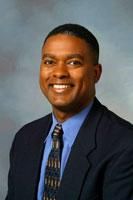
Florida school board members say education commissioner Gerard Robinson issued a threat to local control during a lunchtime speech Thursday at the state association meeting in Tampa.
Robinson told the Florida School Boards Association members they were free to oppose the Florida Comprehensive Assessment Test, but they were not free to ignore state law or Florida Board of Education decisions.
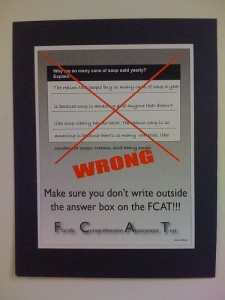
The group later approved a resolution opposing the current use of the FCAT to asses student, teacher, school and district performance.
Robinson made a similar statement in an earlier interview with StateImpact Florida.
“They can express their opinion,” he said. “But let’s also remember the local school board’s obligation is to implement the laws approved by the Florida Legislature; to implement the regulations approved by the state board.”
Florida education commission Gerard Robinson says a Florida School Boards Association proposal objecting to the current use of the Florida Comprehensive Assessment Test does a disservice to students and ignores a decade of state school improvement.
Robinson spoke to state superintendents and school board members gathered at a Tampa meeting Thursday. A Florida School Boards Association committee approved a resolution opposing the current use of the FCAT Wednesday, and the full organization could follow suit this afternoon.
Robinson said FCAT opposition ignores the reality of the workforce.
“What they’re focusing on is high-stakes testing, which is a political way of saying that ‘We just don’t like testing,'” Robinson said. “Let’s be real clear: Many of the teachers who are in our classrooms have to take tests in order to be a classroom teacher; many of our students are going to become CPAs or lawyers and they have to take exams.
Florida will have fewer kids enrolled in traditional public schools in the coming years. That’s the consensus of the Education Enrollment Conference. The panel of state economists and legislative staffers is compiling projections for public schools over the next decade.
The reason for the enrollment forecast is money. The panel recommends school district renovation and construction budgets to the Legislature based on the enrollment projection.
After crunching the numbers, they don’t see a need for any new schools within the next five years. The student population is expected to slowly decrease starting this fall, so it looks as though schools will have sufficient classroom space.
School boards representing 1 in 4 Florida public school students have asked for less emphasis on FCAT results..
Schools boards representing more than one out of every four Florida students have approved a resolution asking state education leaders put less emphasis on standardized tests.
A dozen Florida districts have approved a national anti-testing resolution. Those districts include large counties such as Broward and Palm Beach — the nation’s 6th and 11th largest. Pinellas County joined the list earlier this week.
Those districts educate more than 750,000 Florida public school students in total.
He used a lot of jargon – “devolution,” “delivery systems,” “performance funding” – to explain what the Board of Governors and others are trying to change within the State University System.
StateImpact Florida sorted through the buzzwords and the bureaucratese to find the three things Brogan wants to accomplish:
But the system breaks down because of ‘FCAT frenzy’ and the anxiety school districts create with extra drills, pep rallies and other events which ratchet up the pressure on students.
Nearly a dozen Florida school districts have approved resolutions asking Gov. Rick Scott and other state leaders put less emphasis on FCAT results. The resolution asks that students are evaluated in a number or ways, not just through standardized test.
The Florida School Boards Association is meeting in Tampa Thursday to debate a statewide resolution.
Florida’s economy isn’t back to pre-recession peak levels, but it’s growing. That’s what the Blue Ribbon Task Force on State Higher Education Reform heard Monday as the panel looks for ways to reform the State University System.
Panel members want to know what the job market will look like in the coming years and which industries may have worker shortages soon.
Amy Baker, coordinator of the Legislative Office of Economic and Demographic Research, looked at trends for the state through 2030. For now, she said Florida is among a handful of states that hasn’t recovered from the recession.
Bush recently spoke with StateImpact Florida about his role in the national education debate, why Republicans and Democrats can find common ground on education and what he’s learned .
Q: Governor, how do you see yourself? How do you see your role as a national education figure?
A: I don’t know if I’m a national education figure. I do know that the Florida experience is one that we like to share because a lot of people are very interested in the academic results that have been achieved over the last decade and few years.
So we have created a strategy of going state by state, where invited, trying to create coalitions of people interested in reform. Telling the Florida story and building on that with exciting new elements of reform that I think states are embracing at record levels.
It’s a really exciting time to be engaged in education reform. The ultimate objective is not just to reform the system. The ultimate objective is to improve student learning.
First Lady Ann Scott reads to kids at the Tallahassee Museum.
Florida first lady Ann Scott likes to read. She’s trying to get more kids reading, too.
Friday morning at the Tallahassee Museum, she helped kick off the 2012 Summer Literacy Adventure. The program is designed to get kids interested in reading and keep them motivated to read all year.
Scott told an audience of museum campers that she loved school growing up, but couldn’t wait for summer break.
“One of the first things that I did was head to the local library near my home,” said Scott, “and I would peruse the aisles looking at books that I thought I might enjoy reading, checking out a stack of books and seeing how many I could get through in a week.”
StateImpact seeks to inform and engage local communities with broadcast and online news focused on how state government decisions affect your lives. Learn More »