Pennsylvania

Energy. Environment. Economy.

Topics

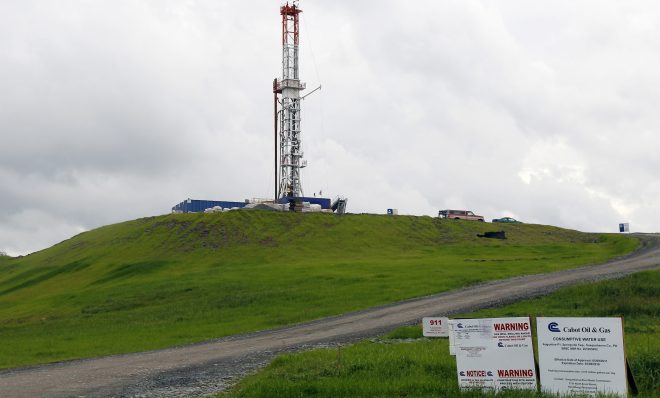
A drill rig rises above a farm in Susquehanna County, Pa.

The Pennsylvania Guide to Hydraulic Fracturing, or "Fracking"

Background

Susan Phillips / WHYY

Drill rig in Susquehanna County Pennsylvania

Slick water hydraulic fracturing or “fracking” is a technology used to extract natural gas, and oil, that lies within a shale rock formation thousands of feet beneath the earth’s surface.

Combined with another technique called “horizontal drilling,” natural gas companies are able to drill previously untapped reserves. The combination of the two has resulted in a boom in domestic oil and gas production over the past five years. Horizontal drilling allows one surface well to tap gas trapped over hundreds of acres. Once the conventional verticle drill hits the shale formation, it turns horizontally. Drilling can then occur in several directions, much like the spokes of a wheel. The well is cased with steel and cement, which is meant to protect gas and frack water from leaking out. Explosives are placed at intervals along the horizontal section of the well to perforate the steel casing. These holes allow the gas, which is trapped in tight formations, to flow up the vertical section of the well. Under very high pressure, a combination of water, sand and chemicals is sent deep into the earth to create cracks and fissures in the shale rock. Those fissures are held open by the sand, allowing the natural gas to flow through those cracks, into the well bore and up to the surface.

Click on the image to the left to view Penn State Public Broadcasting’s interactive website explaining the hydraulic fracturing process.

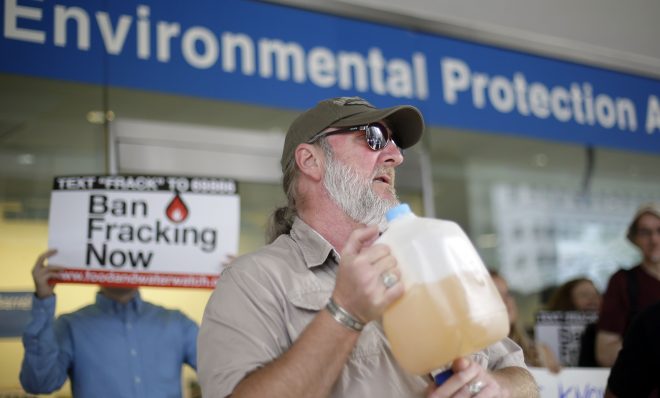
Industry says the process is safe and does not pollute drinking water supplies. But a growing movement of environmentalists, scientists and residents worry that the chemicals used in the fracking process will leak into aquifers. Wastewater from the process returns to the surface contaminated with some of those chemicals, as well as buried salts and naturally occurring radioactive material. That wastewater needs to be treated, or buried deep in the earth using underground injection wells.

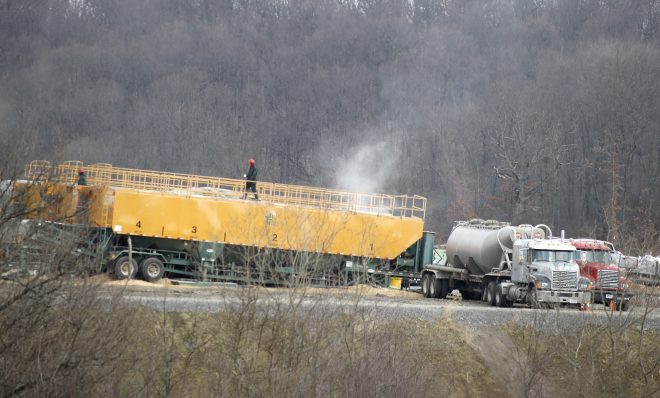
The cost of fracking a well can cost between $3 and $5 million dollars. Before a well is fracked, land needs to be cleared, leveled and prepared for a well pad. Each wellhead needs about 5 acres. Although a wellhead may sit on one leased piece of property, the extraction of the gas may take place beneath the land of numerous property owners. Initial drilling produces drill mud and drill cuttings. Some of that mud can be reused, but the cuttings often require disposal.

After a well is cased and cemented, a separate team comes to frack the well, which involves several different phases. These include the perforation of the horizontal section, injecting pressurized frack water, plugging that section of the well and moving on to another section. The frack water contains a proppant, usually sand, to keep open the fractures. It also contains chemical additives, perhaps the most controversial ingredients. Those additives include gels to add viscosity, acids that remove mud from the wellbore, biocides to kill microbes, surfactants to make the water slippery, and scale inhibitors.

The industry has an exemption from the Safe Drinking Water Act, and does not have to disclose the chemicals used. Critics say those chemicals could pollute water supplies, either through surface spills, or through leaks from poorly constructed wells. Not all of the frack water returns to the surface once the well starts producing. Some are concerned that even the frack water left more than a mile underground could, over time, migrate and pollute water supplies. Although the drilling companies are not required to disclose the chemicals, many have begun to do so on an industry sponsored website called fracfocus.org. Information on the health and environmental impacts of exposure to drilling chemicals can be found on a website created by the Endocrine Disruption Exchange.

Debate rages over the safety of hydraulic fracturing. Industry and some elected officials will say fracking chemicals have never polluted any water supplies. Cases of methane migration due to poor casing construction have been confirmed, but industry often says the methane existed in drinking water supplies prior to drilling activity. And they say that technically, methane migration is not caused by “fracking.” Recently, the EPA released a report on water contamination in Pavilion, Wyo. Federal environmental regulators linked drilling chemicals in the aquifer to fracking.

In addition to water contamination, some worry about the amount of water needed to frack a well. Fracking can also create small earthquakes if done along faults. But the big concern with earthquakes has come with the disposal of used frack water in deep injection wells.

With the increase in publicity around the shale gas boom, the term fracking has become synonymous with everything associated with drilling, including the development of the site, and all the activity needed to support the industry like pipeline construction and truck traffic. It’s important to note that fracking (which some spell as “fracing”) was coined by oil and gas workers, and refers to a specific stage in natural gas development. But some drilling opponents have argued in favor of redefining the term to mean every part of the drilling process.

Latest Posts

Bradford County Landowners Accuse Chesapeake Of Underpaying Royalties

It’s not easy to find Mary Jane Foelster’s home. “We wanted the peace and quiet,” she says. “It’s just wonderful out here.” Her home sits on 50 acres tucked away down a 1.7 mile dirt road in Bradford County. It’s as far north as you can go in Pennsylvania before crossing the border into New York. [...]

Chevron CEO: Industry Must Engage With Public Over Fracking Concerns

Bloomberg reports Chevron CEO John Watson says the oil and gas industry needs to meet “high” public expectations related to hydraulic fracturing. Watson was speaking at event in Washington D.C. at the Center for Strategic and International Studies, according to Bloomberg: “Public expectations are very high, and there’s no reason they shouldn’t be high,” Watson said. “There [...]

U.S. Agency Boosts Worldwide Shale Gas Projections

The Energy Information Administration has increased its assessment of the amount of shale gas available worldwide by ten percent. The comparison to a 2011 report shows the “technically available” recoverable gas is now 7,299 trillion cubic feet. That includes unproven resources, which are natural gas deposits that may not be profitable to extract using current [...]

Confidentiality Agreements Prevent Fracking Contamination Claims From Being Made Public

Bloomberg reports on how confidentiality agreements with landowners across the country have helped protect drilling companies from bad publicity and allegations of pollution. The article specifically mentions the Hallowich v. Range Resources case in Washington County. The Hallowich family sued gas drillers after they said drilling activity near their home outside Pittsburgh made their children [...]

Touring Wall Street Mogul’s Company, Corbett Denies Politics Influences His Visits

While touring the ACF Industries rail car manufacturing plant today in Milton, Northumberland County, Governor Corbett faced questions about whether campaign contributions and political influence factor into decisions about which companies he comes to visit. He says they don’t. “We don’t go to places just because we may or may not have gotten a campaign [...]

Gas Industry Supporters Don’t Accept Rep. Jesse White’s Apology For Online Bullying

An exposé by the Pittsburgh CBS affiliate KDKA has revealed state Rep. Jesse White (D- Allegheny) used a variety of aliases to bully online commenters who were supportive of gas drilling, including a 64-year-old woman he impersonated. White has been an outspoken critic of the gas industry. Although he refused to acknowledge his behavior on camera, he [...]

Rep. Jesse White Apologizes for Online Bullying of Shale Gas Supporters

KDKA-TV reports state Rep. Jesse White — a Pittsburgh area Democrat and vocal critic of the natural gas industry –has been using pseudonyms to bully online commenters who express support for shale gas development. Although he declined to comment on camera to KDKA, White issued an apology today: On occasion, I have exercised my First [...]

Tax Breaks for Natural Gas Pipelines on the Chopping Block

E&E Daily reports today on how the oil and gas industry finances a large part of its infrastructure through a corporate tax-free structure called a “master limited partnership.” These MLP’s have grown in recent years to keep up with the shale boom. But E&E reports some congressional tax-reformers want to eliminate the “MLP’s.” Capital spending [...]

“Natural Fracking” Fuels Eternal Flames

As researchers debate the overall greenhouse gas impact of shale gas extraction, it turns out that  nature has its own way of fracking and releasing methane into the atmosphere. Scientists refer to this as natural seepage that occurs through seismic activity, or earthquakes, which release the pressurized gas and send it up through cracks in [...]

Gas Industry Building Database Of Water Test Results, But Won’t Make It Public

More than two years ago the Marcellus Shale Coalition, a gas industry trade group, began building an electronic database to house information about the water quality in thousands of private wells across Pennsylvania. It’s made up of “pre-drill” or baseline data– critical information that helps establish whether drilling operations may have caused water contamination issues. The [...]

About StateImpact

StateImpact seeks to inform and engage local communities with broadcast and online news focused on how state government decisions affect your lives.
Learn More »

Education