Pennsylvania

Energy. Environment. Economy.

Topics

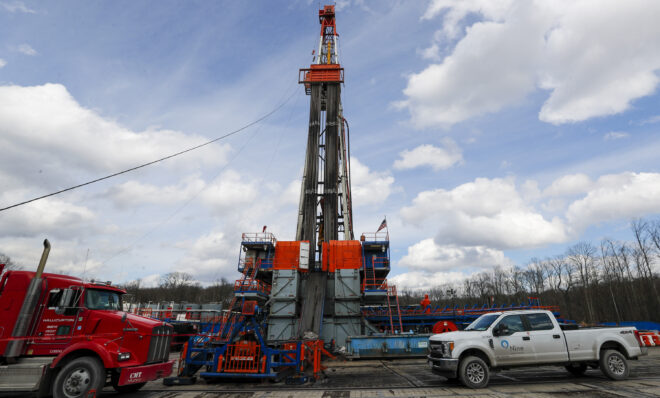
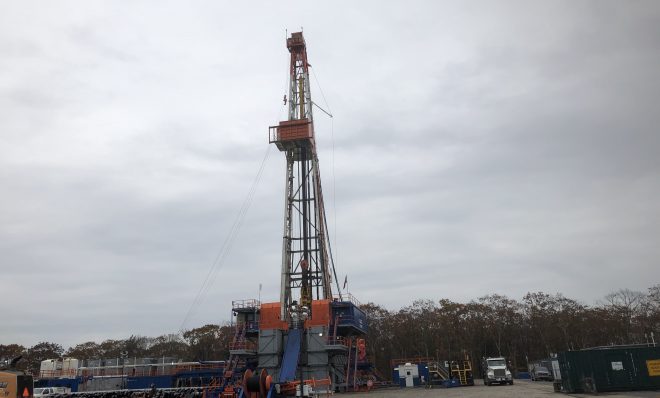
A drill rig rises above a farm in Susquehanna County, Pa.

The Pennsylvania Guide to Hydraulic Fracturing, or "Fracking"

Background

Susan Phillips / WHYY

Drill rig in Susquehanna County Pennsylvania

Slick water hydraulic fracturing or “fracking” is a technology used to extract natural gas, and oil, that lies within a shale rock formation thousands of feet beneath the earth’s surface.

Combined with another technique called “horizontal drilling,” natural gas companies are able to drill previously untapped reserves. The combination of the two has resulted in a boom in domestic oil and gas production over the past five years. Horizontal drilling allows one surface well to tap gas trapped over hundreds of acres. Once the conventional verticle drill hits the shale formation, it turns horizontally. Drilling can then occur in several directions, much like the spokes of a wheel. The well is cased with steel and cement, which is meant to protect gas and frack water from leaking out. Explosives are placed at intervals along the horizontal section of the well to perforate the steel casing. These holes allow the gas, which is trapped in tight formations, to flow up the vertical section of the well. Under very high pressure, a combination of water, sand and chemicals is sent deep into the earth to create cracks and fissures in the shale rock. Those fissures are held open by the sand, allowing the natural gas to flow through those cracks, into the well bore and up to the surface.

Click on the image to the left to view Penn State Public Broadcasting’s interactive website explaining the hydraulic fracturing process.

Industry says the process is safe and does not pollute drinking water supplies. But a growing movement of environmentalists, scientists and residents worry that the chemicals used in the fracking process will leak into aquifers. Wastewater from the process returns to the surface contaminated with some of those chemicals, as well as buried salts and naturally occurring radioactive material. That wastewater needs to be treated, or buried deep in the earth using underground injection wells.

The cost of fracking a well can cost between $3 and $5 million dollars. Before a well is fracked, land needs to be cleared, leveled and prepared for a well pad. Each wellhead needs about 5 acres. Although a wellhead may sit on one leased piece of property, the extraction of the gas may take place beneath the land of numerous property owners. Initial drilling produces drill mud and drill cuttings. Some of that mud can be reused, but the cuttings often require disposal.

After a well is cased and cemented, a separate team comes to frack the well, which involves several different phases. These include the perforation of the horizontal section, injecting pressurized frack water, plugging that section of the well and moving on to another section. The frack water contains a proppant, usually sand, to keep open the fractures. It also contains chemical additives, perhaps the most controversial ingredients. Those additives include gels to add viscosity, acids that remove mud from the wellbore, biocides to kill microbes, surfactants to make the water slippery, and scale inhibitors.

The industry has an exemption from the Safe Drinking Water Act, and does not have to disclose the chemicals used. Critics say those chemicals could pollute water supplies, either through surface spills, or through leaks from poorly constructed wells. Not all of the frack water returns to the surface once the well starts producing. Some are concerned that even the frack water left more than a mile underground could, over time, migrate and pollute water supplies. Although the drilling companies are not required to disclose the chemicals, many have begun to do so on an industry sponsored website called fracfocus.org. Information on the health and environmental impacts of exposure to drilling chemicals can be found on a website created by the Endocrine Disruption Exchange.

Debate rages over the safety of hydraulic fracturing. Industry and some elected officials will say fracking chemicals have never polluted any water supplies. Cases of methane migration due to poor casing construction have been confirmed, but industry often says the methane existed in drinking water supplies prior to drilling activity. And they say that technically, methane migration is not caused by “fracking.” Recently, the EPA released a report on water contamination in Pavilion, Wyo. Federal environmental regulators linked drilling chemicals in the aquifer to fracking.

In addition to water contamination, some worry about the amount of water needed to frack a well. Fracking can also create small earthquakes if done along faults. But the big concern with earthquakes has come with the disposal of used frack water in deep injection wells.

With the increase in publicity around the shale gas boom, the term fracking has become synonymous with everything associated with drilling, including the development of the site, and all the activity needed to support the industry like pipeline construction and truck traffic. It’s important to note that fracking (which some spell as “fracing”) was coined by oil and gas workers, and refers to a specific stage in natural gas development. But some drilling opponents have argued in favor of redefining the term to mean every part of the drilling process.

Latest Posts

Fractures in the Anti-Fracking Movement

Discord over how to best protect the environment from impacts of natural gas drilling has led to a coalition of grassroots environmental groups shunning the Environmental Defense Fund. The groups plan to hold a conference call on Wednesday to “send a message…disapproving of [EDF's] willingness to be coopted by industry interests on the issue of [...]

Lovers of Pa.’s Loyalsock Forest Fight to Limit Drilling There

Deep in the Loyalsock State Forest, where no cell phone signal reaches, the sounds of rushing waterfalls and forest birds are suddenly interrupted by the sound of a helicopter. Paul Zeph of the Pennsylvania Audubon Society says the noise could be related to gas drilling. Drillers will often drop seismic testing equipment into remote areas [...]

Marcellus Shale Booster Calls for More Transparency

Penn State geologist Terry Engelder, who helped propel the state’s shale gas boom by revealing how much natural gas lies trapped within the Marcellus, says the industry would be better off with more disclosure. Speaking to Gas Rush Stories producer Kirsi Jansa after a panel discussion on the lack of openness at the Pennsylvania Department [...]

Ernest Moniz Confirmed as Energy Secretary, EPA Nominee McCarthy Makes it Through Committee

Ernest Moniz, President Barack Obama’s pick for Energy Secretary, glided easily through the nomination process, garnering unanimous support from the Senate. The MIT physics professor replaces Steven Chu, who stepped down in April. Moniz served as undersecretary for the agency during the Clinton Administration. He currently runs MIT’s Energy Initiative, which is partly funded by [...]

Poll Shows Support for a Drilling Moratorium in Pennsylvania

A new poll out Tuesday shows strong support for a moratorium on natural gas drilling in Pennsylvania, despite showing general support for gas extraction. The Center for Local, State, and Urban Policy at the University of Michigan, in conjunction with the Muhlenberg College Institute of Public Opinion, surveyed both Pennsylvania and Michigan residents on fracking. [...]

Federal Government Expected to Unveil Fracking Regulations For Public Lands Soon

The Obama Administration is expected to release new regulations for hydraulic fracturing on public lands soon. Reuters reports Interior Secretary Sally Jewell told a Senate Appropriations subcommittee last week the Department of Interior is “very close” to releasing the new rules: “The fracking rules are not bowing to industry pressure or environmental pressure,” Jewell told [...]

Bill Would Create Advisory Panel To Look at Health Impacts of Shale Drilling

The Associated Press reports on an effort by Senate President Pro Tempore Joe Scarnati (R -Jefferson) to create a 13-member advisory panel to examine the health impacts of natural gas drilling. According to the AP, the bill is in committee, and its future is uncertain: Patrick Henderson, Gov. Tom Corbett’s energy executive, wrote in an [...]

U.S. Demand For Coal Hits 63-Year Low

The boom in production of oil and gas has lead to a decline in the nation’s coal industry, according to Bloomberg: Pain is being felt from Appalachia to Wyoming as the U.S. reduces its dependence on coal to almost the lowest level in 63 years — the cost of the country becoming more energy self- sufficient through [...]

DEP Allows Driller To Continue Operations Despite Two Accidents in As Many Months

In the span of two months the same gas drilling company, Carizzo Marcellus, has had two accidents in Wyoming County and spilled thousands of gallons of fracking fluid. After the first accident on March 13 released more than a quarter million gallons of fluids and forced the evacuation of three homes, the state Department of [...]

Critics Want More Oversight of Gas Industry from PA Department of Health

Why didn’t anyone invite the state Department of Health to a hearing at the capitol today about the environmental and health impacts of natural gas drilling? Dr. Bernard Goldstein, a professor emeritus with the University of Pittsburgh, says it’s because the state hasn’t given the agency the regulatory role it deserves. “There is basically nothing [...]

About StateImpact

StateImpact seeks to inform and engage local communities with broadcast and online news focused on how state government decisions affect your lives.
Learn More »

Education