Pennsylvania

Energy. Environment. Economy.

What Happens Now That Pennsylvania Legislators Have Passed An Impact Fee

Scott Detrow / StateIm­pact Pennsylvania

The Mar­cel­lus Shale impact fee’s final draft

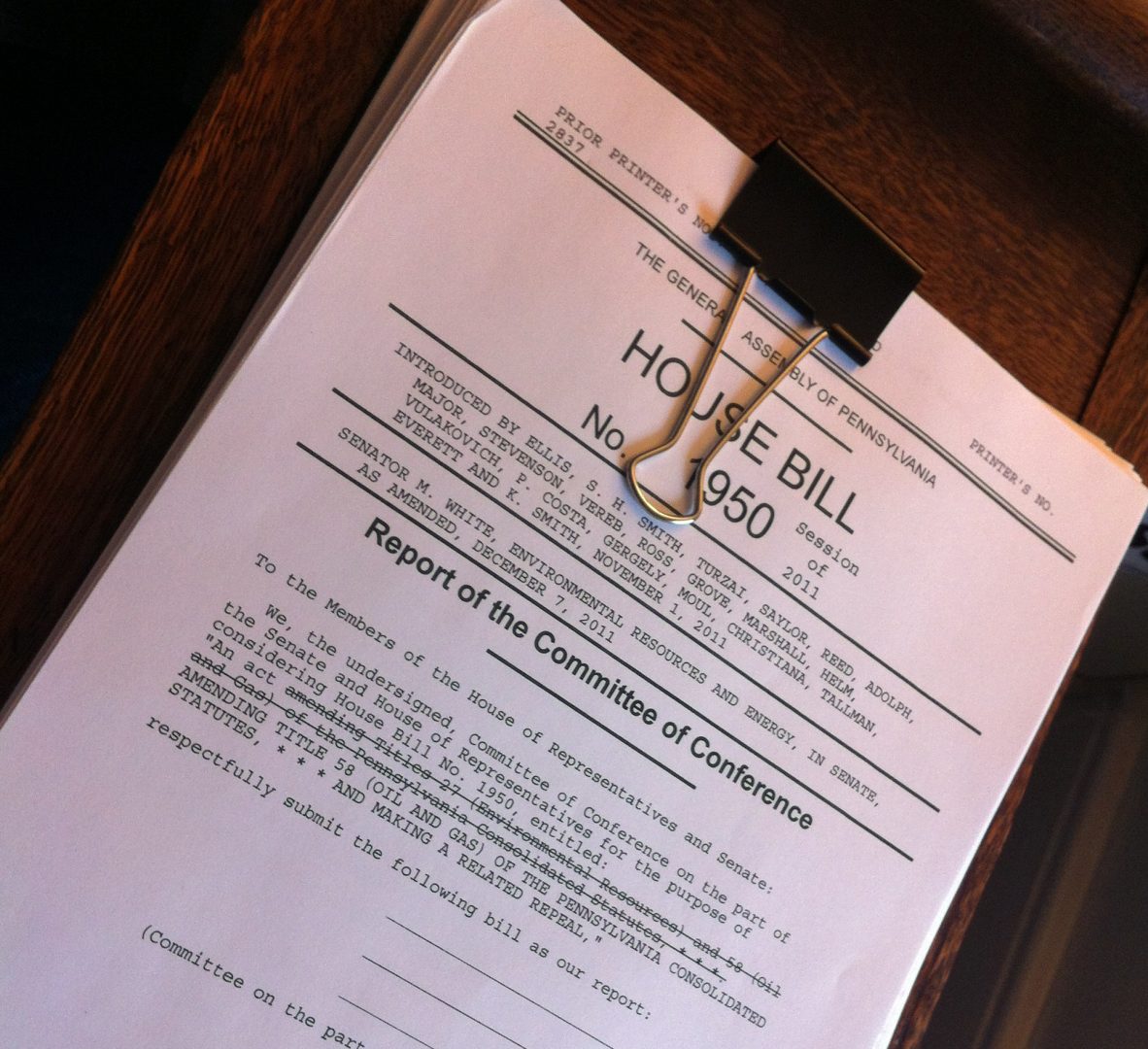
Pennsylvania’s House has passed a Mar­cel­lus Shale impact fee on a 101–90 vote.

Now that the leg­is­la­tion is on its way to Gov­er­nor Corbett’s desk, what hap­pens next? Here are some key mile­stones to look for.

Once Cor­bett signs the bill into law, coun­ties host­ing nat­ural gas wells will have 60 days to pass an ordi­nance autho­riz­ing an impact fee within their bor­ders. If a county’s com­mis­sion­ers don’t want a levy, they sim­ply won’t hold a vote on the matter.

After the ini­tial 60-day win­dow ends, munic­i­pal­i­ties will have a chance to over­ride any county com­mis­sion­ers who opt out of the impact fee.  If a town­ship or bor­ough wants a fee, it will need to pass a res­o­lu­tion read­ing, “The (insert name) in the county of (insert name) hereby resolves to have the county impose an uncon­ven­tional gas well fee on each uncon­ven­tional gas well spud in the county.” If more than half of a county’s munic­i­pal­i­ties do this within 60 days, the county’s fee will be enacted. The fee will also go into effect if coun­ties rep­re­sent­ing more than 50 per­cent of the county’s total pop­u­la­tion pass the resolution.

Sep­tem­ber 1, 2012: The due date for retroac­tive 2011 fees. Sen­ate Repub­li­can lead­ers esti­mate the fee will gen­er­ate around $180 mil­lion, if every drilling county opts into the levy.

Jan­u­ary 1, 2013: The bill requires nat­ural gas drillers to post the chem­i­cals they use dur­ing hydraulic frac­tur­ing on FracFocus.org. (This is some­thing Mar­cel­lus Shale Coali­tion mem­bers have already begun doing on a vol­un­tary basis.) Next Jan­u­ary, the Depart­ment of Envi­ron­men­tal Pro­tec­tion will eval­u­ate the web site, and deter­mine whether it’s pro­vid­ing enough well-by-well chem­i­cal infor­ma­tion. If not, DEP may begin host­ing the data on its web­site. (The impact fee marks a major improve­ment in Pennsylvania’s frack­ing dis­clo­sure reg­u­la­tions. Until now, com­pa­nies have been required to report chem­i­cals to the state, but the infor­ma­tion has remained private.)

Jan­u­ary 31, 2013: The Pub­lic Util­ity Com­mis­sion will set 2012 fee rates. Per-well fees are based on a slid­ing scale. The PUC will set a rate based on two fac­tors: changes in the Con­sumer Price Index, and 2012 nat­ural gas rates.  Nat­ural gas prices fluc­tu­ate on a daily basis, so the com­mis­sion will arrive at the rate by tak­ing the New York Mer­can­tile Exchange’s nat­ural gas price from the last day of every month, and aver­ag­ing the 12 totals out.

April 1, 2013: 2012 fees are due. Leg­isla­tive lead­ers esti­mate the sec­ond fee pay­ment will gen­er­ate about $211 million.

Comments

  • Fee Ques­tion

    Do you know how much, or what per­cent­age of the CPI and price of NG it will be per well?  You give the total pos­si­ble rev­enue but not on a per well/ pro­duc­tion basis.

    • Scott Detrow

      The fee sets clear fee ranges based on price — the 2011 fee will be $50,000 per hor­i­zon­tal well, and $10,000 for smaller ver­ti­cal wells. That will be the year 1 price if gas prices are between $2.99 and $5.00. The CPI adjust­ment appears to be more dis­cre­tionary. PUC offi­cials will set it once a year.

      You can read the bill lan­guage here: https://stateimpact.npr.org/pennsylvania/2012/02/06/here-it-is-the-impact-fee-bill/

      –Scott Detrow

    • Scott Detrow

      The fee sets clear fee ranges based on price — the 2011 fee will be $50,000 per hor­i­zon­tal well, and $10,000 for smaller ver­ti­cal wells. That will be the year 1 price if gas prices are between $2.99 and $5.00. The CPI adjust­ment appears to be more dis­cre­tionary. PUC offi­cials will set it once a year.

      You can read the bill lan­guage here: https://stateimpact.npr.org/pennsylvania/2012/02/06/here-it-is-the-impact-fee-bill/

      –Scott Detrow

  • Dou­glas Shields

    and what are the impli­ca­tions of the pre­emp­tions of local zon­ing ordi­naces??  PUC over­sight of local leg­isla­tive process??????  Just about the money huh???  Good luck with that.

  • Jen­nifer

    I greatly appre­ci­ate the in-depth, intel­li­gent report­ing you folks do on the Mar­cel­lus Shale issues.

    • Scott Detrow

      Thanks!

  • Don­nie

    Will the zon­ing restric­tions on com­pres­sor sta­tions still limit them to Ag and Indus­trial zones? Will com­pres­sors that have already destroyed peo­ples’ res­i­den­tially zoned neigh­bor­hoods be forced to relocate?

  • Heavenman77

    Shale frack­ing = US chil­dren future com­pro­mised. Water is life, don’t mess with our most pre­cious ressource.

    • John_m76229

      Our most pre­cious resource is people.

      • http://www.facebook.com/people/Michelle-Boice/100002038196217 Michell’e Boice

        And peo­ple can­not live with­out water!

  • http://www.facebook.com/people/Dan-Vaughn/508260740 Dan Vaughn

    In gen­eral I am against shale frack­ing and think long term we are going to pay a heavy price with our health, econ­omy and envi­ron­men­tal impact. How­ever, that being said, if it “MUST” hap­pen, com­mu­ni­ties should exact a high enough Impact Fee to may the gas com­pa­nies seri­ously con­sider whether they REALLY want to drill in said com­mu­nity or town­ship. Don’t think $100s, or $1000s. Think $100,000s per well!

  • Dan Vaughn

    In gen­eral I am against shale frack­ing and think long term we are going to pay a heavy price with our health, econ­omy and envi­ron­men­tal impact. How­ever, that being said, if it “MUST” hap­pen, com­mu­ni­ties should exact a high enough Impact Fee to may the gas com­pa­nies seri­ously con­sider whether they REALLY want to drill in said com­mu­nity or town­ship. Don’t think $100s, or $1000s. Think $100,000s per well!

    • John_m76229

      Who do you think will ulti­mately pay those fees?

  • jwoz­niak

    We, in Greene County, are still endur­ing the dele­te­ri­ous fall­out from Act 54, a seri­ously flaw­ing piece of leg­is­la­tion which effec­tively empow­ered the coal indus­try to do what­ever it wanted to coal­field res­i­dents with lit­tle fear of con­se­quences. Duke Lake is still a dry hole in the ground. Long­wall call min­ing is still destroy­ing land and water resources with impunity, and prop­erty own­ers are still defense­less against the onslaught. This new leg­is­la­tion makes us a tar­get for yet another horde of well-funded cor­po­rate invades who care lit­tle for the basic human rights for those of us who are forced to play host to them. Greene County is, and always will be, Pennsylvania’s third world, except with fewer civil rights. Dunkard Creek is STILL dead, and no one will ever pay for this crim­i­nal act. 

  • Don­nie Rhodes

    It is clear that this shame­ful piece of leg­is­la­tion places the well-being of Pennsylvania’s res­i­dents a dis­tant sec­ond to the wel­fare of the gas drillers. Corbett’s pals at Range Resources, Chesa­peake, et al, must be pleased as punch with this load of effer­ves­cent dung.
       Mean­while, the greed­heads will con­tinue to rape this land and ruin the lives of the good peo­ple of rural Penn­syl­va­nia. When it comes to buy­ing politi­cians, the drillers have cer­tainly got their money’s worth.

About StateImpact

StateImpact seeks to inform and engage local communities with broadcast and online news focused on how state government decisions affect your lives.
Learn More »

Education