Pennsylvania

Energy. Environment. Economy.

How A Thousand Pounds Of Butter Becomes Three Days’ Worth Of Energy

Scott Detrow / StateIm­pact Pennsylvania

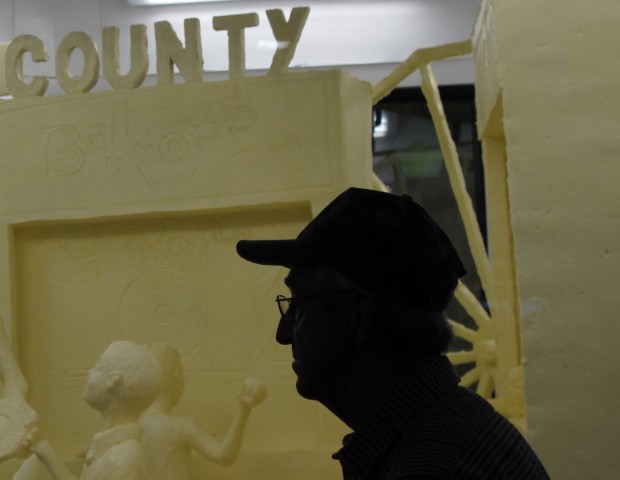
A Farm Show vis­i­tor checks out the but­ter sculpture

A dizzy­ing fall from grace is in store for the Penn­syl­va­nia Farm Show’s famed but­ter sculpture.

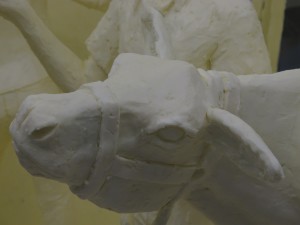
Through tomor­row, the thousand-pound work of art will be the star attrac­tion of the annual indoor agri­cul­ture fes­ti­val. Thou­sands of peo­ple have snapped pic­tures of the refrig­er­ated sculp­ture, which depicts a boy lead­ing his prize-winning calf through a county fair.

Next week, how­ever, a Juni­ata County farmer will uncer­e­mo­ni­ously dump it into a manure pit.

That’s because he’s turn­ing the sculp­ture into methane gas. One thou­sand pounds of but­ter, it turns out, cre­ates enough energy to power a farm for three days.

How does this work?

Mary Hoff­man and Linda Mus­tac­chia – both from Allen­town – couldn’t fig­ure it out as they peered at the sculp­ture through its eight-sided dis­play case. “I don’t know, but I’m glad they’re doing that,” said Hoff­man, who was wor­ried the sculp­ture would have oth­er­wise been thrown out. “I like but­ter,” she said. “But that’s a lot of butter.”

Scott Detrow / StateIm­pact Pennsylvania

A closer look at the thousand-pound sculpture
Turns out, but­ter becomes gas through the work of a methane digester. Glenn Cauff­man, the man­ager of Penn State University’s Farm Oper­a­tions, said the but­ter will be dumped into a big heated tank where microor­gan­isms will feast on it. “Those microor­gan­isms can break those fat mol­e­cules apart into the less com­plex mol­e­cules,” he explained. “Then fur­ther take that to pro­duce a gas called methane, which burns read­ily in an engine, and can be con­verted into…electricity.”

As long as the farmer keeps the digester hot, the bac­te­ria will do all the work. “Those organ­isms at a hun­dred degrees, are work­ing hard,” said Cauff­man. “They’re try­ing to live. They’re try­ing to repro­duce. They’re try­ing to eat food, be happy, make more bacterial.”

Steve Rein­ford is the lucky dairy farmer who will take cus­tody of the sculp­ture. He’ll be the one dump­ing it into the manure pit, where it will sit for sev­eral days, before he grinds it into fuel and feeds it into the digester.

Rein­ford said it will take about five days to load the butter/manure mix into the tank.  “And as it’s heat­ing it’s break­ing down. It’s going to take prob­a­bly up to 25, 30 days to break it down com­pletely. And that will make the methane. And then I’m going to run a gen­er­a­tor,” he said.

Rein­ford has been gen­er­at­ing energy this way for a while. He said he gets a lot of fuel from the nearby Wal­mart, which hands over food prod­uct that has gone bad. The methane digester cre­ates so much energy, Rein­ford said, that he sells it back to the grid.

He expects the but­ter sculp­ture – or what used to be the but­ter sculp­ture – to power his home and farm for about three days.

Rein­ford did make sure to visit the Farm Show, to see the sculp­ture on dis­play. “I took a lot of pic­tures of it down there so I’d be able to see it before and after. We’ll actu­ally enjoy the heat – the elec­tric­ity in our houses about a week, two weeks from now.”

Today’s but­ter is tomorrow’s energy.

Featured Topics

Comments

  • Jean­nette Lewis

    but but but, its BUTTER. Three days of energy or a YEAR of toast!

    • Prosperity1122

      Really? A year? I won­der how obese you are…

      • Aby

        you’re an idiot.

      • Oscarlarson1

        Prosperity1122 ~ Pretty sure Jean­nette was being light-hearted & mak­ing a joke.  Lighten up.  There’s no need to be unkind.

  • Nope

    Does any­body proof read these errors?

  • Anon

    A gas called elec­tric­ity? :P

    • No

      no a gas called Methane which can in turn be used for energy or electricity…when you leave out words it makes you sound stu­pid not the article.

  • Anony­mous

    I thought Cal­i­for­nia was the land of the fruits and nuts. I don’t mind liv­ing here but I think it is headed into orbit. Sounds like Penn­syl­va­nia will be keep­ing up the wacko cul­ture in the land after we have departed.

    • Hate­morons

      How is find­ing alter­nate and “cheaper” ways of energy which are help­ful to the world lived in keep­ing up with “wacko cul­ture”???  No let’s keep abus­ing every­thing until there’s noth­ing left, it’s a waste­land, and we all die out.

  • Novella

    I won­der if we apply this con­cept to my thighs and run my com­puter while gain­ing a more slen­der physique?

  • Mscottcgp

    If he has a dairy farm he should har­ness the methane gas from his cows.

    • an answer

      I think he is if he’s putting the but­ter into a manure pit. 

    • Really?

      I guess the “Methane Digester” he uses on his farm just sits there and isn’t used for any­thing else.….…..

  • Kevin

    Maybe we should air­lift the sculp­ture to Norway?

    • Danny

      This is Amer­ica! We burn what you desire! How dare you…

  • http://www.facebook.com/lonnie.austen.moore Lon­nie Moore

    The real­ity is that this same process can be adapted at every sewer treat­ment plant in the world, if designed cor­rectly. This has been done in Switzer­land for years… In the USA who would want free energy anyway? 

    • The­fleet­wood­pro­ject

      Actu­ally Lon­nie, it is used here, and quite preva­lently! Have you ever heard of cogen­er­a­tion? Many US waste water treat­ment plants have this sys­tem, and it works quite well.

      • Can­dee­vi­sions

        right but we’re still not using it to dis­trib­ute mass FREE energy and sav­ing mil­lions of peo­ple mil­lions of dol­lars which can in turn be used for some­thing else, so Actu­ally The­fleet­wood­pro­ject, it’s not really used to preva­lently here then is it?? It’s still used for greedy per­sonal gain, think of the big­ger pic­ture and what prob­lem is truly being addressed before answer­ing like an arro­gant American.

        • The­fleet­wood­pro­ject

          Hmm, I am not too sure if you are trolling me or you just have an off idea about how much energy can be pro­duced by these means. Let’s get a few things straight, shall we?

          In Albu­querque, New Mex­ico, their waste­water treat­ment plant uses almost all of the incom­ing bio­mass in digesters which cre­ate methane, used to power gen­er­a­tors which in turn power the plant. Do you know how much power that plant gets from an entire city’s worth of sewage? About 50% of demon­strated need. The money saved is used to keep util­ity prices and taxes down. In a way, your dream has come true! They ARE dis­trib­ut­ing mass FREE energy and sav­ing mil­lions of peo­ple mil­lions of dol­lars which can in turn be used for some­thing else. 

          Don’t believe me? Bam! http://www.abcwua.org/content/view/91/80/

          So, as some­one once told me (less a minor cor­rec­tion): “Think of the big­ger pic­ture and what prob­lem is truly being addressed before answer­ing like and unin­formed dolt.”

          Regards,

          The­fleet­wood­pro­ject

  • http://www.facebook.com/people/Amy-Blankenship/743874381 Amy Blanken­ship

    I’m a bit con­fused as to why the farmer would need to keep a digester heated to get it to over 100 degrees. Even a com­post pile can keep itself heated to over 200 degrees in a ver cold win­ter, and this is using essen­tially the same process.

  • dave

    What  a ter­rific idea

  • mochta

    I hope all those pre­cious pic­tures get sent to Haiti so all the starv­ing peo­ple liv­ing under tarps can enjoy it too. Maybe when they try to go to sleep their stom­achs will be full of love for the US– a place that can waste 1,000 pounds of but­ter while their babies starve to death.Hey, butter-waster– just because you can do some­thing doesn’t mean you should.

    • Isle77 Kc

      Ludi­crous statement.

    • wannabe1987

      Haiti doesn’t want your but­ter.  but­ter isn’t really good for them.  they’d love panut but­ter tho, its called medika mamba, med­ical peanutbutter.

      either visit haiti or get your facts straight from reli­able sources before mak­ing idi­datic com­ments such as these. 

  • Sir­fuzzy

    Putting aside any argu­ments con­cern­ing the use of but­ter as a medium for art and an avenue for free­dom of expres­sion, I’m glad to see it recy­cled but far more energy and resources were used to cre­ate and destroy this sculp­ture than were gained in it’s demise. How­ever the dear­est cost incured, is the pain and suf­fer­ing of cows that are enslaved and expo­lited, by the dairy indus­try, whose lives are spent in mis­ery and then cut short, all to the end that we should enjoy the fruits of their labor while their very own off­spring are denied those very same rewards. Show com­pas­sion, renounce dairy!

    • Prosperity1122

      Nope. Milk is my won­der drug ;)

    • Can­dee­vi­sions

      Don’t con­fuse the MEAT indus­try for the DAIRY indus­try.  I assure you NO COWS ARE HARMED DURING MILKING, in fact, they’re kept warm, com­fort­able, fed, cared for, farm­ers and dairy ranch­ers usu­ally are more com­pas­sion­ate then a butcher.  If they don’t release their milk it backs up and causes painful prob­lems.  Their off­spring (the ones that breed) get their milk from their mother (pass by a farm and watch, you’ll see the chil­dren feed­ing off their par­ent).… Please, show some com­pas­sion, get an edu­ca­tion before you speak in a pub­lic forum.

      • Spb Long

        Tricky to reply here — but I’ve been shocked this year to learn that mil­lions of calves are bred each year in order to switch on milk pro­duc­tion, then at a few days old mam­mas and calves are sep­a­rated so the milk can be col­lected and calves are sent off to be slaugh­tered as veal — calves are a dairy indus­try waste prod­uct. Just keep­ing it real.…

        • Danny

          I’ll eat those babies.

  • Don Scott

     I thought it was a bet­ter idea when they turned a pre­vi­ous sculp­ture into biodiesel: http://www.nytimes.com/2010/08/10/science/10butter.html

    • Scot Detrow

      Don — the PSU prof I inter­viewed told me the butter/biodiesel attempt had one big flaw: it smelled ter­ri­ble. Thanks for the link!

      • Don Scott

        I bet you’re con­fus­ing the smell of the biodiesel with the smell of the trap grease that Black Gold Bio­fu­els also uses to pro­duce biodiesel.  The odor of fin­ished biodiesel should be sig­nif­i­canlty less offen­sive rel­a­tive to con­ven­tional diesel fuel.

        The waste grease that Black Gold con­verts into clean fuel is pretty stinky, because it comes from waste­water. It is arguab­ley as stinky as a manuer pit.  

        • Scott Detrow

          Thanks for the explanation.

          We posted a link to the NYT biodiesel arti­cle on the blog.

  • Lilly

    Doesn’t methane pro­mote cli­mate change or does this process help by remov­ing it before it gets into the air. 

  • Waldo But­ter­man

    I bet Paula Deen is horrified!

About StateImpact

StateImpact seeks to inform and engage local communities with broadcast and online news focused on how state government decisions affect your lives.
Learn More »

Education