Pennsylvania

Energy. Environment. Economy.

Senate Impact Fee Vote Shines Light On How Bills Are Passed

Getty Images

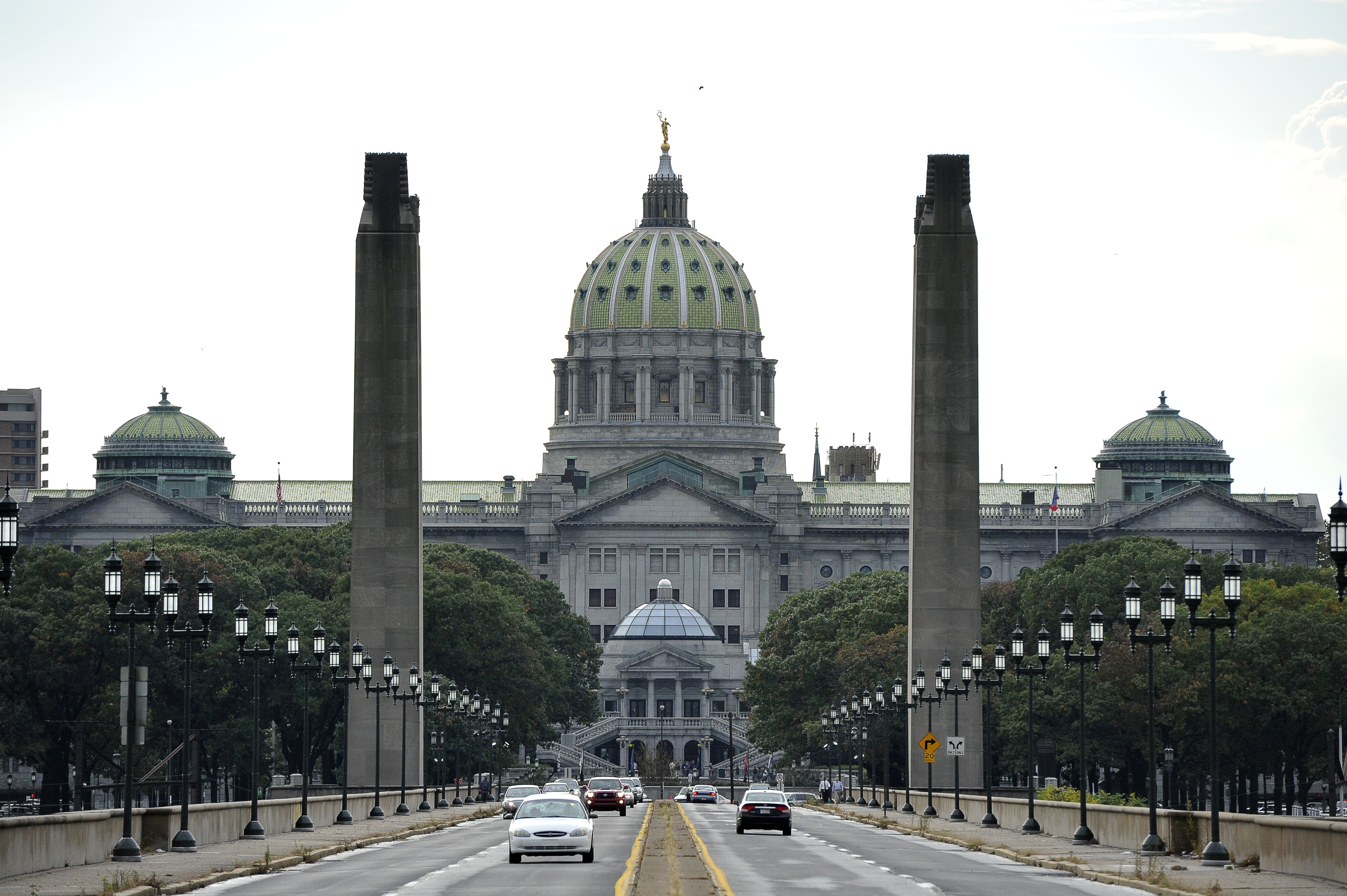
The state Capitol

The state Senate’s Environmental Resources and Energy Committee is set to consider and approve the House’s impact fee today.

“What’s that?” You may be wondering. “Legislative leaders have reached an agreement on how much to charge drillers, who would collect an impact fee, and other outstanding disagreements?”

Not at all. Today’s vote is the latest example of how major bills don’t move through the Legislature School House Rock-style, with committee hearings, floor debates, and open deliberations over amendments. Rather, details are worked out in closed-door meetings attended by legislative leaders and their top staffers. When an agreement is in place, they’re quickly amended into bills and then voted as soon as possible.

HB 1950 is merely serving as a vehicle today – a shell that lawmakers will advance in order to put the bill in position for quick passage when a deal is struck. Another example of this practice is HB 5, which dictates the new boundaries for Congressional districts.   How does the measure draw the lines right now?

(1)  The First District is composed of a portion of this Commonwealth.

(2)  The Second District is composed of a portion of this Commonwealth.

(3)  The Third District is composed of a portion of this Commonwealth.

(4)  The Fourth District is composed of a portion of this Commonwealth.

..and so on. This will be amended in the coming weeks, when lawmakers finalize their redistricting agreement. You can bet the legislation will move fast, as soon as it’s amended.

Comments

  • speak truth

    As a member of the PLCA one would think your ability to explain the process as it unfolds would be more acute.

    “Today’s vote is the lat­est exam­ple of how major bills don’t move through the Leg­is­la­ture School House Rock-style, with com­mit­tee hear­ings, floor debates, and open delib­er­a­tions over amend­ments. Rather, details are worked out in closed-door meet­ings attended by leg­isla­tive lead­ers and their top staffers.” — Some members of the press were there but where were you?

    Really?  If you check the legislative history, you’ll see that hundreds of people have spent thousands of hours formulating this language and several days debating its merits and drawbacks.  You wrote articles about the process as it unfolded, why the sudden change?  http://www.legis.state.pa.us/cfdocs/billinfo/bill_history.cfm?syear=2011&sind=0&body=H&type=B&bn=1950
    I understand that it’s easier for a lay person to look at the process and say, “The legislature isn’t accomplish anything.”  However, I don’t think it’s unreasonable to expect an individual with your level of expertise to be able to explain the implications of such actions as opposed to misleading the public.

    If you’re looking for a measure of what little is accomplished by the legislature simply take the number of Resolutions and Road/Bridge dedications and compare that to the number of substantive laws that are passed each year.  Please don’t misinform the public.  At the very least you should be able to justify your position.       

    • Scott Detrow

      Thanks, “guest,” for your comment. I wasn’t saying the legislature isn’t  accomplishing anything – not at all. And you’re right. The Senate has been talking about an impact fee since April, and the larger issue of whether or not to tax natural gas drilling has been taking place since early 2009. There have been dozens of hearings, multiple votes, and hours of debate on the issue. Most of the issues being negotiated – the level of a fee, who implements it, where the money goes – have been debated over and over and over by lawmakers.

      My point was this: every time the legislation has been significantly altered this fall – the two rounds of changes to SB 1100 , the introduction and then amendment of HB 1950 – the details were negotiated in private meetings, introduced in bulk form, and then quickly voted. The hastily arranged House committee meeting where HB 1950 was unveiled and then approved is the best example of this.

      So, if a reader is wondering where the major action is taking place, and where the differences between the two bills are being worked out, I was writing that it wasn’t happening at the committee meeting, but rather at the ongoing discussions and negotiations. Much like the budget and every other major bill is hashed out. And that the committee vote was more about positioning the legislation for quick action, once the agreement has been reached.

      –Scott Detrow

About StateImpact

StateImpact seeks to inform and engage local communities with broadcast and online news focused on how state government decisions affect your lives.
Learn More »

Education