The Florida Council on Economic Education says personal bankruptcies have increased 2200 percent in the last 40 years. That’s one reason why the council is leading a campaign called Require The Money Course.
Bills filed in the Florida House and Senate would require high school students to take a one-semester financial literacy course. But with just three weeks left in the legislative session, the proposals (House bill 29 and Senate bill 92) haven’t been discussed by committees.
Now, there’s another option in the Florida Senate to get the class into high schools if the legislative proposals fail. An alternative is now part of the Senate budget plan for the state starting in July. It would create a required financial literacy pilot project in Broward County schools and a grant program that would enable other districts to participate.
A survey by the National Foundation for Credit Counseling finds about three-quarters of Americans think they would benefit from professional help with their everyday finances.
Criminology major Justin Buis, a junior at Florida State University, has friends who could use the help.
“They have a certain amount of money for a semester and by the time the semester is halfway through, all their money is gone,” Buis says. “They’re living on gas station food or ramen noodles because they don’t know how to manage their money.
President Obama wants to make two years of public community college free for many students. But institutions like Miami Dade College, pictured here, could only participate if they also have a performance funding program.
Performance funding in public higher education is a way for states to hold institutions accountable for certain outcomes. But new research shows it doesn’t do much to keep students enrolled or boost graduation rates.
A study co-authored by Dr. David Tandberg, Florida State University assistant professor of higher education, shows little difference in outcomes between institutions that receive performance funding and those that don’t.
The latest report examined community colleges in Washington State, but the research is part of a series of studies measuring outcomes nationally.
Florida currently has no performance funding model for state colleges. But its program for state universities considers a long list of metrics including how many bachelor’s recipients are employed or furthering their education one year after graduation, their salaries, and the six year graduation rate.
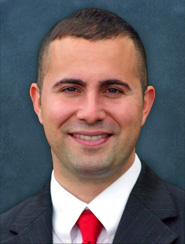
Orlando Democratic Sen. Darren Soto has introduced a bill establishing a minimum salary of $50,000 for all "instructional personnel."
Beginning teachers would earn at least a $50,000 salary – starting next school year – under a bill filed this week in Tallahassee.
Sen. Darren Soto (D-Orlando) filed the bill, SB 280, which cites a need for the state to attract and retain teachers. It seeks to increase their pay without affecting other personnel and programs.
Lawmakers would have to put enough money into education to guarantee the minimum starting salary for teachers and to ensure that districts have enough money to maintain other services. The base salary would be adjusted each year for inflation.
The bill doesn’t explain how lawmakers should come up with the money to boost all of those salaries. It makes no mention of teacher evaluations – which impact salaries. It also doesn’t say whether experienced teachers would get a pay increase since beginners would be bumped up considerably.
While the starting pay varies among districts, the state Department of Education says the average salary among all Florida teachers for the 2013-2014 school year was $47,780.
The federal Bureau of Labor Statistics says the average salary for all Florida workers is just over $41,000.
Maureen Yoder addresses students at the School of Arts and Sciences in Tallahassee.
The School of Arts and Sciences (SAS) in Tallahassee has just over 300 students, and the waiting list to get in is much longer.
Maureen Yoder is one of the founders of the 15-year-old K-8 charter school.
“We started this school with the intent of keeping it small because we want to create a school family,” Yoder says. “We believe that the relationship between the teacher and the students is the primary reason students succeed – besides a good home base.”
This is sixth grader Mary Stafford’s first year.
“I think I’ll stay. I didn’t want to at the beginning of the year. I wanted to go to a bigger school.”
The Florida Standards Assessment replaces the FCAT. Students will take the test online.
“Opt Out” groups are pushing back against what they say is too much standardized testing in Florida. The tests are changing as the state transitions to Florida Standards – an offshoot of the Common Core standards being implemented around the country.
Two-dozen groups have been formed at the district level to help parents learn the procedure for opting their students out of the tests.
By following a specific procedure (which may vary depending on the district), the student’s test is invalidated. The result is that the student doesn’t fail, school grades and teacher pay aren’t impacted, and the district is forced to find an alternative means of assessing what the student has learned.
Cindy Hamilton, co-founder of Opt Out Orlando, talked with StateImpact Florida’s Gina Jordan about why she wants an end to so much testing and what she’d like to see happen instead.
Althea Valle teaches a class of ELL's. She says of the new federal requirement, "I think it’s going to put a lot of pressure on the schools to get these kids where we think they should be."
A 10th grader born in Haiti struggles to read in his class at Godby High School in Tallahassee. The student is more comfortable with Haitian Creole than English. Teacher Althea Valle has students of various nationalities trying to master the language.
“It’s a challenge,” Valle says. “There’s a lot of gesturing, and you know sometimes I feel like I’m onstage and sometimes I have to be onstage to make myself understood.”
Valle is the ESOL (English for Speakers of Other Languages) coordinator for Leon County schools. Her developmental language class is offered as an elective for students who want the extra help, like Anas Al-Humiari from Yemen. His native language is Arabic, and he’s been studying English for 5 years.
“First of all, the words are the main things that get me down and the time, me trying to understand the sentence and what is the article or text actually means,” Al-Humiari says, trying to find the right words.
The ACLU is worried single-gender classes might reinforce stereotypes of the 1950s.
The American Civil Liberties Union has filed federal complaints against school districts in Broward, Hernando, Hillsborough and Volusia counties over the use of all-girls or all-boys classes. The ACLU wants the U.S. Department of Education’s Office of Civil Rights to investigate the programs.
StateImpact Florida’s Gina Jordan spoke with Galen Sherwin, a senior staff attorney at the ACLU Women’s Rights Project, about the complaints.
Q: Galen, what do the complaints say?
A: Schools shouldn’t be in the business of making crude judgments of children’s educational needs based solely on whether they’re a boy or a girl – that’s the definition of sex discrimination.
They’re using different teaching methods, environments and even curricula.
Reinaldo Camacho finished his two-year degree from Miami Dade College while he was still in high school. He's the first member of his family to pursue post-secondary education.
Sixty students from the Hialeah area will graduate from high school this month like thousands of others in Florida, but these students have done something especially remarkable.
They’ll receive their high school diplomas almost a month after graduating from Miami Dade College.
The students took advantage of the dual-enrollment programs offered at Mater Academy and Mater Lakes Academy. These are publicly funded charter schools that operate independently of the district.
Both campuses have large immigrant populations.
“They’re located in Hispanic, working-class, low-income neighborhoods in Miami,” says Lynn Norman-Teck with the Florida Consortium of Public Charter Schools. “So the administrators really started pushing dual enrollment more as a cost saving program for these kids because they could get a lot of college credits out of the way.” Continue Reading →
A new bill would make chewing these into guns a less severe offense in Florida schools.
Pop-Tarts chewed into the shape of a gun would not be grounds for suspension under a bill passed Thursday by the House Education Committee.
The bill is supposed to cut down on the number of students arrested because of zero tolerance policies.
The ‘Toaster Pastry Gun Freedom Act’ is known as the Pop-Tart bill after a 7-year-old in Maryland was suspended from school for biting his snack into the shape of a gun.
Rep. Dennis Baxley, R-Ocala – the man behind Florida’s Stand Your Ground law – sponsors the bill.
“I think it does lay down the proper balance and hopefully will be an example and an opportunity for administrators to feel they are empowered to make those common sense judgments,” Baxley said.
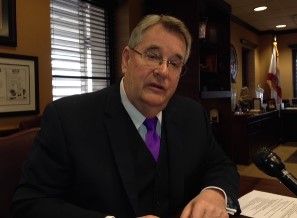
Senate President Don Gaetz sat down with StateImpact Florida to talk about some of the biggest education issues for lawmakers this spring, including what kind of test will replace the FCAT.
Q: Florida is in the process of implementing Common Core standards. The state still hasn’t determined how students will be assessed on what they’ve learned. Plus, you still have critics who say this a national take over of education. You’ve said you would not support legislation to repeal common core. But are there any plans to change it this year?
A: When you look at materials used to teach students, that’s where some of the criticism has come in. So there’s legislation that would make clear that the selection of instructional materials is up to the local school board.
Then there’s the issue of assessment. Speaker Weatherford and I last year wrote to the Department of Education and said get Florida out of Common Core PARCC.
StateImpact seeks to inform and engage local communities with broadcast and online news focused on how state government decisions affect your lives. Learn More »