A pre-recession construction project south of Twin Falls
Agriculture Secretary Tom Vilsack this week announced a new round of grants and loans from the agency’s rural development program. The funds are meant to spur rural job creation and business development. In Idaho, the one grantee is the Idaho Falls office of the Yellowstone Business Partnership.
Executive Director Jan Brown says they have big plans for their $49,500 allocation. They’ll hire two consultants to work with small businesses in rural counties of eastern Idaho. The aim is to help those businesses shift to more sustainable and, Brown says, money-saving practices. That would be things like more efficient waste management, energy conservation and water conservation. That, she says, could free up money for hiring.
This is the slow road to create jobs in rural Idaho and beyond. The New York Times detailed criticism of this route to economic growth earlier this week. The basic complaint? For all of its funding and effort in rural areas, why doesn’t the Obama Administration have more to show? But on the flip-side, where would rural communities be without this spending?
Economists like Lionel Beaulieu, the director of the Southern Rural Development Center at Mississippi State University, said financing for rural programs might have prevented even deeper levels of poverty and unemployment.
“The truth is,” Mr. Beaulieu said, “we don’t know how much worse it would have been if not for this funding.” — The New York Times
The creation and growth of most western states was a direct result of the mining industries that developed in the late 1800s. In Idaho, it was silver and gold. Mining and other traditional natural resources have taken a big hit in the last decade, but industry representatives and some economists believe they’re still a major player in Idaho’s 21st Century economy.
Jeff Perkell / Getty Images
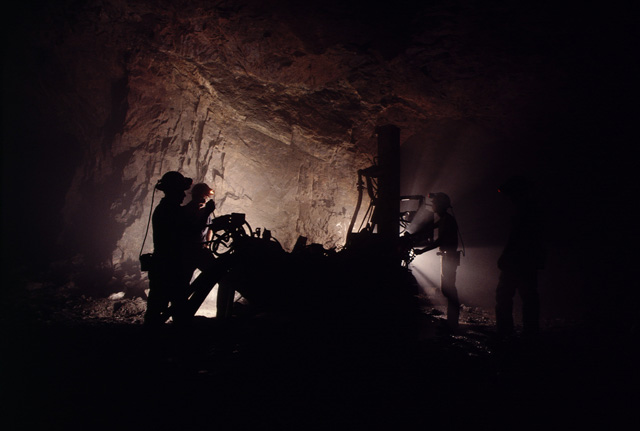
Idaho's mining industry is known for its silver, molybdenum and phosphorus
“It (mining) might not be the largest industry in the state,” said Jack Lyman, Executive Vice President of the Idaho Mining Association (IMA), “but it’s certainly an important industry in our state.”
The Idaho Division of Financial Management said the state’s mining industry grew four percent in 2010 and it projects “consistent gains” through 2014.
“Mining is benefiting from high metal prices.” – Derek Santos, Economist, Division of Financial Management
In fact, the average price of an ounce of silver has doubled from August 2010 compared with August 2011. Still, Lyman says its difficult to forecast potential growth because the industry’s fate is largely dependent upon global commodity prices. Continue Reading →
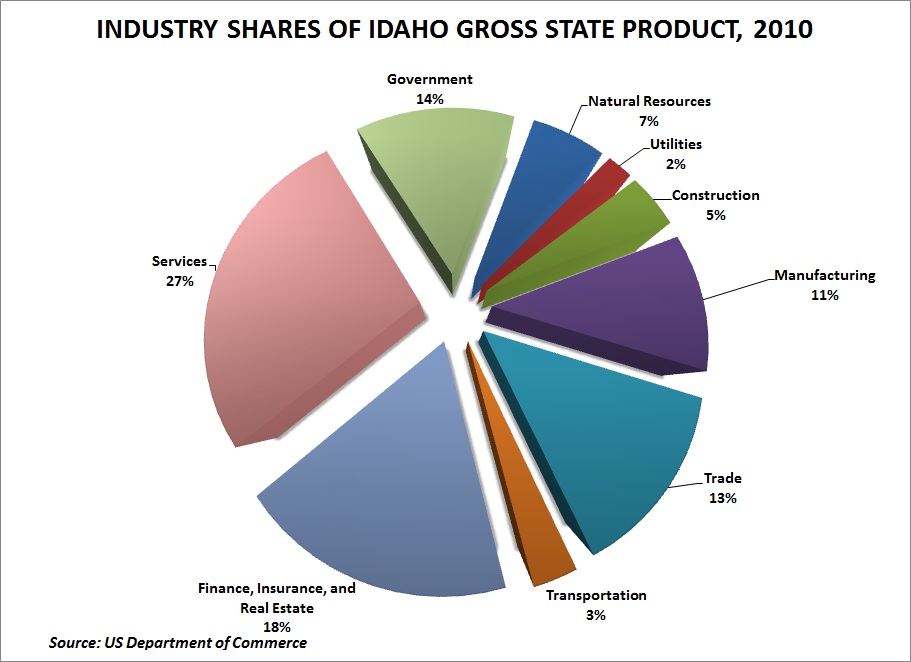
The Idaho Department of Labor says the state’s economy has been growing more slowly than the nation’s. The Idaho Statesman reports the state’s total gross state product rose 3.3 percent last year to $55.4 billion. But, when adjusted for inflation, it rose 2 percent to $50.7 billion. Nationwide, the inflation-adjusted gross product for 2010 is 2.6 percent.
Idaho ranked 30th among the states in its rate of growth.
These five industries, like construction and high-tech, hardly cover Idaho’s entire economy, but they have acted as some of the most volatile and crucial economic indicators over the last decade. State economists say Idaho’s economic turnaround will be gradual, albeit it’s headed in the right direction.
Keith Brofsky / Getty Images
Business services are expected to make a "disproportionately positive impact" on employment
Services & Trade: The services industry includes everything from accountants and lawyers to roofers and painters. This sector of Idaho’s economy experienced declines in 2009 and 2010 but is now expected to be one of Idaho’s growth engines over the next four years. That’s according to the 2011 Idaho Economic Forecast which is published by the Division of Financial Management. The retail and wholesale trade part of this sector is also expected to grow. According to the report, Idaho’s trade sector shed more than 10,500 jobs in retail and wholesale trade between 2007 and 2010.
“This sector’s return to growth is especially important because it is the largest private employer in the state.” – Derek E. Santos, Economist, Idaho Division of Financial Management
Inc.com ranks the Meridian, Idaho based wickless-candle company Scentsy the 85th fastest growing company in the United States over the last three years. According to its website, Scentsy has 100,000 independent sales representatives who market and sell products through home parties.
It’s the second year the wickless-candle company has made Inc. Magazine’s list of the fastest-growing, privately-held companies. Scentsy says its 2010 revenues totaled $381.8 million.
The Idaho Department of Commerce reports 16 other Idaho based companies made the list this year including, Balihoo in Boise, North Wind in Idaho Falls and Bodybuilding.com in Meridian.
Some bad news today from the U.S. Census Bureau. The most recent poverty numbers show that the national rate grew to 15.1 percent in 2010.
“Another 2.6 million people slipped below the poverty line in 2010, meaning 46.2 million people now live in poverty in the United States, the highest number in the 52 years the Census Bureau has been tracking it.” – The New York Times
In Idaho, the poverty rate rose to 14 percent, up from 13.7 percent in 2009. That tracks with the state’s Medicaid enrollment numbers, which continue to rise. According to a report from the state Department of Health and Welfare, average monthly enrollment grew by 9 percent from 2009 to 2010. Enrollment grew further from 2010 to 2011.
The Idaho Statesman is reporting August tax collections were 4.4 percent below the projected $199 million because of lower-than-expected sales and individual income taxes.
“Since sales-tax collections are a near real-time economic indicator, their lower-than-expected performance may raise concerns that the economy is not recovering as strongly as predicted.” – The Division of Financial Management
The state budget is based on tax collection estimates. When those estimates are off, so is the budget. July receipts fared better, so revenues are 2.2 percent off target for the fiscal year.
About StateImpact
StateImpact seeks to inform and engage local communities with broadcast and online news focused on how state government decisions affect your lives. Learn More »