Pennsylvania

Energy. Environment. Economy.

Topics

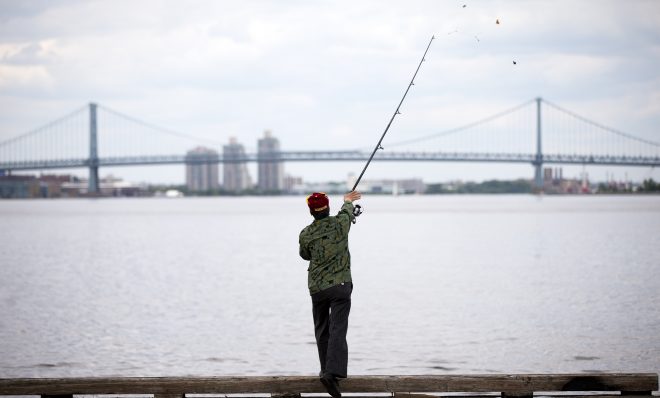
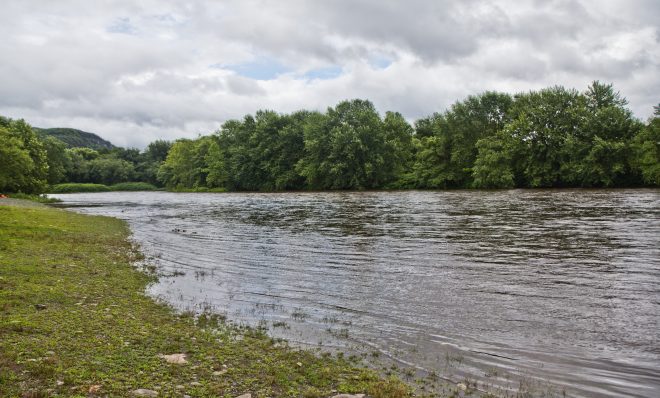
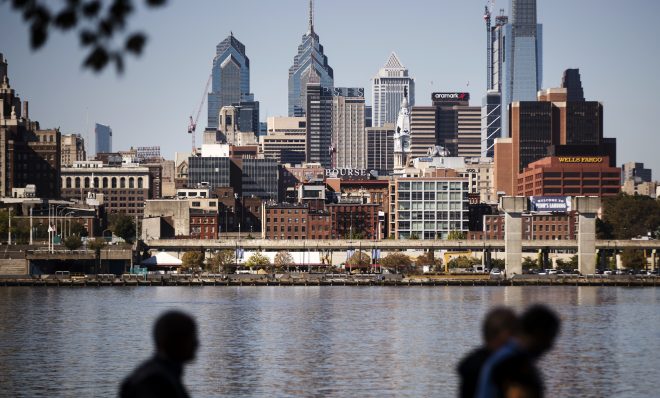
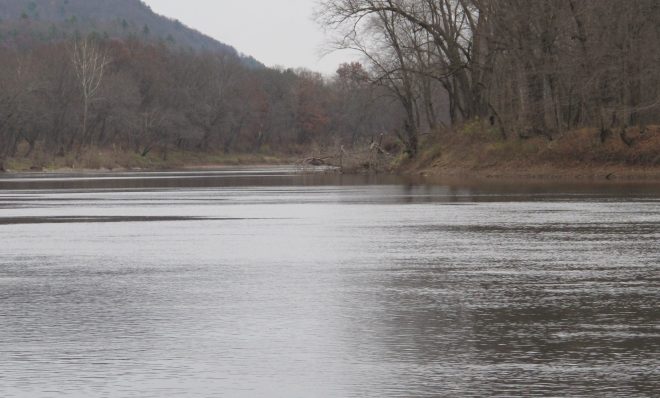
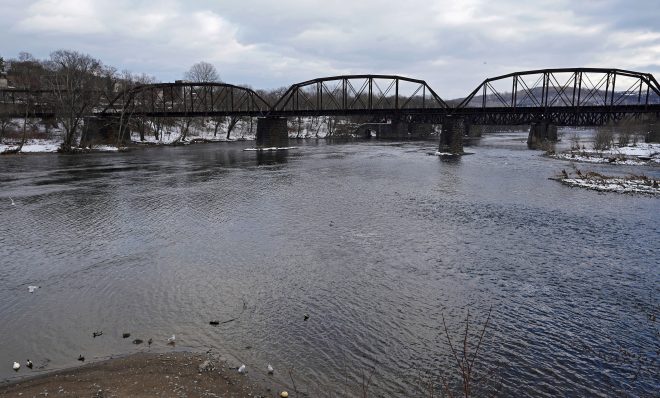
View of the Delaware River from Bucks County, Pa.

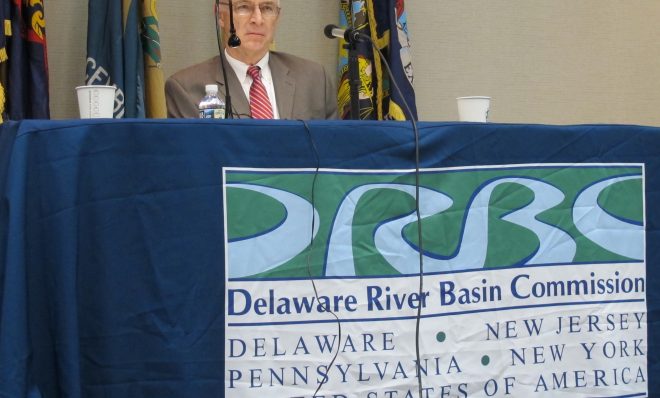
Delaware River Basin Commission: Battleground for Gas Drilling

Background

In 1961, President Kennedy signed a compact with the Governors of New York, New Jersey, Pennsylvania and Delaware, which created a partnership between those states and the federal government to manage water in the Delaware river basin. The Delaware River Basin Commission consists of governors from the four states, and the federal government is represented by the Army Corps of Engineers. The DRBC manages water quality, withdrawals, droughts, floods, conservation and permitting for the river and its tributaries. It’s funded by the states, the federal government, permit fees, fines, as well as public and private grants.

The Delaware River is the longest free-flowing river east of the Mississippi with its headwaters located in Hancock, N.Y. It stretches 330 miles and empties into the Delaware Bay.  The river provides drinking water to about 15 million people in New York, New Jersey, Pennsylvania and Delaware. In 1968 the Delaware River was declared a “Wild and Scenic River” by President Lyndon Johnson, which affords it special protection. Parts of the river have also received the designation of “special protection waters.” Two primary regulatory functions of the DRBC are water quality and quantity. The DRBC has about 50 staff members, including several hydrogeologists and water resource engineers. Before the DRBC stepped into the natural gas debate, it was an agency that conducted most of its business free of public scrutiny. But the development of the Marcellus Shale has changed that.

About one-third of the Delaware River Basin, in New York and Pennsylvania, lies above Marcellus Shale natural gas deposits. In May of 2009, DRBC executive director Carol Collier issued an order that all drilling for natural gas in the basin needed the approval of the Commission. Collier was concerned about the water withdrawals needed for drilling as well as the impact on water quality from the drilling practice known as “hydraulic fracturing,” or fracking.

The de-facto moratorium prevents drilling for natural gas in Pennsylvania’s Wayne and Pike counties, as well as parts of southern New York, until the DRBC establishes its own regulations for gas drilling. Those rules would trump state regulations in Pennsylvania and New York. The gas industry has cried foul, saying the DRBC is overstepping its authority. Environmentalists applauded the move at first. But have since criticized the Commission for not doing a more thorough environmental impact study, or proposing more stringent regulations.

In December of 2010, the DRBC released its proposals. Since then they have held public hearings and have gotten an unprecedented response from both sides of the issue. In May, 2011 New York Attorney General Eric Schneiderman filed a lawsuit against the federal government, charging the U.S. Army Corps of Engineers in its role as a member of the Commission violated the National Environmental Policy Act. The lawsuit says NEPA requires the DRBC to do a more thorough environmental review before implementing any new regulations. In August, 2011 environmental groups filed a similar lawsuit.

After reviewing more than 60,000 public comments, the DRBC posted its revised draft regulations online in early November, 2011. Environmentalist groups, such as the Delaware Riverkeeper Network, criticized the draft rules and continued to lobby for a more extensive environmental impact study. Environmentalists say the new rules do not go far enough to protect drinking water supplies. They planned a large demonstration and civil disobedience at a scheduled November 21, 2011 meeting where the DRBC planned to vote on the new rules. But just days before that meeting, Delaware Governor Jack Markell announced his intent to reject the proposed rules. Like the environmentalists, Markell wants the DRBC to conduct an environmental impact study before drafting new regulations. New York, which is currently engaged in drafting its own state regulations, also wanted more time. With Pennsylvania and New Jersey likely to approve the new regulations, that put the federal government in the position of casting a deciding vote. But before hundreds of protestors descended upon Trenton, NJ, the divided Commission canceled the meeting, and more than a year later, has yet to revisit the subject in a public forum.

Latest Posts

SRBC Defends its Limited Role in Overseeing Water Quantity

When it comes to Marcellus Shale Gas development, the differences between the Delaware River Basin Commission and its central Pennsylvania counterpart, the Susquehanna River Basin Commission, are stark. The DRBC has been the force behind a drilling moratorium in Northeast Pennsylvania and southern New York. But the Susquehanna River Basin Commission has not weighed in [...]

Dueling Fracking Films Battle for Pennsylvanian’s Hearts and Minds

courtesy of filmmakers A dairy farmer from Calicoon, NY who is campaigning to lift the moratorium on gas drilling in New York, appears in Fracknation. The pro-fracking answer to “Gasland” is on the road in Pennsylvania and will be screened in hostile territory tonight — the Philadelphia suburbs. “Fracknation,” a film by Phelim McAleer and [...]

U.S. Army Corps Okay’s Controversial Pipeline Project

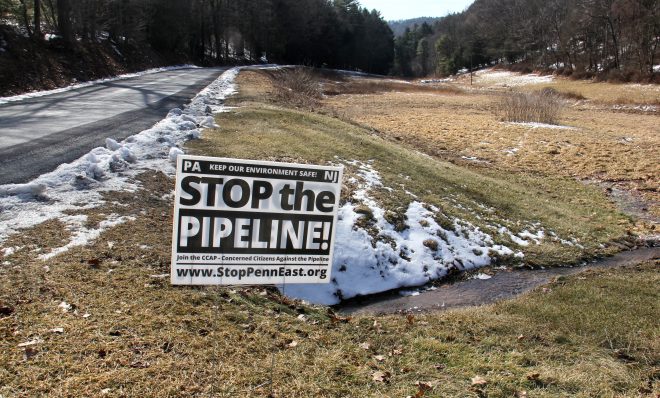
The U.S. Army Corps of Engineers has granted permission for a controversial pipeline project to cross wetlands, rivers and streams in the Delaware River watershed. The Corps issued the permits last Friday. Environmentalists who oppose the project had pinned their hopes on having it blocked by the Corps, which issues the wetland permits. Richard Pearsall, [...]

Army Corps Still Reviewing Tennessee Gas Pipeline Access

Environmentalists opposed to the construction of a natural gas pipeline in Northeast Pennsylvania are pinning their hopes on the U.S. Army Corps of Engineers to halt the project. “The Army Corps of Engineers could make a big difference here,” said Faith Zerbe, a field biologist with the Delaware Riverkeeper Network. The Riverkeeper Network opposes the [...]

Pipeline Protests Shift From Courts to Direct Action

Two protestors in northeast Pennsylvania are trying to halt the clearing of trees to make way for an expanding natural gas pipeline in Pike County. Allison Petryk and Alex Lotorto handcuffed themselves to a gate in the Delaware State Forest on Monday and Tuesday, blocking access to tree felling crews. The Tennessee Gas Pipeline Northeast [...]

2012 NY State Dept. of Health Document Says Fracking Can Be Safe

A document acquired by the public radio project Innovation Trail, reveals New York state’s public health department concludes fracking can be done safely. The report, written almost a year ago, discussed health risks associated with gas drilling, but says proper safety measures to prevent exposure to chemicals and naturally occurring radioactive material, would reduce health [...]

How Hurricane Sandy Will Impact Gasoline Prices

It’s not an easy thing to shut down a refinery, so operators like to get ahead of any potential power outages by reducing or halting gasoline production in an orderly way before a major  storm hits. Several refineries in Pennsylvania and New Jersey have plans to shut down or reduce their output ahead of Hurricane [...]

Environmental Groups Petition EPA Over Fracking Disclosure

Environmental groups from across the country have signed on to a petition asking the EPA to include the oil and gas industry in a national database of chemical releases. The Toxics Release Inventory requires companies to report the quantity of chemicals that end up in the air, water, land, landfills, and treatment facilities. Congress established [...]

Philadelphia Mayor to Drillers: Earn Our Trust

Philadelphia Mayor Michael Nutter says he’s worried about the gas industry’s impact on water quality, and has yet to be reassured by the gas drillers that they can extract shale gas without hurting the environment, specifically the water supply for hundreds of thousands of Philadelphians who rely on the Delaware River. “I recognize that there [...]

About StateImpact

StateImpact seeks to inform and engage local communities with broadcast and online news focused on how state government decisions affect your lives.
Learn More »

Education