Emilie Ritter Saunders was StateImpact Idaho's multimedia reporter until the project merged with the Boise State Public Radio site in July 2013. She previously worked as the Capitol Bureau Chief for Montana Public Radio and was a Senior Fellow with NPR's Economic Training Project from 2009 until 2010. She graduated from the University of Montana School of Journalism in 2007.
Reporters Emilie Ritter Saunders, Molly Messick, and Boise State Public Radio news director Sadie Babits.
On August 29, 2011 StateImpact Idaho wrote this welcome post, introducing ourselves to the state, and explaining the stories we hoped to tell. Now, just shy of two years later, we’re signing off.
Don’t worry, this site will remain here as an archive, and we hope, as a resource. But it will no longer be updated daily. For continued in-depth coverage of Idaho, please turn to Boise State Public Radio.
StateImpact Idaho, a collaboration of Boise State Public Radio and NPR, set out to tell the stories of Idahoans affected by the Great Recession and the state policy decisions (or indecisions) that most directly affected their daily lives. Continue Reading →
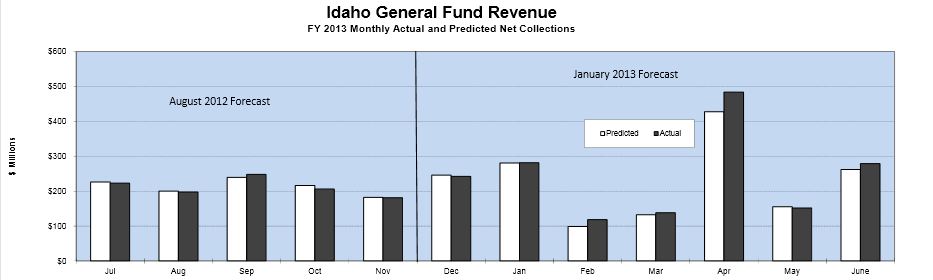
Idaho ended its 2013 fiscal year with 6.3 percent more revenue than in 2012. The Division of Financial Management, under the governor’s office, reports tax collections for fiscal year 2013 came in at 3.5 percent above projections. Idaho collected $2.75 billion during the budget year that ended June 30.
Division of Financial Management / State of Idaho
Click on the chart to enlarge.
The Division reports all general fund revenue categories posted higher-than-expected collections totals. Continue Reading →
Construction is underway and sold signs are posted at this south east Boise subdivision.
Idaho is one of five states that saw housing prices climb by more than 12 percent from the first quarter of 2012 to the first quarter of 2013.
In Idaho, home prices are up 15.1 percent over the first quarter of last year. But as the State Economic Monitor from the Tax Policy Institute points out, Idaho is among states that saw the sharpest decline in home prices during the recession.
John Starr is a Boise broker with Colliers International. He says in a normal market, 15 percent growth in housing prices would be cause for concern. He says 5 percent a year would signal a healthy market, but Idaho is still bouncing back from the boom and bust of the recession.
He says Idaho’s housing market was “massively overheated” during the peak years of 2006-2008. “We don’t want to go back [to those inflated home prices]”, says Starr. Continue Reading →
EPI says it costs $48,720 for a family of three to live in Boise.
It costs more to get by in rural Idaho than it does in Boise, the state’s population center. That’s according to the Economic Policy Institute’s family budget calculator.
A family of four living in Boise needs $56,491 per year. A family of four in rural Idaho needs $58,071.
Here’s a comparison of what it costs for a family of four, two parents and two children, to live in four different parts of Idaho. Continue Reading →
Nearly one-fifth of the total post-recession job growth falls into the temporary worker category. That’s according to an in-depth investigation by ProPublica.
Their article dubbed, “The Expendables”, takes a closer look at where temp jobs are on the rise, what’s causing the increase, and how temp work affects those jobholders.
Across America, temporary work has become a mainstay of the economy, leading to the proliferation of what researchers have begun to call “temp towns.” They are often dense Latino neighborhoods teeming with temp agencies. Or they are cities where it has become nearly impossible even for whites and African-Americans with vocational training to find factory and warehouse work without first being directed to a temp firm. – ProPublica
A change in income guidelines means more Idahoans could qualify for food assistance through the WIC program.
The supplemental nutrition program Women, Infants and Children, or WIC provides certain foods to pregnant or breastfeeding moms and families with children under age five. Starting July 1, a cost-of-living adjustment goes into effect.
The Idaho Department of Health and Welfare says WIC recipients get about $54 worth of food each month. The Department reports there are currently 43,200 Idahoans signed up for the program. That’s a decline in recent years.
Eligibility is income-based. The applicant’s gross income should be at or below 185 percent of poverty. Under the new income guidelines, a family of three can earn up to $36,131 a year to qualify for assistance. That’s up from $35,317 in 2012.
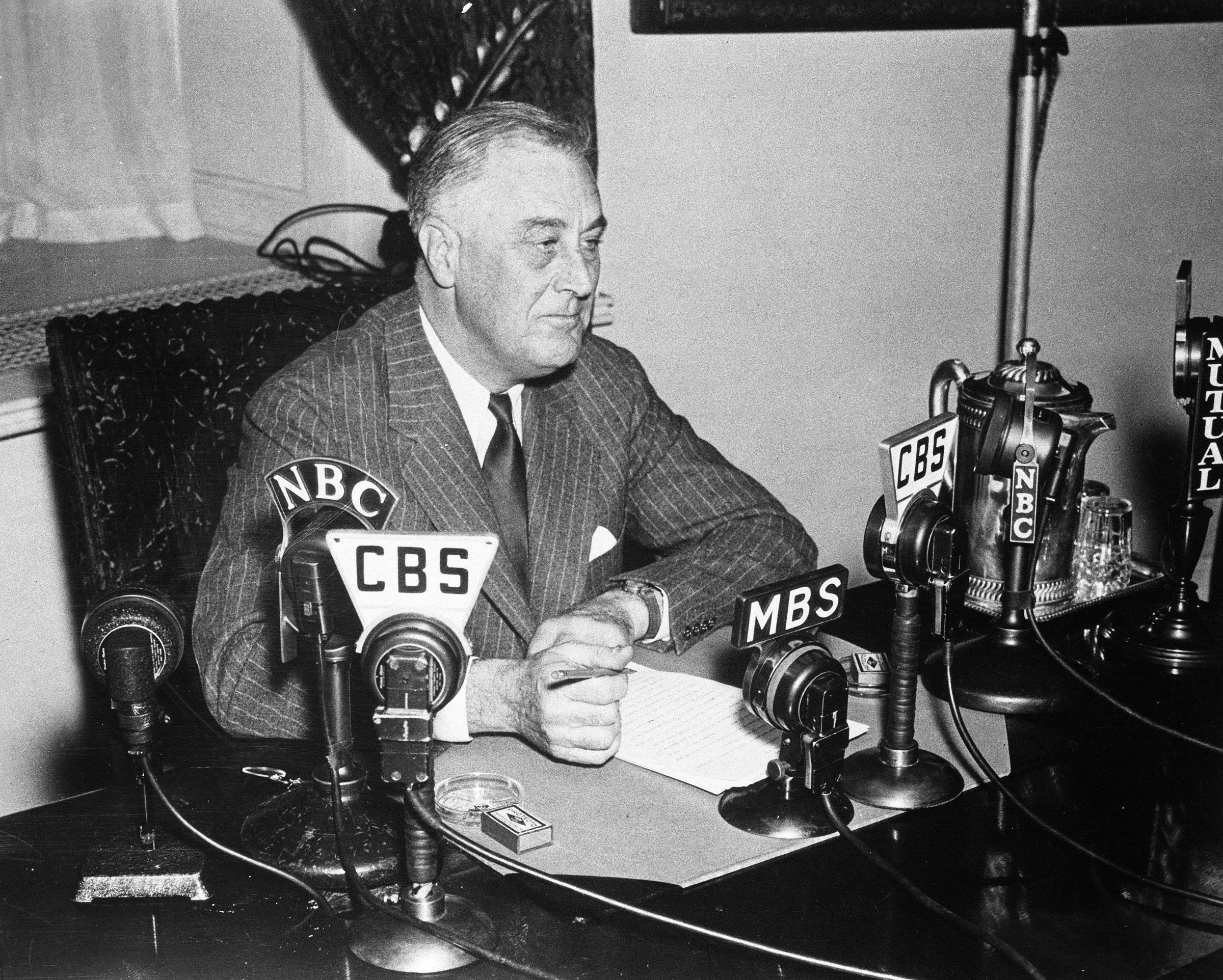
Pres. Franklin Roosevelt broadcasts from the White House in May 1939.
President Franklin D. Roosevelt created the U.S. minimum wage 75 years ago today. On June 25, 1938, Roosevelt signed the Fair Labor Standards Act.
Since the minimum wage was created, it’s been increased federally at least 25 times. At least 18 states have increased the wage above the federal minimum, but not in Idaho.
The Idaho Statesmanhas reported on an interesting piece of law tucked into the federal immigration reform package. It’s a provision that could allow more foreign-born doctors to practice in states with physician shortages.
For the first time since June 2011, Idaho’s unemployment rate ticked up one-tenth of a percentage point in May.
The Idaho Department of Labor says the workforce grew last month, contributing to an increase in the jobless rate from 6.1 percent in April to 6.2 percent in May.
“May’s labor force expansion ended a four-month decline of 4,000 to October 2011 levels even though Idaho’s economy was beginning to add jobs at a decent rate. Continue Reading →
About StateImpact
StateImpact seeks to inform and engage local communities with broadcast and online news focused on how state government decisions affect your lives. Learn More »