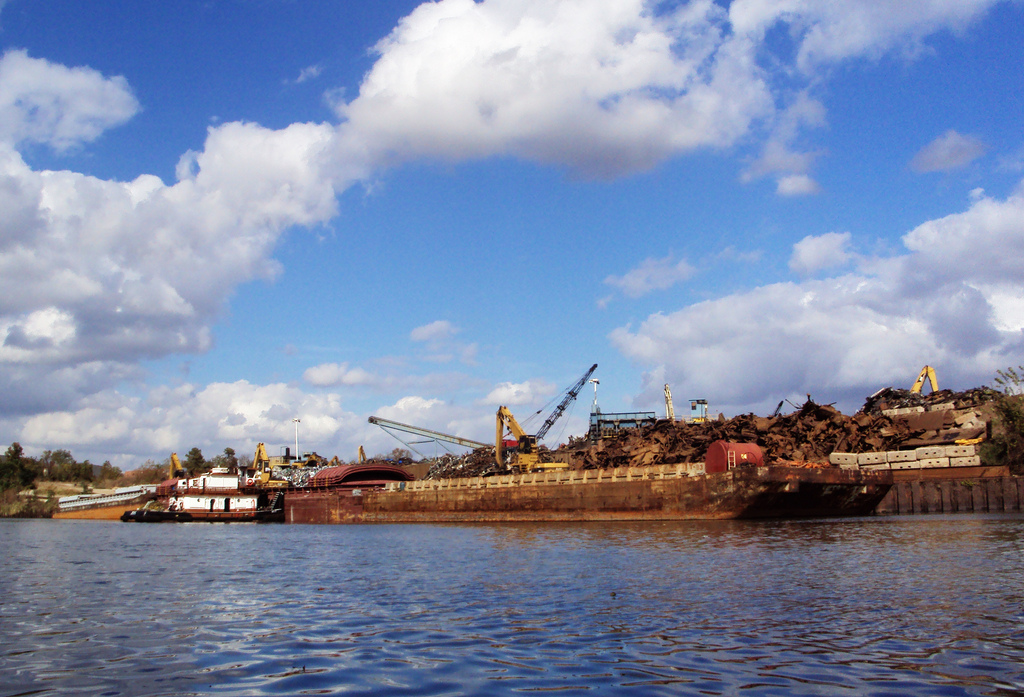
Scrap Metal Yard, between Hirsch and Lockwood, Buffalo Bayou, Houston, Texas
Houston area residents who live near some scrap metal recycling facilities are inhaling dangerous levels of a metal carcinogen called Chromium Six. It’s the same pollutant at the heart of the class action lawsuit portrayed in the film Erin Brockovich.
The Houston Chronicle first reported about the pollution in 2012, after the city received 189 complaints over five years about red and yellow smoke, explosions, fire, and difficulty breathing in the affected areas.
State Representative Gilbert Peña, a Pasadena Republican, introduced a bill, HB 3760, that would give regulators at the Texas Commission on Environmental Quality (TCEQ) more oversight over metal recyclers. At a committee hearing on the bill Tuesday, Peña said the solutions required by the bill would be simple. Continue Reading →
Charlie Williams is a veteran of the drilling business and now heads an industry safety group.
A little before 10 o’clock on the night of April 20th, 2010 multiple explosions blew apart the Deepwater Horizon drilling rig. Eleven crew members died, 17 more were injured while nearly 100 others narrowly escaped. In the five years since, the drilling industry says it has dramatically changed how it does business to make it safer.
Charlie Williams, who spent 40 years at Shell where he was Chief Scientist of Well Engineering, is the man the industry has put in charge of what it calls the Center for Offshore Safety, created after the tragedy and based in Houston.
“I think we are better and we’re going to get continuously better. And the thing people have to realize is you never have zero risk. It can never be zero,” Williams told News 88.7.
One week remains for the public to comment on an Environmental Protection Agency proposal to reduce smog in one of Texas most beloved national parks. The EPA’s plan to limit so-called ‘regional haze’ is one of a slew of new air quality rules that have critics accusing the EPA of waging a ‘war on coal.’ But the reality of environmental policy-making, and the years of lawsuits that it often entails, is more complicated than the rhetoric.
To see how, look no farther than the hazy skies over Far West Texas.
“Big Bend National Park and Big Bend State Park. They are beautiful,” says Mary Ann Melton of the region. She’s a photographer who’s been visiting there since the 1970s.
“You can see 100 miles on a clear day. You’re looking over the valley, you’re about 1800 feet high off the floor of the river, and you can see far into Mexico and mountain ranges far into Mexico.”
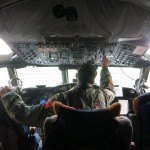
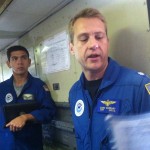
A NOAA pilot prepares for a mission over the Eagle Ford shale in South Texas.
NOAA pilots run through safety protocol before the flight.
The NOAA plane that’s the team is using is the “Miss Piggy.”
The planes has been stripped down and turned into a flying alb.
Tubes sticking out from the plane
A team of scientists from the National Oceanic and Atmospheric Administration – NOAA – has been circling over Texas, gathering data.
The flights are part of a project to find out exactly how emissions from the state’s sprawling oil and gas fields pollute the air we breathe.
When he offered me a seat on the plane, Dr. Joost de Gouw, a scientist with NOAA’s earth systems research lab, gave me a warning: There are risks that come with this kind of mission.
“You know…some people can get airsick, and it’s hot and it’s noisy and it’s a seven- to eight-hour flight, so there are tough days,” de Gouw said.
Leading the study, de Gouw spends his time measuring air pollution from America’s biggest shale fields — the places where fracking created a boom in oil and gas extraction.
The project tracks things like the excessive production of ozone, which has adverse affects on human health, and methane, a greenhouse gas far more potent than even carbon dioxide.
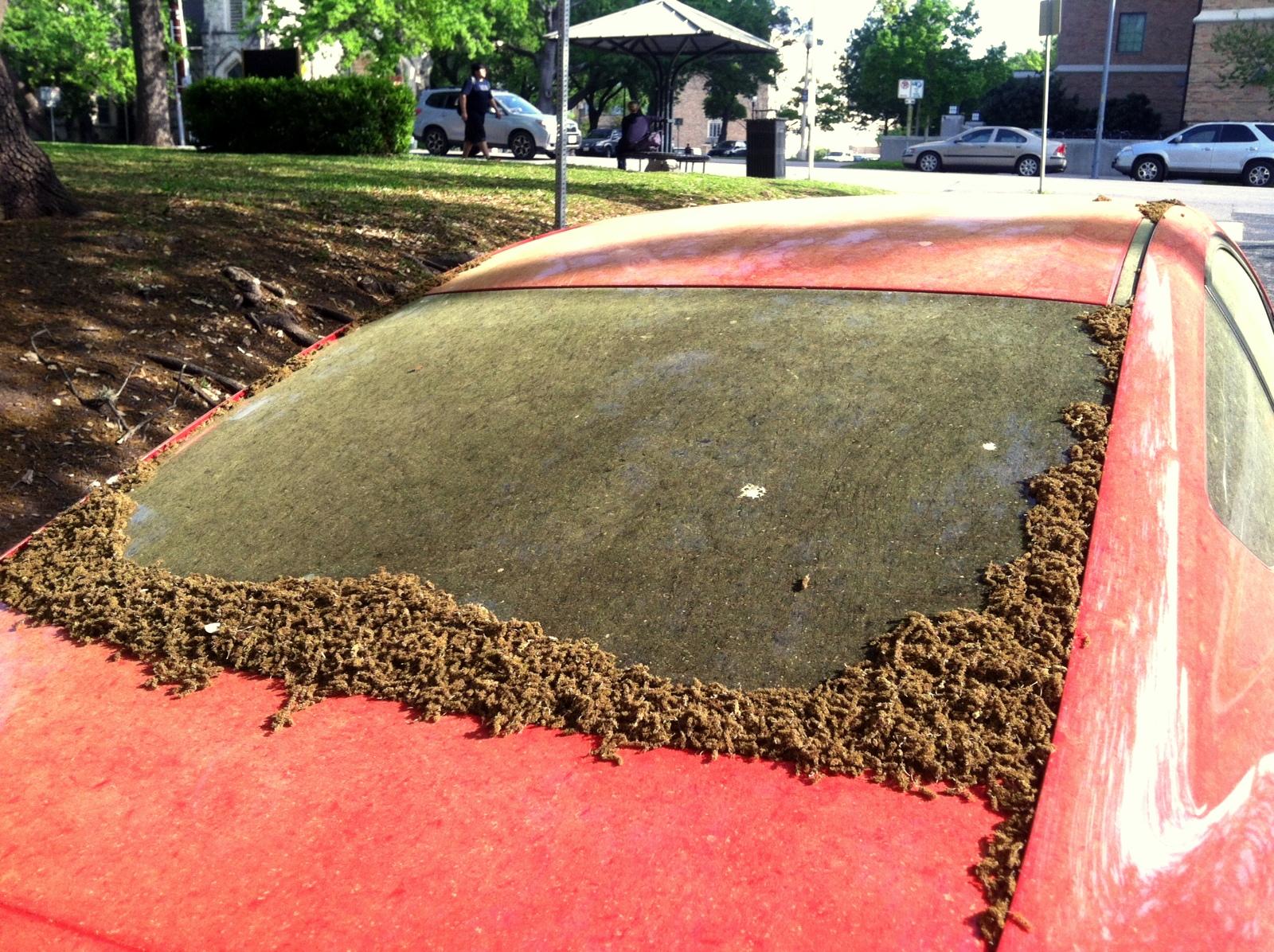
Does your car look like this? Many do during springtime in Texas.
Every spring clouds of green pollen descend on Austin, bringing misery to allergy-suffering public radio reporters like me and frustrating drivers like DeAunderia Bowens.
“You know I just got my car washed and literally got up the next morning and my car was covered with this green stuff!” she said on her way to work. “If I had a green car it would be alright, but clearly not working on a grey vehicle.”
This time of year the stuff is oak pollen, but why does its get everywhere? The answer might make you look at trees a little differently.
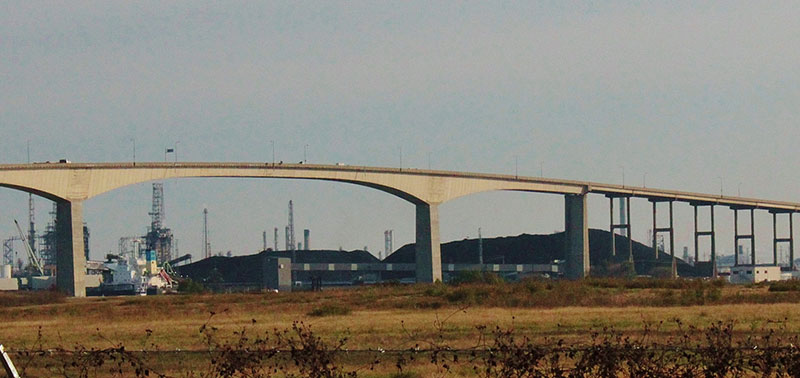
Mountains of petroleum coke near the Beltway 8 bridge at the Houston Ship Channel.
State lawmakers are proposing legislation to deal with something we reported on this past December: giant piles of petroleum coke or “pet coke.” It’s a form of coal piling up along the Houston Ship Channel, and it’s leading to complaints from some nearby residents.
We recently reported how black mountains of petroleum coke could be seen along the Ship Channel; one pile looked to be more than half as high as the Beltway 8 bridge. The pile is just a mile from a neighborhood where we’d talked to Esmerelda Moreno who said with so many refineries and chemical plants nearby, they get used to mystery odors.
“Sometimes there’s like a smell, a weird smell,” Moreno said.
It was five years ago next month that a BP oil drilling rig exploded in the Gulf of Mexico, killing 11 workers. Millions of gallons of crude spilled into the water. Damage was done to aquatic life.
But is the spilled oil now to blame for the deaths of hundreds of dolphins?
“The magnitude and the duration of the deaths is utterly unprecedented in the Gulf of Mexico,” said Ryan Fikes, a scientist with the National Wildlife Federation. In a conference call, Fikes talked with reporters along with the group’s David Muth. They released a report titled “Five Years & Counting” about the effects of the spill on wildlife.
“There is compelling evidence that this mortality event that has been going on since the spill is linked to the spill,” said Muth, head of the group’s Gulf Restoration Program.
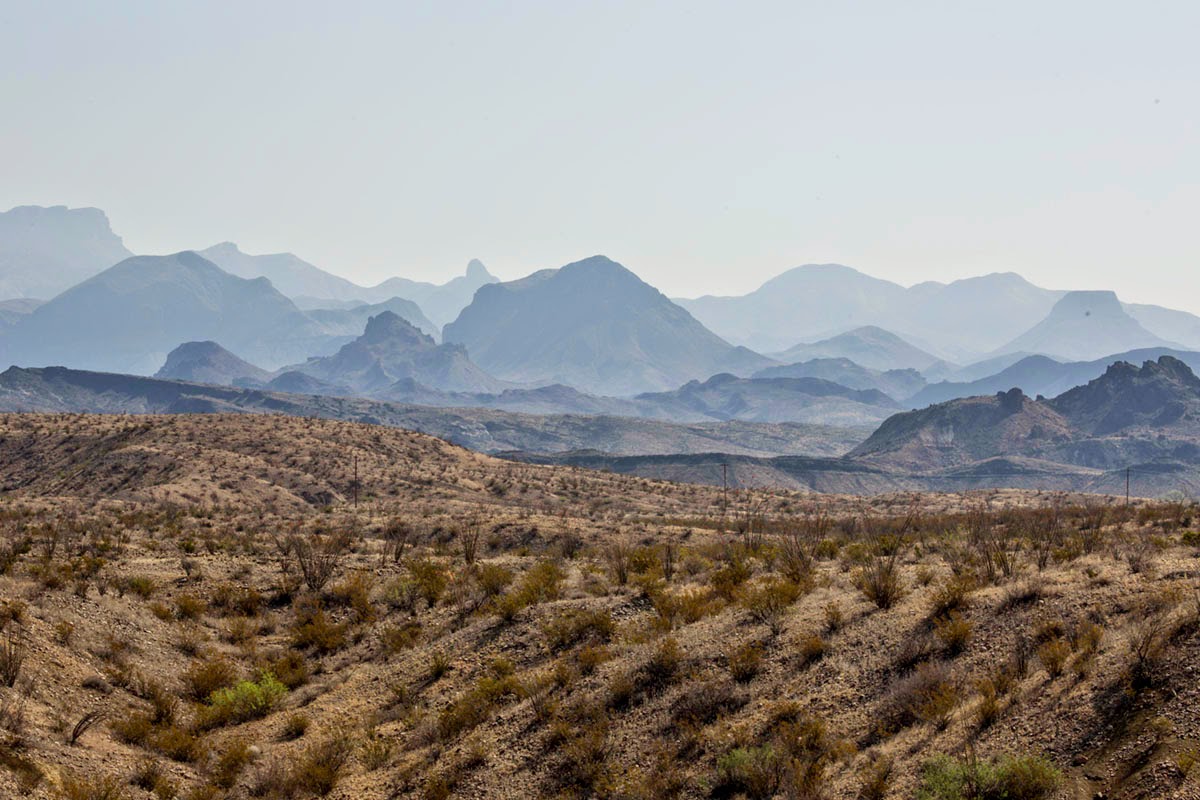
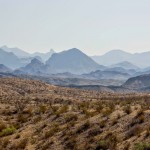
Haze is visible in the distance at Big Bend National Park.
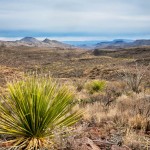
The desert of Far West Texas.
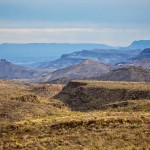
The views are striking in Big Bend Ranch State Park and Big Bend National Park.
The landscape cane be barren, but beautiful.
Everyone’s heard of the War on Drugs. There’s also, of course, the War on Terror. And as presidential election season heats up – we can expect to hear more about another war. For years some politicians have accused President Obama and the Environmental Protection Agency of waging a “war on coal.”
For StateImpact Texas, KUT’s Mose Buchele reports on the legal push and pull over environmental regulation.
A weed grows out of the dry cracked bed of O.C. Fisher Lake in July. The drought has taken a severe toll on Texas' lakes and rivers.
Over the last several years, climate patterns from the Atlantic and Pacific Oceans have exacerbated the historic Texas drought. A reverse in those patterns could bring Texas abundant rains over the next couple decades, according to State Climatologist John Nielsen-Gammon.
But, Nielsen-Gammon says, long term trends give Texans no reason to break out the champagne. Global climate change means the next major drought could be even worse than this one.
The Texas climate is sensitive to weather cycles in the Atlantic and Pacific Oceans, and neither has favored precipitation in the state since 2005. “The Pacific Ocean has been unfavorable for rainfall since about 2000 or 2005. The Atlantic Ocean has been unfavorable since 1995,” Nielsen-Gammon said.
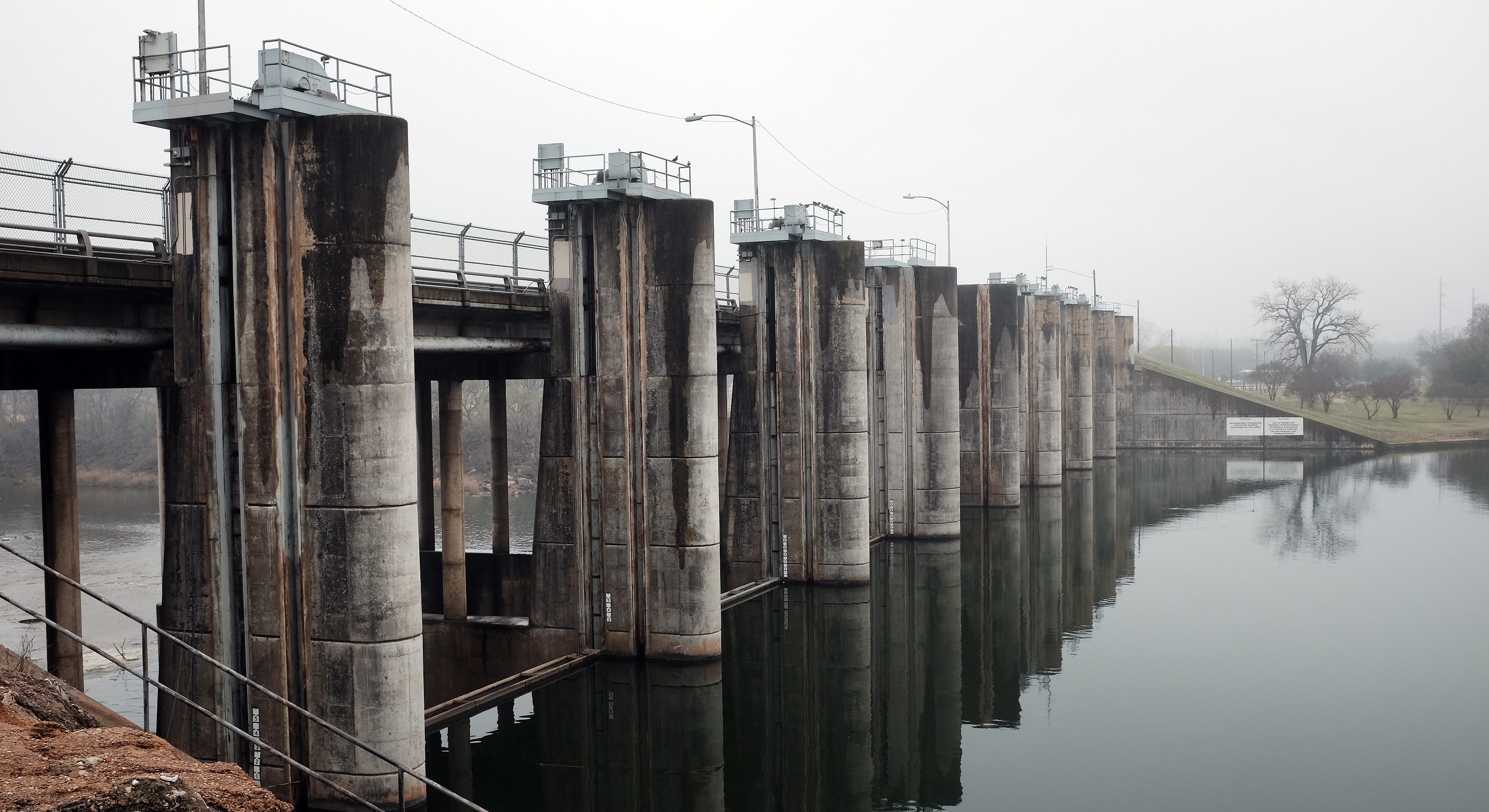
Officials have long been aware of the need for repairs at Longhorn Dam.
The poor condition of the dam that holds in the waters of Austin’s beloved Lady Bird Lake continues to vex city officials. Emails obtained in a public information request reveal challenges the city faced in performing maintenance on Longhorn Dam, which crosses the Colorado River beneath Pleasant Valley Road. Documents tell of water lost through the dam’s gates that could potentially stay in upstream reservoirs, and show city departments struggling to assign responsibility for the structure and plan a long-term solution.
Austin Energy, the city-owned electric utility, and the Lower Colorado River Authority (LCRA) have long known about the need for work on the dam. Austin Energy is the city department that operates the structure. The LCRA operates dams upstream from Austin and coordinates with Austin Energy when they release water downstream.
StateImpact seeks to inform and engage local communities with broadcast and online news focused on how state government decisions affect your lives. Learn More »