One week remains for the public to comment on an Environmental Protection Agency proposal to reduce smog in one of Texas most beloved national parks. The EPA’s plan to limit so-called ‘regional haze’ is one of a slew of new air quality rules that have critics accusing the EPA of waging a ‘war on coal.’ But the reality of environmental policy-making, and the years of lawsuits that it often entails, is more complicated than the rhetoric.
To see how, look no farther than the hazy skies over Far West Texas.
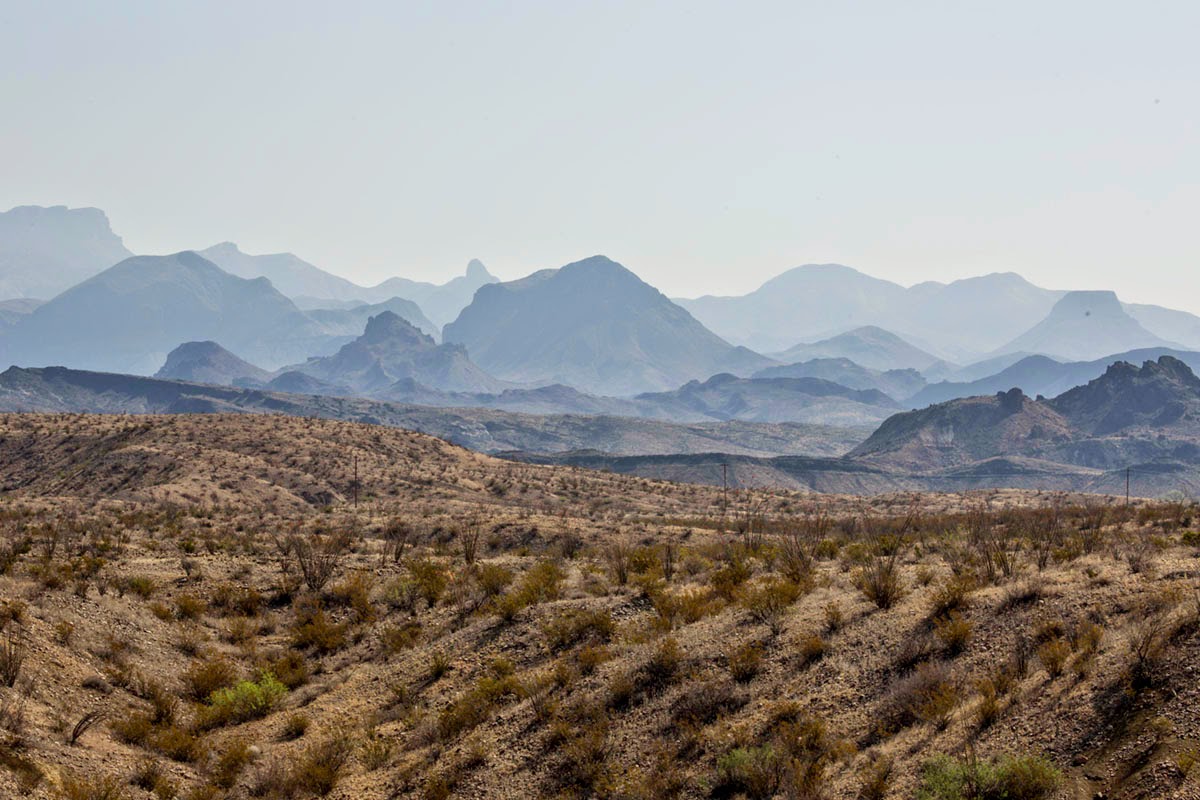
“Big Bend National Park and Big Bend State Park. They are beautiful,” says Mary Ann Melton of the region. She’s a photographer who’s been visiting there since the 1970s.
“You can see 100 miles on a clear day. You’re looking over the valley, you’re about 1800 feet high off the floor of the river, and you can see far into Mexico and mountain ranges far into Mexico.”
A NOAA pilot prepares for a mission over the Eagle Ford shale in South Texas.
NOAA pilots run through safety protocol before the flight.
The NOAA plane that’s the team is using is the “Miss Piggy.”
The planes has been stripped down and turned into a flying alb.
Tubes sticking out from the plane
A team of scientists from the National Oceanic and Atmospheric Administration – NOAA – has been circling over Texas, gathering data.
The flights are part of a project to find out exactly how emissions from the state’s sprawling oil and gas fields pollute the air we breathe.
When he offered me a seat on the plane, Dr. Joost de Gouw, a scientist with NOAA’s earth systems research lab, gave me a warning: There are risks that come with this kind of mission.
“You know…some people can get airsick, and it’s hot and it’s noisy and it’s a seven- to eight-hour flight, so there are tough days,” de Gouw said.
Leading the study, de Gouw spends his time measuring air pollution from America’s biggest shale fields — the places where fracking created a boom in oil and gas extraction.
The project tracks things like the excessive production of ozone, which has adverse affects on human health, and methane, a greenhouse gas far more potent than even carbon dioxide.
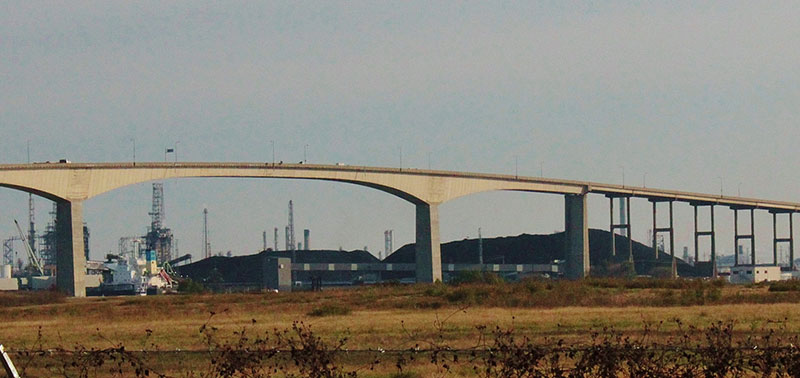
Mountains of petroleum coke near the Beltway 8 bridge at the Houston Ship Channel.
State lawmakers are proposing legislation to deal with something we reported on this past December: giant piles of petroleum coke or “pet coke.” It’s a form of coal piling up along the Houston Ship Channel, and it’s leading to complaints from some nearby residents.
We recently reported how black mountains of petroleum coke could be seen along the Ship Channel; one pile looked to be more than half as high as the Beltway 8 bridge. The pile is just a mile from a neighborhood where we’d talked to Esmerelda Moreno who said with so many refineries and chemical plants nearby, they get used to mystery odors.
“Sometimes there’s like a smell, a weird smell,” Moreno said.
It was five years ago next month that a BP oil drilling rig exploded in the Gulf of Mexico, killing 11 workers. Millions of gallons of crude spilled into the water. Damage was done to aquatic life.
But is the spilled oil now to blame for the deaths of hundreds of dolphins?
“The magnitude and the duration of the deaths is utterly unprecedented in the Gulf of Mexico,” said Ryan Fikes, a scientist with the National Wildlife Federation. In a conference call, Fikes talked with reporters along with the group’s David Muth. They released a report titled “Five Years & Counting” about the effects of the spill on wildlife.
“There is compelling evidence that this mortality event that has been going on since the spill is linked to the spill,” said Muth, head of the group’s Gulf Restoration Program.
Philip Dellinger is head of the EPA’s Underground Injection Control Section for Region 6 in Dallas.
The earthquakes that have shaken Dallas and Irving, Texas the last several months have people looking into whether oil and gas activity in the area plays a role. Some of those people work at the Environmental Protection Agency. But EPA researchers say they’re not getting the data they’ve requested from Texas state oil and gas regulators to investigate the possible link.
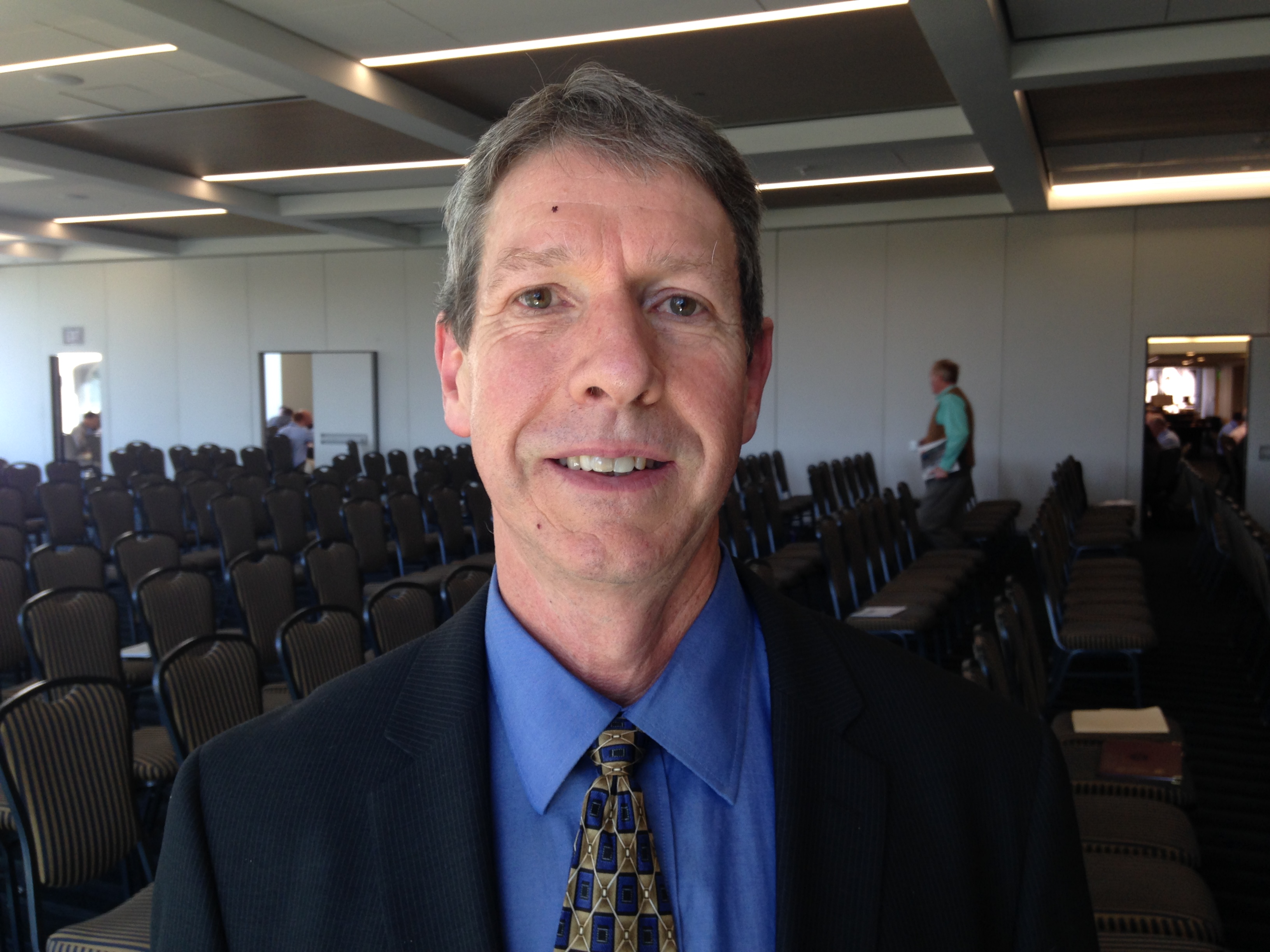
Philip Dellinger is head of the EPA’s Underground Injection Control Section in Dallas. At a conference of the Groundwater Protection Council Tuesday, he showed early results from a study his team conducted on earthquakes around Irving.
The group looked at the use of wastewater disposal wells closest to Irving earthquakes. Dellinger does not necessarily believe the recent quakes are related to disposal wells, where wastewater from oil and gas drilling is pumped underground. But these types of wells have caused other earthquakes, so his team wanted to see what wells were close to the Irving events.
His choice for where to look was simple. There are only two wells near the recent quakes, and one had been plugged up.
James Tour leads research at Rice University to develop smaller, more powerful batteries.
One of the nation’s leading researchers who’s trying to make batteries better is James Tour and his colleagues at Rice University.
“Everybody’s investing billions. If you say millions they scoff at you,” Tour told News 88.7.
Tour says there are three categories of things that need better batteries: portable electronic devices, electric vehicles, and a use we wanted to learn more about: batteries to store huge amounts of electricity to power homes and businesses.
“We are not there yet to be able to store large amounts of electricity. So in other words you have huge banks where you can store electricity at night while people are sleeping.”
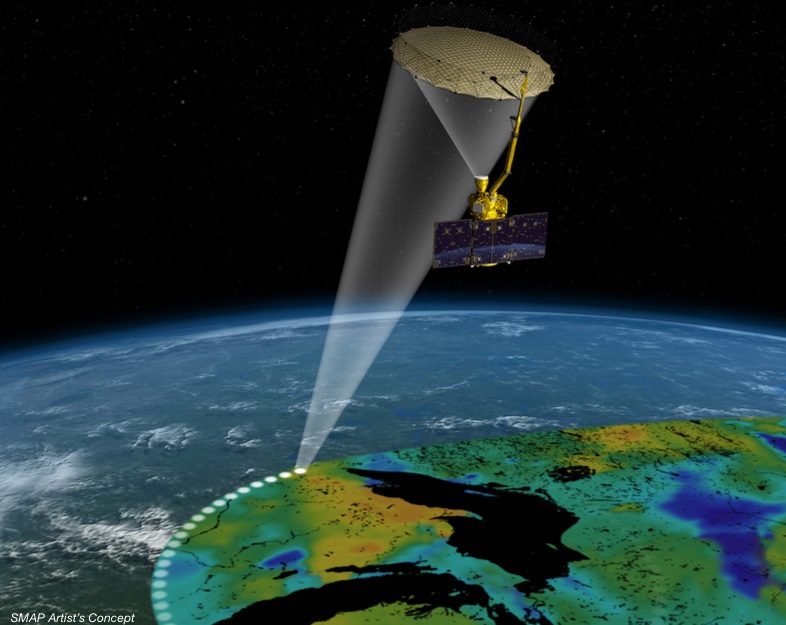
The SMAP satellite will monitor drought levels around the globe.
A satellite launched by NASA over the weekend could help people around the world tackle the challenges of drought. Researchers at the University of Texas will play a part in that mission that could also help forecast flooding and allow officials to better manage reservoir water supplies.
The SMAP (Soil Moisture Active Passive) satellite that launched on Saturday will carry two devices to track drought. One to measure heat from the earth’s surface and the other a radar sensor to help pinpoint the location of the land surveyed. Researchers say that by using the two different technologies, they will get a clearer understanding of where the soil is parched and where it is well-saturated around the globe.
That information will be complimented with data gathered by soil moisture monitors, some of them installed around the Texas Hill Country by UT’s Bureau of Economic Geology. These on-the-ground sensors will help validate and improve the satellite’s readings.
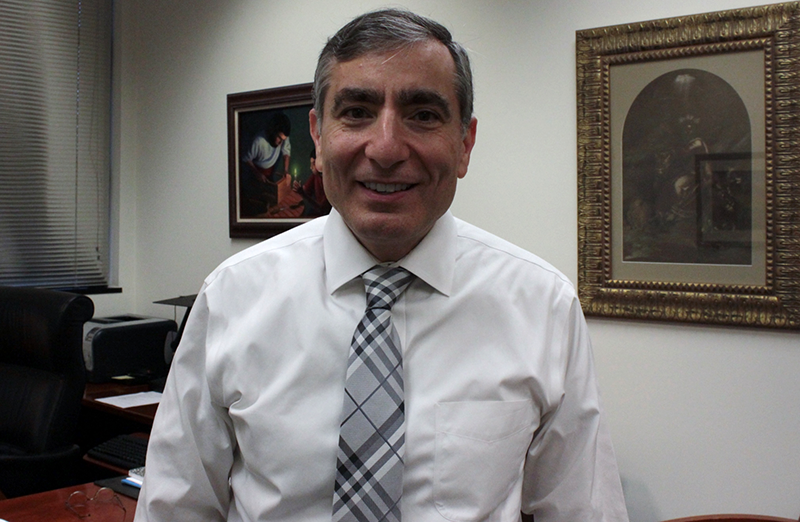
Ehud Ronn directs the Center for Energy Finance Education and Research at UT Austin.
The financial markets may be betting that the Keystone XL pipeline is a done deal.
The U.S. House and Senate have now both passed bills to force approval of the controversial pipeline. The southern leg of the project already delivers oil from Cushing, Oklahoma to the Texas Gulf Coast. But approval of the full build-out would link existing pipe to the Canadian border, allowing more crude from the tar sands of Canada to reach Texas refineries via Cushing.
President Obama has vowed to veto the bills, but one expert says the fate of the project may already be written in futures contracts for crude oil.
Johnny Herrera is a dispatcher for Tex Con Oil. A company that distributes fuel around the Austin area.
By now, the initial surprise over low gas prices has worn off. But people looking for the very best deals might have noticed a trend: small, unbranded gas stations are often the first to cut prices. Many of them continue to stay competitive even when larger brand-name stations cut their prices as well.
To understand why stations offer different prices for essentially the same product, it helps to take a trip from the pump back to the pipeline, to see exactly how gas is bought, sold and transported.
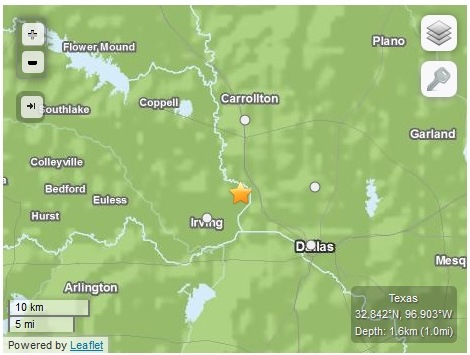
This map from the USGS shows the approximate location of a recent quake near Irving, Texas.
Updated 1/6/14 with more comment from Railroad Commission and information on Tuesday January 6th earthquake.
A team of seismologists headed to the North Texas town of Irving Monday. Like some other Texas towns, Irving has experienced scores of small earthquakes lately, 20 since last September, including a magnitude 3.5 quake that struck on January 6th. And the city is hoping to figure out what’s behind the shaking.
The upsurge in quakes started in Texas around the time the oil and gas boom took hold several years ago. Residents in many parts of the state blame the them on wastewater disposal wells, where fluid byproducts of oil and gas drilling are pumped deep into the ground. Scientists have shown how injecting fluid into the ground can cause earthquakes.
After a spate of quakes in the North Texas town of Azle, the Railroad Commission of Texas, the state’s oil and gas regulator, hired a seismologist, Dr. David Craig Pearson, and passed new regulations for disposal wells. The Commission says it is not investigating the Irving quakes.
“The Railroad Commission is not investigating seismic activity around Irving,” Ramona Nye, a spokesperson for the Commission wrote in an email to StateImpact Texas. “Specifically, there are no disposal wells in Dallas County, and there is only one natural gas well in the vicinity, and it is an inactive well.”
StateImpact seeks to inform and engage local communities with broadcast and online news focused on how state government decisions affect your lives. Learn More »