Background

Kim Paynter / WHYY/Newsworks.org
Workers prepare to lay a new Marcellus Shale gas pipeline in Susquehanna County, Pa.
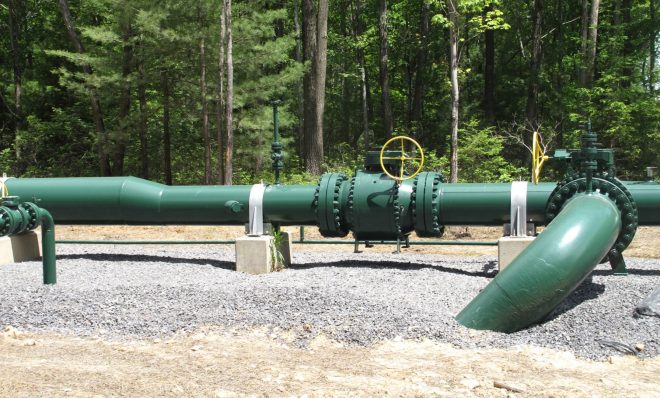
Thousands of miles of new pipelines in Pennsylvania will have to be built to transport Marcellus Shale gas. The new pipeline construction will benefit those in need of jobs, and the companies that do the building. But some residents and local politicians worry about the environmental impacts, and say the current regulatory structure needs updating.
Nobody knows how many miles of pipeline already exists in the state. That’s because Pennsylvania does not have one regulatory authority that oversees intrastate gas pipelines. In fact, out of 31 states that produce natural gas, Alaska is the only other state, besides Pennsylvania, that doesn’t.
Pennsylvania’s Public Utility Commission does inspect about 46,000 miles of pipelines that are categorized as public utilities. That means those pipelines deliver gas directly to a consumer. The PUC has eight inspectors who enforce both state and federal regulations.
The federal government, through the Department of Transportation, regulates the interstate pipeline system. Those are the pipelines that travel across state boundaries. One example would be the Transcontinental Gas Pipeline, or Transco, which travels from south Texas to the major east coast markets of New Jersey and New York City.
Until recently, thousands of miles of what are called “gathering lines” did not fall under the jurisdiction of the Public Utilities Commission. And the Department of Transportation’s Pipeline and Hazardous Materials Safety Administration did not have the resources to inspect them. PHMSA asked Pennsylvania to broaden the PUC’s jurisdiction to include these lines. That was also one of the recommendations made by the Marcellus Shale Commission.
In December, 2011, Gov. Corbett signed the Gas and Hazardous Liquids Pipeline Act, also known as Act 127, which grants the Public Utilities Commission jurisdiction over most of the state’s 886 miles of intrastate pipelines. Rural pipelines, known as Class 1 are exempt from the PUC’s safety inspections. The PUC has hired five new inspectors and two supervisors. The Commission will also develop a registry of pipelines and their operators in the state.
To build a pipeline, rights of way need to be secured from private and public landowners. The companies pay for those rights of way. Then permits are needed. But a confusing network of regulatory bodies handles the permitting process. The Federal Energy Regulatory Commission has to approve any interstate pipeline. The Public Utilities Commission has to approve any that serve consumers directly. But few of the new gas lines connected to Marcellus Shale drilling fall neatly into either of those categories.
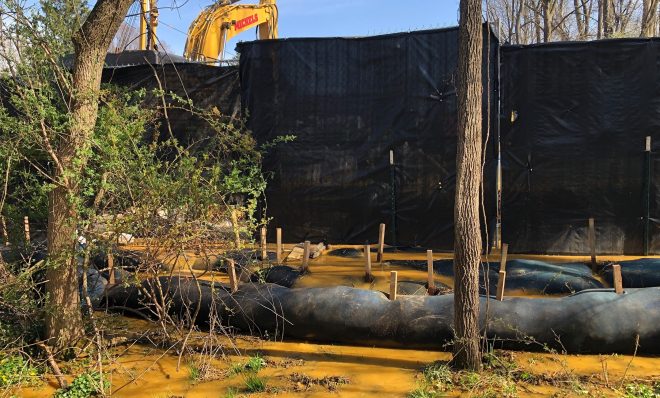
If the pipeline runs through wetlands or cross waterways, permits are needed from the Pennsylvania Department of Environmental Protection. Also, the DEP has oversight if the pipelines cross through areas with endangered or rare species. Sometimes county, or local, level regulations come into play, but not always. Pennsylvania’s new drilling law, ACT 13, restricted local governments from implementing zoning rules for natural gas development, including pipelines. But that provision is still tied up in the courts.