Audio

Oklahoma’s Response to Man-made Quakes is More Passive Than Other States

Phil Masturzo / Akron Beacon Journal/MCT/Landov

Roger Root stands next to an wastewater holding tank near an injection well on his Newton, Ohio farm. Ohio banned wastewater injection wells in risky areas after a series of earthquakes in 2010 and 2011.

The 5.7-magnitude earthquake that destroyed 14 homes and injured two Oklahomans in November 2011 was the nation’s largest quake linked to injecting wastewater from oil and gas production deep underground. But neither that quake near Prague, nor Oklahoma’s recent spike in seismic activity, has provoked lawmakers or regulators here to write rules to protect public safety.

Continue Reading

Why Wyoming Coal Still Powers Natural Gas-Rich Oklahoma

Joe Wertz / StateImpact Oklahoma

The McClain natural gas plant near Newcastle, Okla. is owned by Oklahoma Gas and Electric and the Oklahoma Municipal Power Authority.

Oklahoma has more natural gas reserves than all but three other states. And it now accounts for about 40 percent of the state’s power generation.

Hydroelectric and renewable sources— mainly wind — provide some too. But when you flip a light switch, chances are that electricity came from burning coal we get from Wyoming.

But new standards are forcing coal plants across the country to either shut down, or install scrubbers to limit the release of sulfur dioxide, and it’s changing Oklahoma’s energy mix.

Continue Reading

Is Coal Mining Making A Comeback In Eastern Oklahoma?

Logan Layden / StateImpact Oklahoma

A pile of coal sits along the railroad tracks just east of Red Oak, Okla.

Coal mining plays a key role in the history of eastern Oklahoma. Without immigrant miners flooding into the area in the late 19th and early 20th centuries, some towns might not even exist.

When Oklahoma coal mining began to die off, so did many of the towns founded around it.

Oklahoma’s coal is too high in sulfur to be of much use in the United States, and burning it in large quantities is against federal clean air regulations.

Not all countries have those kinds of restrictions, however, and growing economies in Asia could drive the renewal of Oklahoma’s coal mining industry.

Inside the Arguments in Oklahoma’s Supreme Court Water Case

Joe Wertz / StateImpact Oklahoma

The OK-TX water dispute centers on the Kiamichi River in near Hugo in southeastern Oklahoma.

On Tuesday, the U.S. Supreme Court heard arguments in Tarrant v. Herrmann, an Oklahoma-Texas water fight with national implications.

The justices grappled with the 30-year-old Red River Compact, and whether a region of Texas can reach across state lines to access water in southeastern Oklahoma.

The two states have different interpretations of some language in the agreement. The compact gives Oklahoma and Texas “equal rights” to some of the water in southeastern Oklahoma. But “equal rights” means different things to each state.

Why Oklahoma’s Supreme Court Water Fight Could Have National Ripple Effects

Joe Wertz / StateImpact

State Sen. Jerry Ellis, D-Valiant, opposes the sale or transfer of Oklahoma water to Texas.

The final battle in the Oklahoma-Texas water war will be fought Tuesday in the U.S. Supreme Court.

Texas says the three decades-old Red River Compact entitles it to some of Oklahoma’s water resources. Oklahoma says it doesn’t have to let Texas tap its supply. The ripples of this regional fight could affect water policy across the entire nation.

Oklahoma’s Crime-Funded Court System

Logan Layden / StateImpact Oklahoma

Defense Attorney Chad Moody stands outside his downtown Oklahoma City office.

Oklahoma doesn’t like to raise taxes, and in 1992 voters passed a state question that required massive legislative majorities to do so.

But rising costs in the justice system still have to be paid for, somehow. Since then, the courts have turned to fees for funding more and more.

There’s a $50 fee for summary judgements, a $349 jury fee in civil cases, a $20 court reporter fee. If you get a DUI, there’s a $400 fee. In fact, the DUI fee is higher than the fee for a murder conviction, which is only about $100.

It’s the users of the court system, and more specifically the losers, who pay most of those fees, and many question the wisdom of that trend.


Tax Break for Big Corporations Could Mean Even Less Money for Oklahoma Schools

Logan Layden / StateImpact Oklahoma

Michelle Gentry stands outside her 3rd grade classroom at Madison Elementary School in Norman, Okla.

State Question 766 passed in November 2012, and eliminated the tax on intangible property:  business licenses, trade secrets, company logos, things with value beyond their physical traits.

Before the election, the state Tax Commission estimated 766 would mean revenue losses of around $30 million for Oklahoma public schools.

Five months later, a new estimate predicts the impact could be double that, and administrators are wondering what it means for their districts.

Common education took deep cuts during the state budget crisis that began in 2008, like most other agencies. But for schools, the cuts keep coming. The amount of money the state spends on each student has dropped more than 20 percent over the past five years.

What Happens When Oklahoma Water Systems Drown

Logan Layden / StateImpact Oklahoma

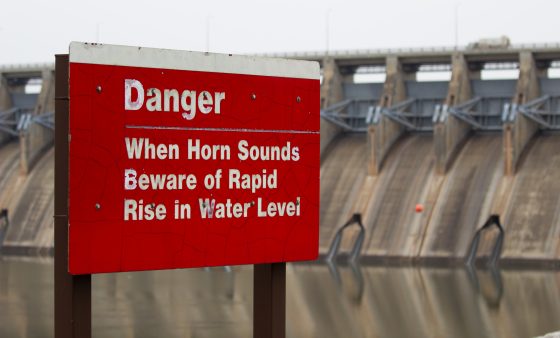
Osage County Rural Water District No. 9's water tower just outside Barnsdall, Okla.

Oklahoma faces an estimated $43 billion in much needed repairs and upgrades to aging water systems across the state.

“A lot of things were sort of overbuilt to meet long-term water needs,” says the Water Resources Board’s Executive Director J.D. Strong.

Ratepayers in small towns and rural water districts are hit the hardest when new pipelines and treatment plants have to be built.

There is help in the form of grants and low-interest loans, but sometimes even that isn’t enough and another, often final option comes into play: Consolidation, merging two or more water systems into one.

It’s meant keep rates in check for customers, but the idea usually isn’t greeted warmly. Even so, consolidation is expected to become more and more common.

First Bill Signing of 2013 Shows What Can Happen When Corporations Help Write Law

jimmywayne / flickr

The first bill to survive Oklahoma’s 2013 legislative session was signed last week by Gov. Mary Fallin.

But the signing of House Bill 1646 met little fanfare. Here’s why: It’s nothing new. When this bill goes into effect, Oklahoma state law will return to where it was just two years ago.

This story is about a bill. A measure that was ineffective, had unintended consequences, and had to be undone. A bill that a big Oklahoma energy company helped write — and helped fight.

Who Pays the Most for Water In Oklahoma?

Logan Layden / StateImpact Oklahoma

Every two years, the Oklahoma Municipal League surveys hundreds of its member cities and towns about their water rates.

StateImpact got an early look at the 2012 data, and found Fort Towson, just across the Red River in Choctaw County, has the highest residential water rate of any community that responded to the OML survey.

Fort Towsoners pay $66.00 per month for 5,000 gallons of water. Contrast that with the rural Ellis County town of Gage in northwest Oklahoma, where residents pay just $8.60 for the same amount.

When a town’s tax base is tiny, and the Department of Environmental Quality mandates expensive water infrastructure improvements, raising utility bills can be the only hope for staying solvent.


About StateImpact

StateImpact seeks to inform and engage local communities with broadcast and online news focused on how state government decisions affect your lives.
Learn More »

Education