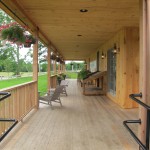
Heron Pond Farm sells produce and other goods at their farm stand in Kensington, N.H.
Cantelmo says having a freezer allows him to over produce during peak season, increasing consistency at his farm stand.
Pigs at Pheonix Hill Farm in Boscawen, where Ryan Ferdinand and Mike Hvizda live and work.
Mike Hvizda and Ryan Ferdinand are farmers and artists in Boscawen. Because farming is so costly, however, they are scaling back to focus on careers as realtors.
Heron Pond farm stand, Kensington, N.H.
Andre Cantelmo says selling value-added processed foods like pesto, made in an industrial kitchen, can help increase profits for produce all around.
With almost 60 farmers markets across the state, demand for local food is growing. But local farmers still struggle to make a profit growing local food. In fact, about three quarters of all farms in New Hampshire gross less than $10,000 from sales each year.
This is the first installment in our summer business series investigating how a changing market place is affecting New Hampshire farmers.
At the Concord Farmers’ Market on a Wednesday evening in July, an older woman peers over a table at some whimsical looking vegetables shaped like a curlicues. She asks a young farmer standing behind the table what to do with them. “You just put it wherever you’d use garlic, or chives,” the farmer explains. “They’re good.”
You know the drill – you get a pretty invitation in the mail with a link to Amazon.com or Bed Bath and Beyond. You sit down on the couch, point, click, type in your credit card digits and wave goodbye to your hard-earned money.
But if a couple wants their friends to shop locally, well – they’ve got to travel back in time.
When I arrived at Things Are Cooking, a kitchen appliance store in Concord, I asked owner Mike Beauregard to show me how his store handles wedding registries. He handed me a pen, a clipboard and a photocopied piece of paper.
As competition in the auto industry heats up, car makers are tightening their image and branding campaigns. But car dealers — who feel financially vulnerable despite soaring profits — say manufacturers are expecting them to pay too much of the price.
In New Hampshire, dealer organizations are behind a bill that would protect them from what they see as exploitation by manufacturers, which won near-unanimous support in the Senate and is now being considered by the House. Manufacturers argue that government shouldn’t interfere with their private business contracts.
But behind all the he-said she-said, there are changing forces in the automobile industry.
Scott Holloway has been selling cars for as long as he can remember. His father Paul Holloway bought a dealership in the 1960s, they’ve been expanding across the state ever since. While there have long been tensions between dealers and manufacturers, the Holloways say they have never seen anything like what’s happening now.
“This is the thing that really made my skin crawl almost,” says Scott Holloway, pointing to some light fixtures at his Buick and GMC dealership in Portsmouth. “We went to PSNH and did their green energy program, less than three years ago.” Holloway says he pulled out all the lights, and got energy saving lights put in. Then, a couple years later, Holloway says, General Motors told him he had to replace the energy efficient lights with GM’s standard issue lights. If Holloway didn’t comply, GM would increase the cost he pays on every car. Continue Reading →
Women cook their own meals at the Goffstown Women’s Prison,but unlike their male counterparts, they cannot receive culinary certification.
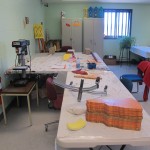
Knives in the Goffstown Prison kitchen are locked down with a steel cable.
The Goffstown Women’s Prison was originally built as a Hillsboro county jail.
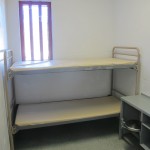
Some women sleep in very small cells. Others share a room with 21 other inmates.
Nearly 24 years after the courts first ordered a new facility for female inmates, the New Hampshire House has approved a capital budget with $38 million set aside for a 224-bed women’s prison in Concord.
Now, a class action lawsuit is driving lawmakers to act.
85 percent of the women here at the Goffstown prison face mental health problems. Another 85 percent face substance abuse issues, and most suffer from both. The most common sentence is theft, followed by forgery, and then murder.
It can take 5 or 6 tries to get any given door to open at the Goffstown womens prison. And that’s after the guard in the control room has unlocked it. But, if you’re persistent, you can get where you’re trying to go.
Almost ten years ago, Holly Wheatley stole $24,000 by forging checks issued by the state. She was a state employee.
Over the hum of vending machines in the prison visitors room, Wheatley says she’s 4 years into her 6 year minimum sentence. Continue Reading →
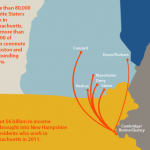
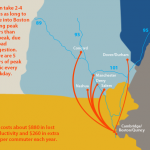
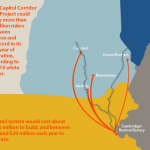
Most common commutes to Boston from New Hampshire towns. Data from Census Bureau’s American Community Survey.
Data from Census Bureau’s American Community Survey.
Rail map based on NHDOT map. Stats from a white paper prepared by TranSystems in 2010.
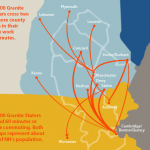
The most popular commutes in NH that cross two or more county lines. Data from Census Bureau’s American Community Survey.
Correction: A calculation error in the text on the fourth slide has been corrected.
At 6:15 every morning, Christine Suchecki leaves her house in Windham, NH, and spends the next hour and twenty minutes driving almost 40 miles to her job as a nurse in Boston. Her husband drives in a similar direction, to Waltham, MA. “We just look at it as either you’re going to pay financially in your proximity to the city, or with time in your commute,” Suchecki says.
Suchecki and her husband are among the more than 80,000 Granite Staters who commute down to Massachusetts each day for work. In fact, only people traveling between Maryland and the District of Columbia commute across state lines more than Granite Staters.
Together, New Hampshire residents earned more than $6 billion in income in Massachusetts in 2011. They pay around $250 million in taxes to the state of Massachusetts each year. Continue Reading →
While beer sales have been down, nationally, since the great recession, the craft beer industry has been going strong – growing 15 percent in 2011, according to the American Brewers’ Association.
The newest kid on the block in craft beer is the “nanobrewery” – a very small scale commercial brewery that produces fewer than 2,000 barrels a year. To put that in context, the Brewers’ Association defines a microbrewery as producing fewer than 15,000 barrels a year, and a large brewery as exceeding 6 million*. Hess Brewing in California keeps a list of nanobreweries and estimates there are about 93 in operation nationally – although that list is probably not comprehensive.
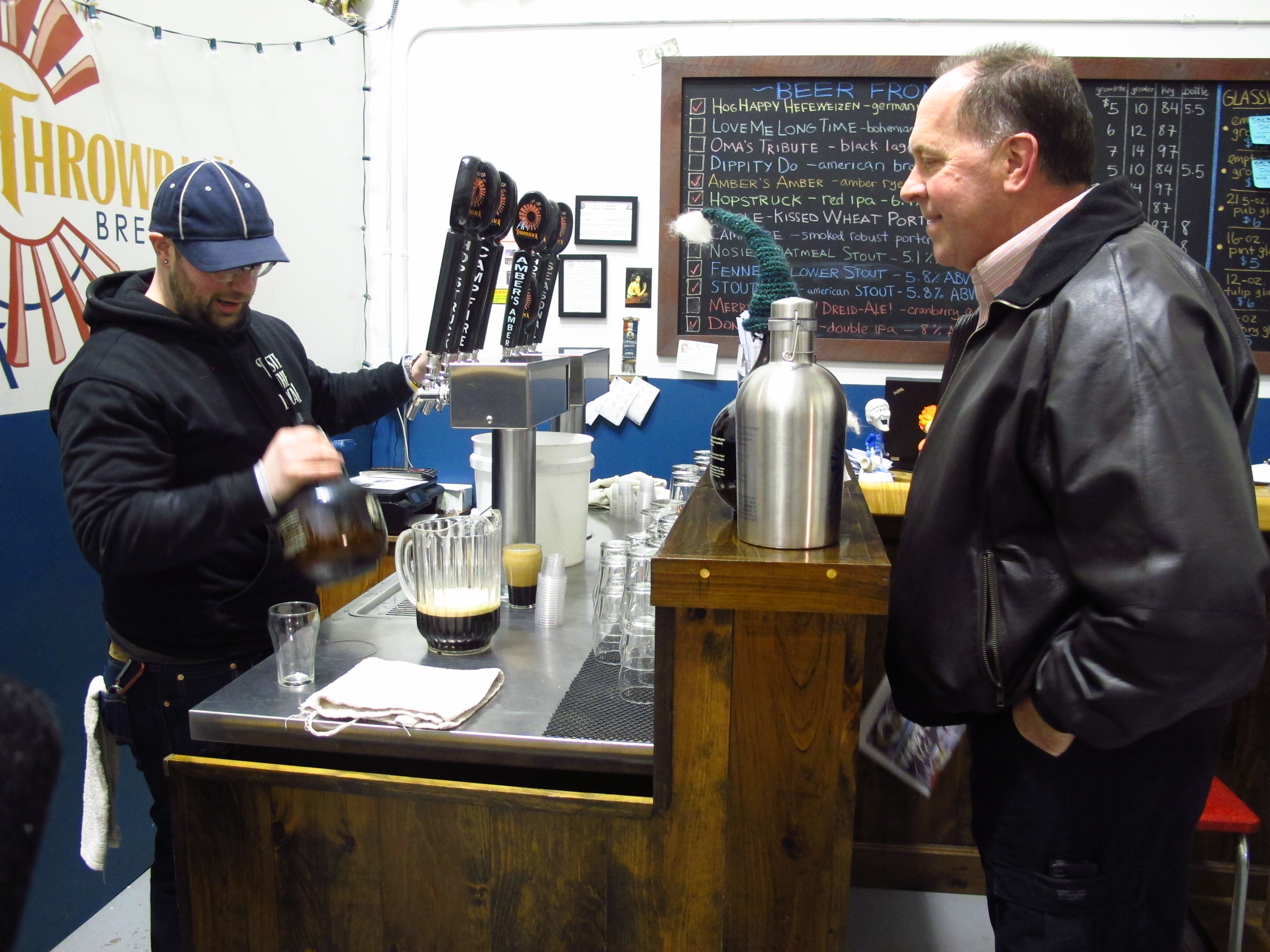
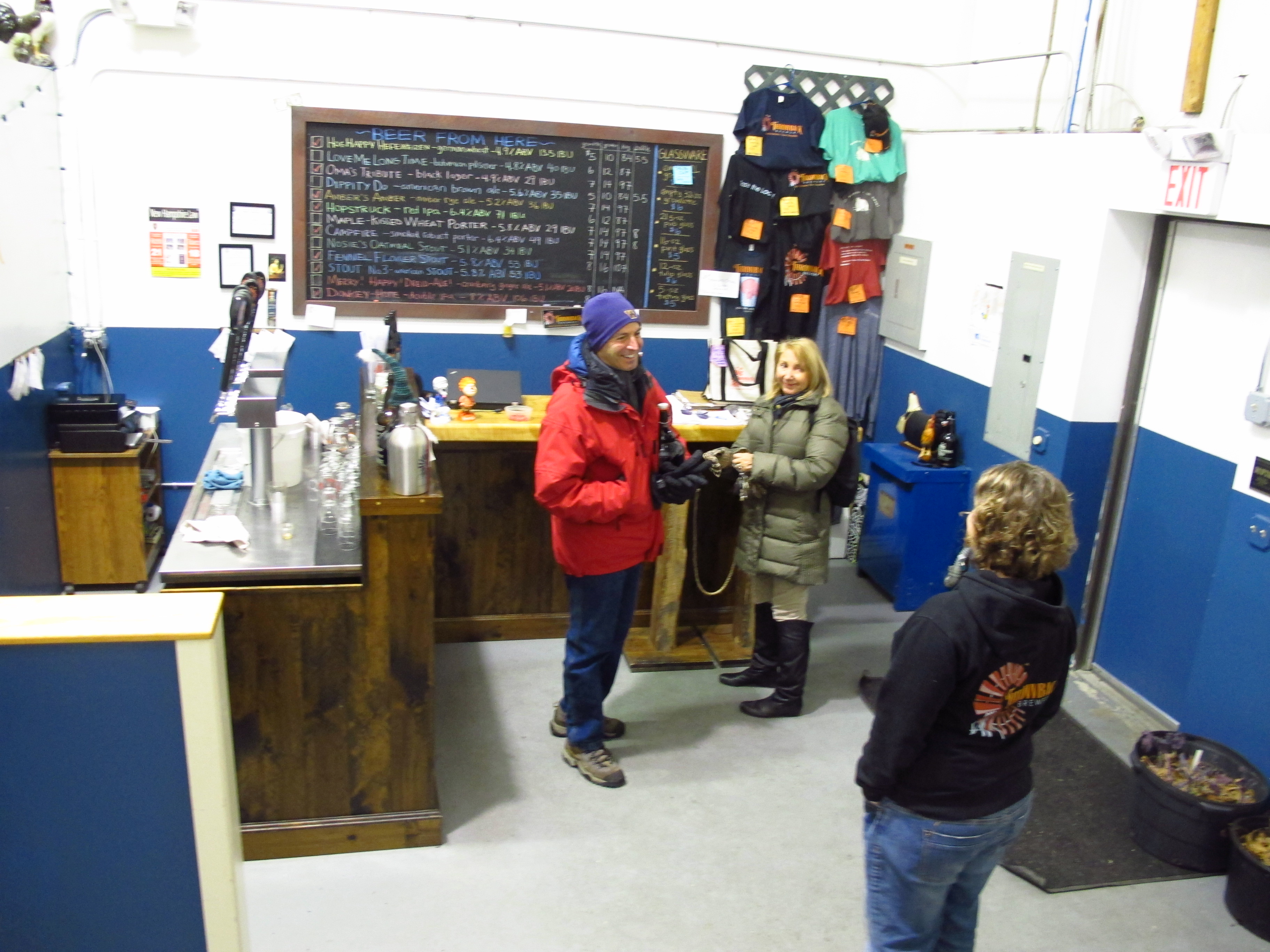
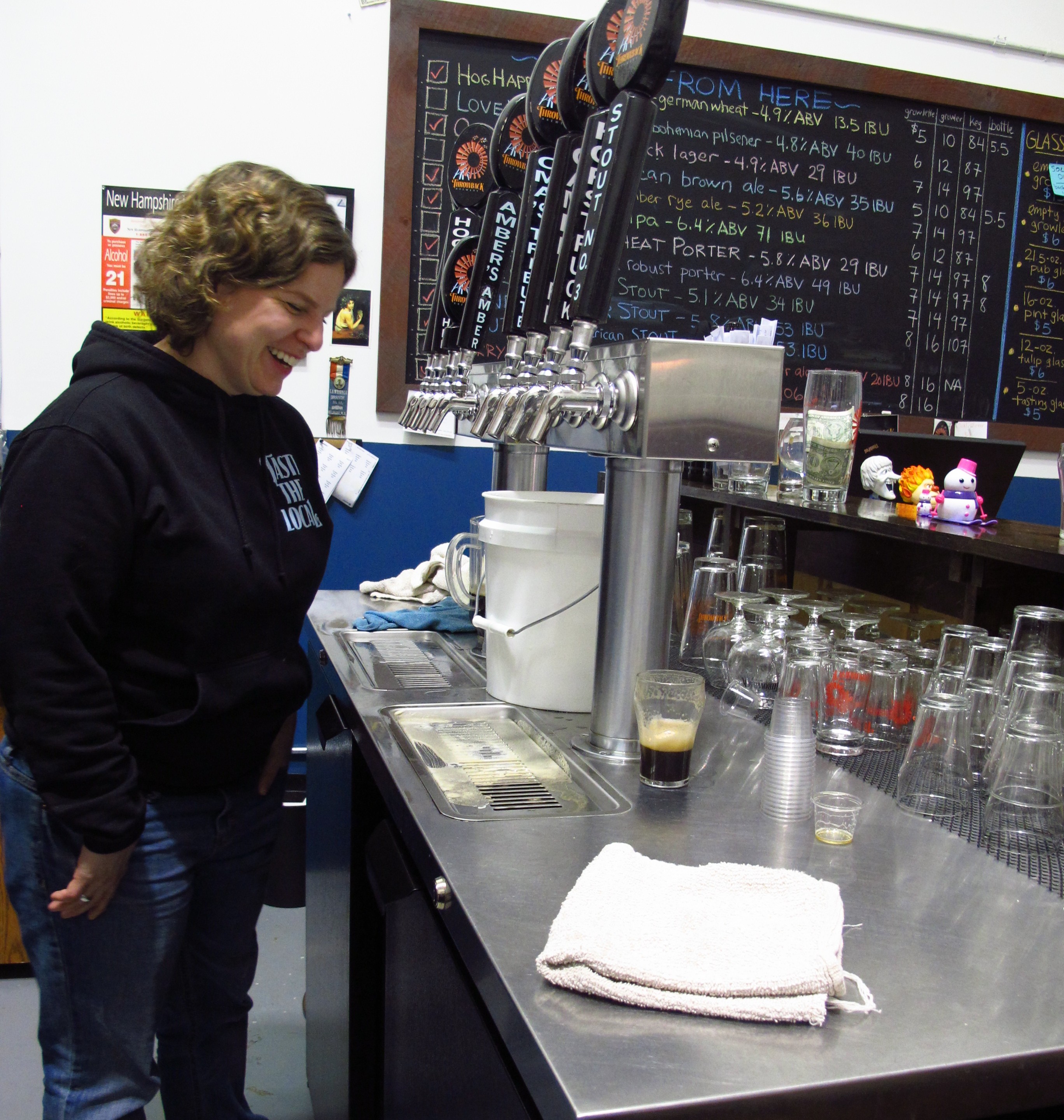
A customer makes an order at Throwback’s tap room.
A customer chats with Throwback co-owner Nicole Carrier at the Throwback tap room.
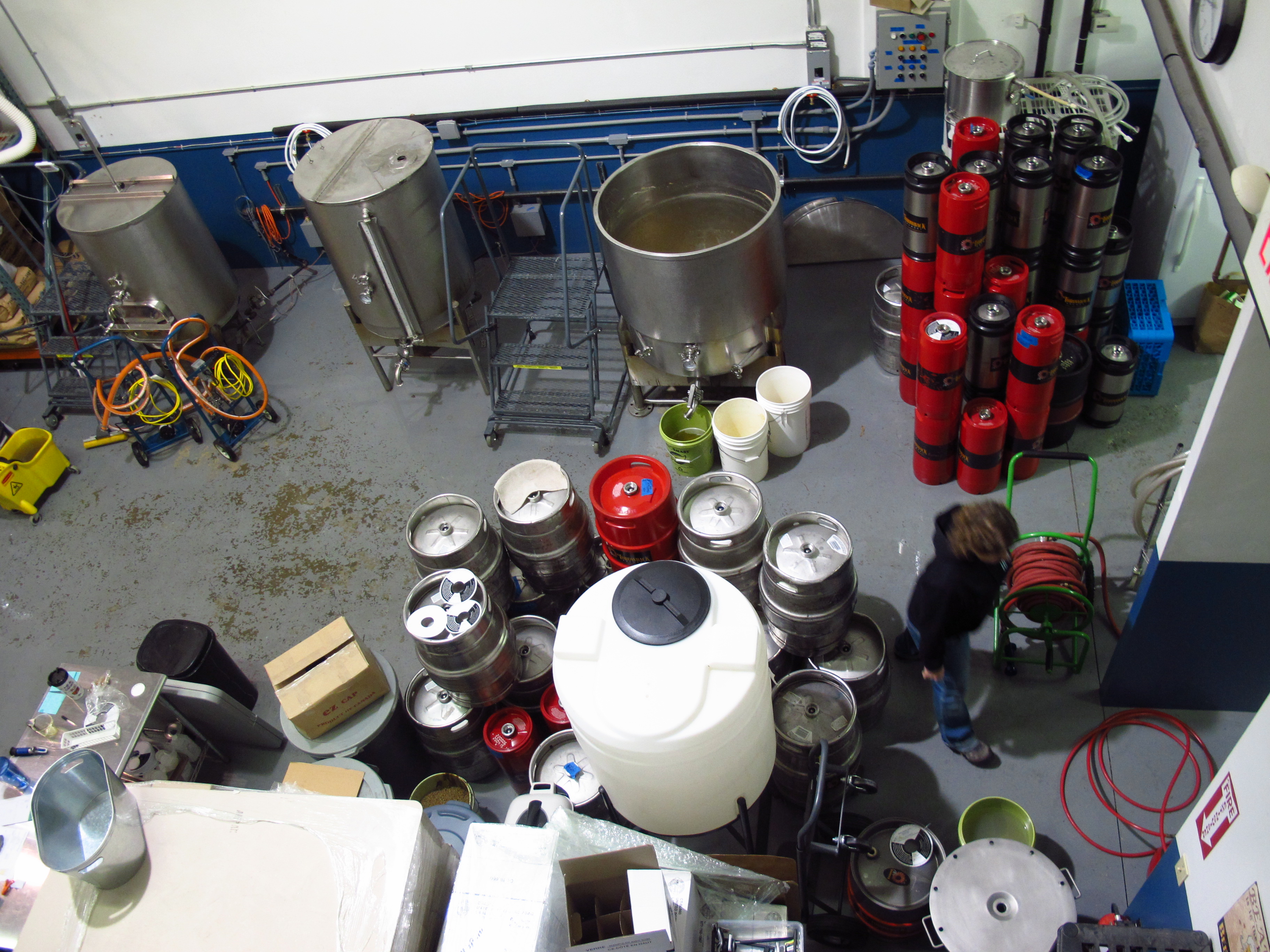
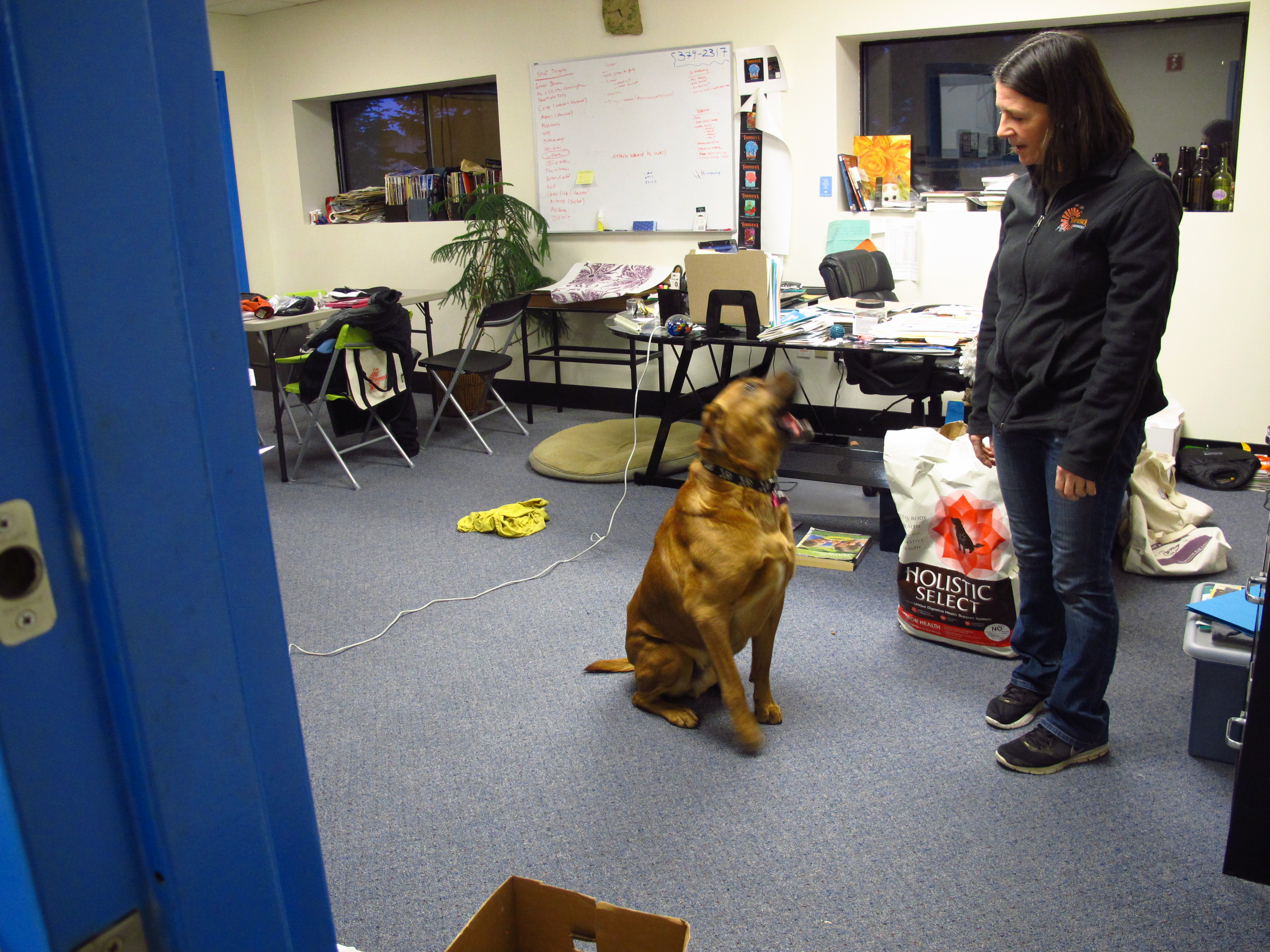
The Throwback Brewery is located in a small warehouse in North Hampton, NH.
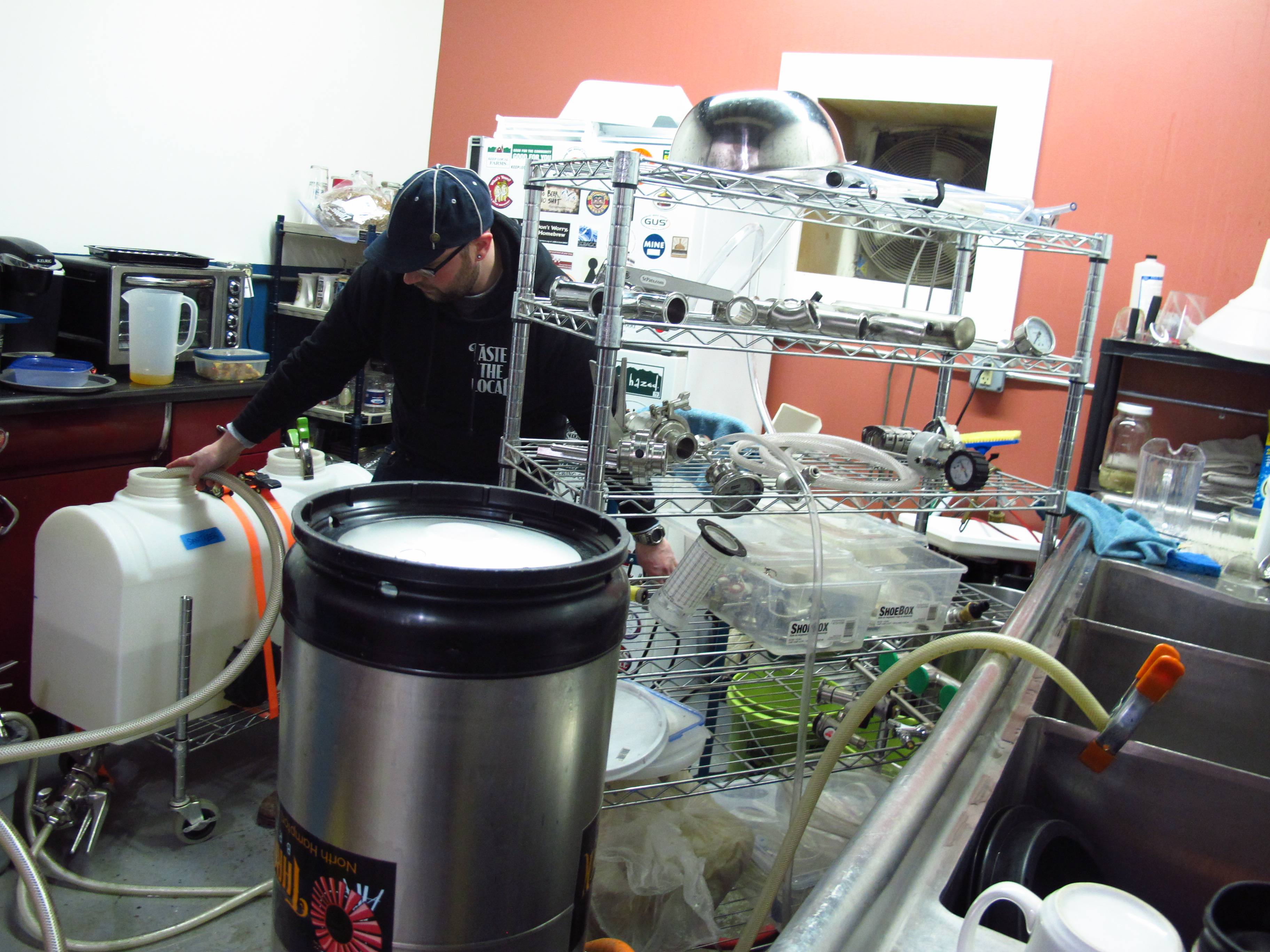
Assistant brewer Chris Naro uses the keg cleaning system jerry-rigged by Throwback owner and former and engineer, Annette Lee.
Assistant Brewer Chris Naro worked in finance before coming to Throwback full time.
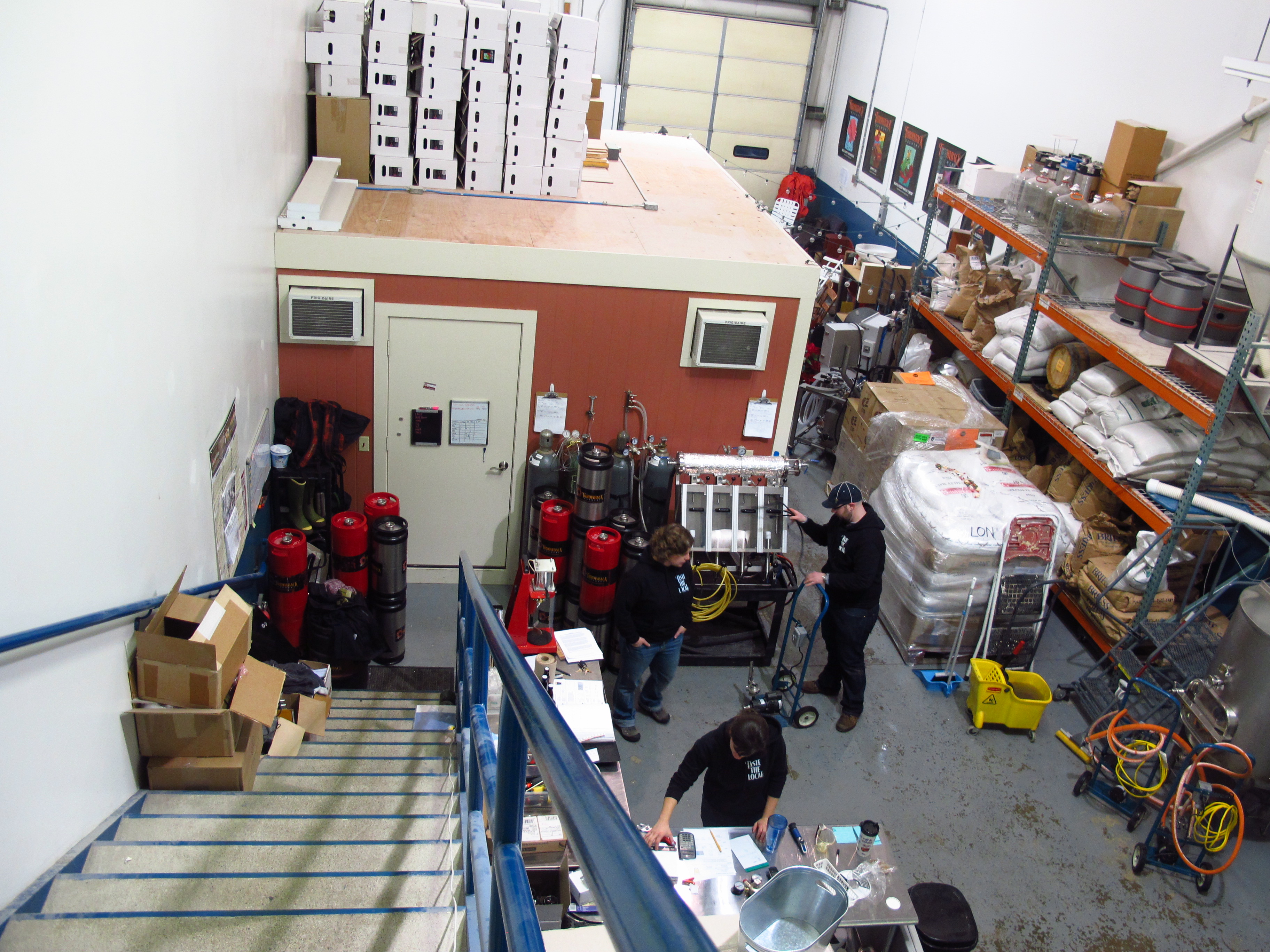
A set of stairs lead up to Annette Lee’s office above Throwback Brewery.
Throwback co-owner Annette Lee works from an office above the warehouse.
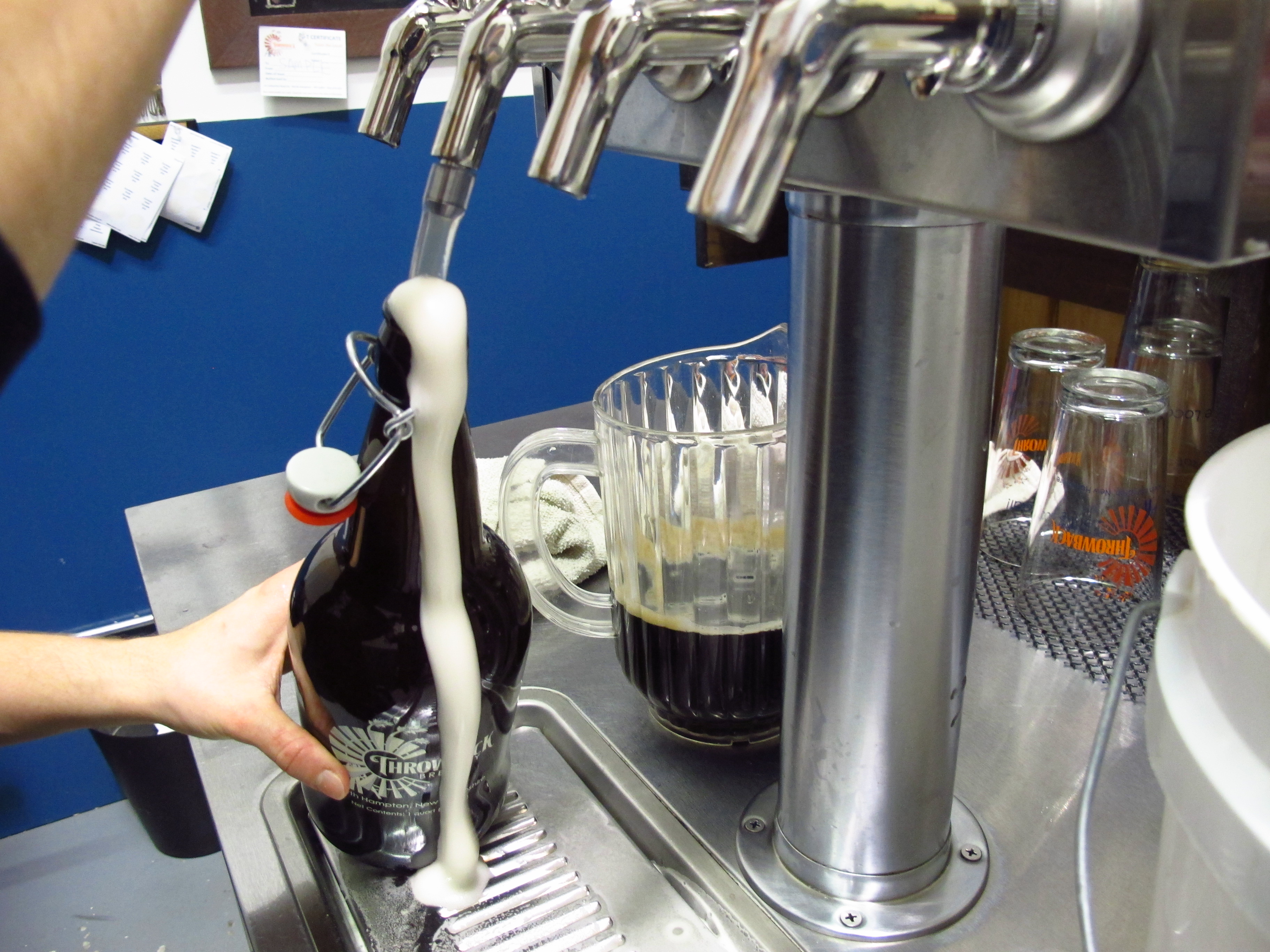
Co-owner Nicole Carrier pours beer for customers.
New Hampshire is the only state in the nation to recognize and codify nanobreweries as separate from large-scale beverage manufacturers. In doing so, the state lowered certain Prohibition-era liquor limitations that make it hard for the little guys to get a license, open a tap room and get brewing – including a requirement that a brewery sell hot food if they wish to serve beer.
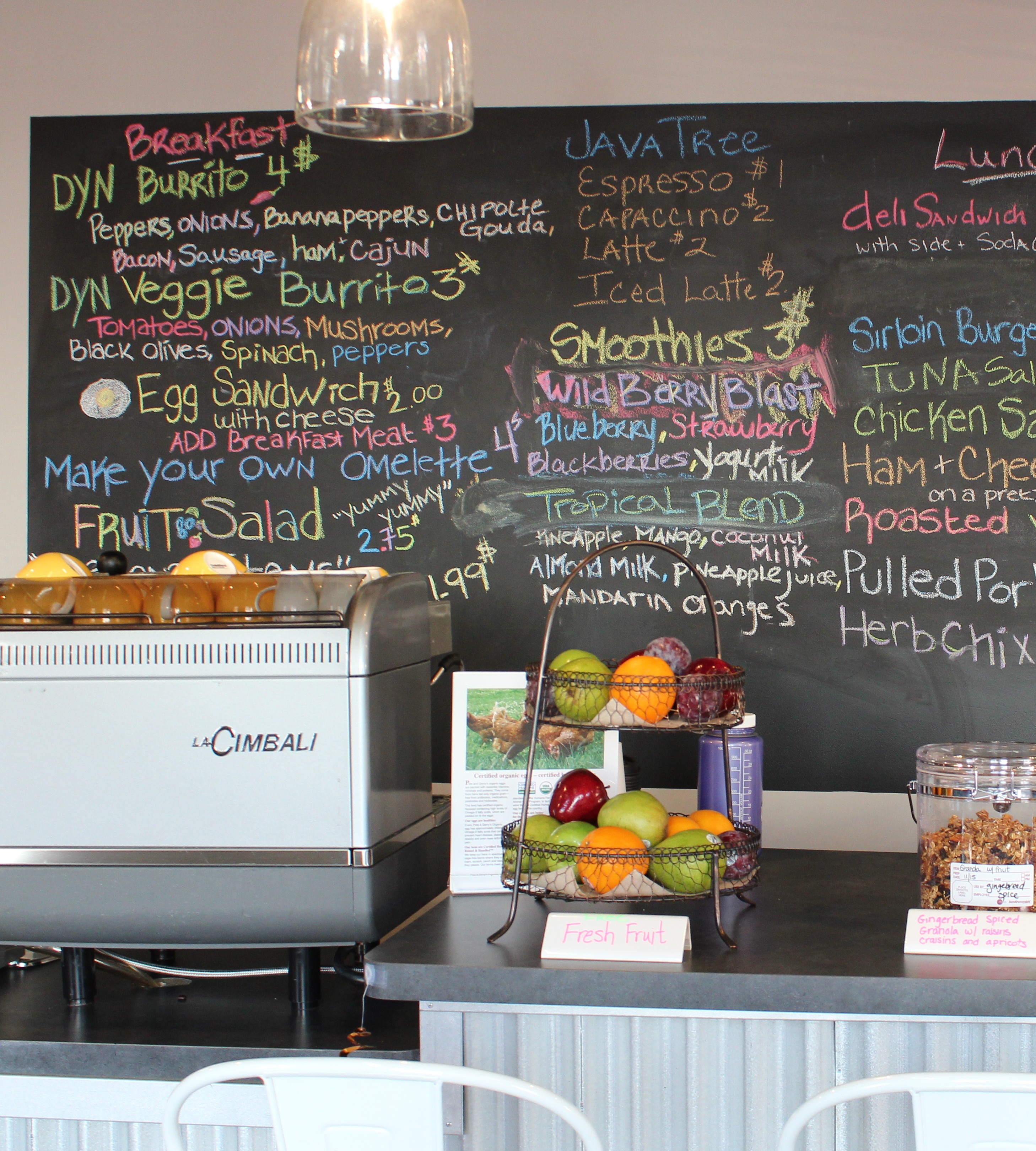
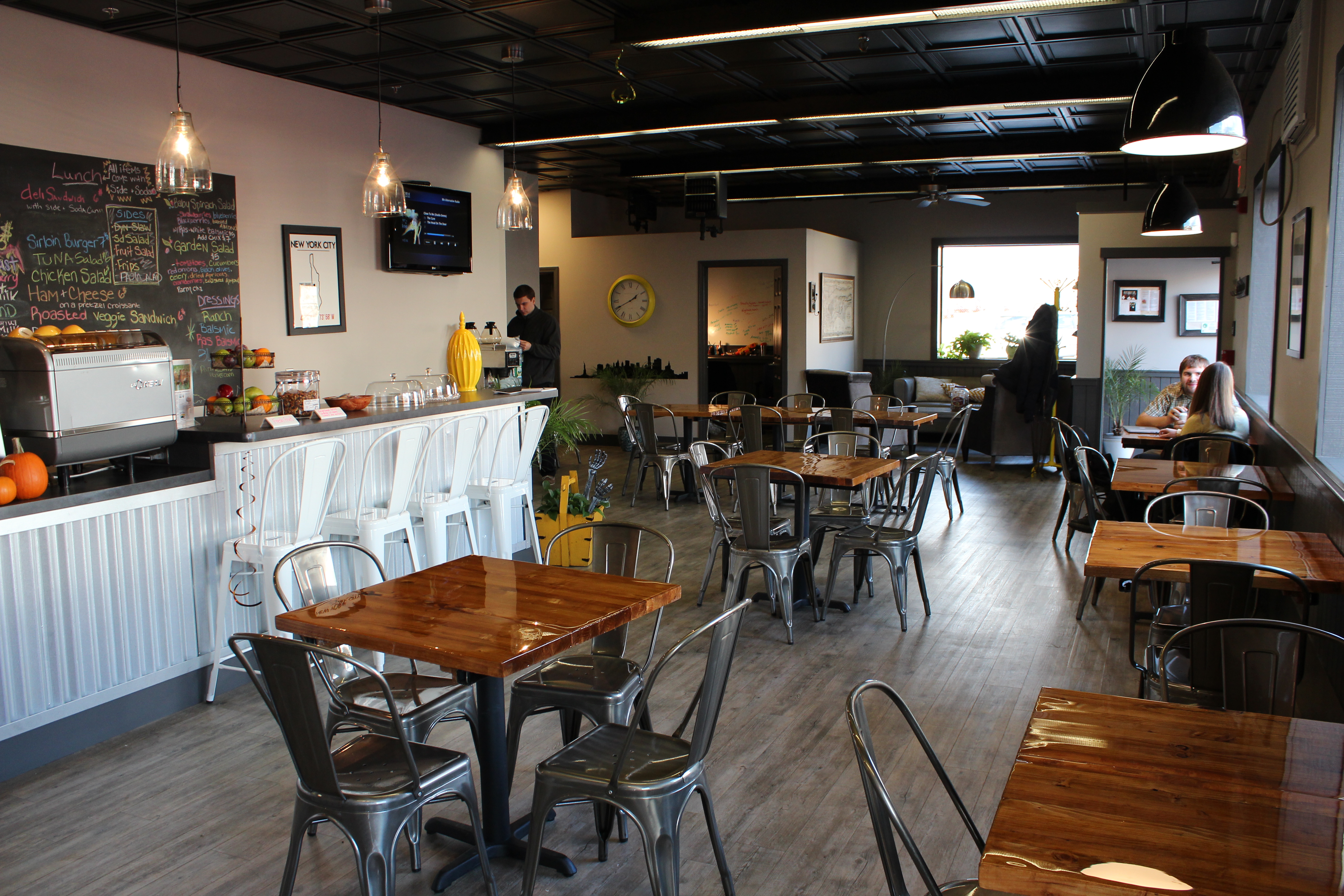
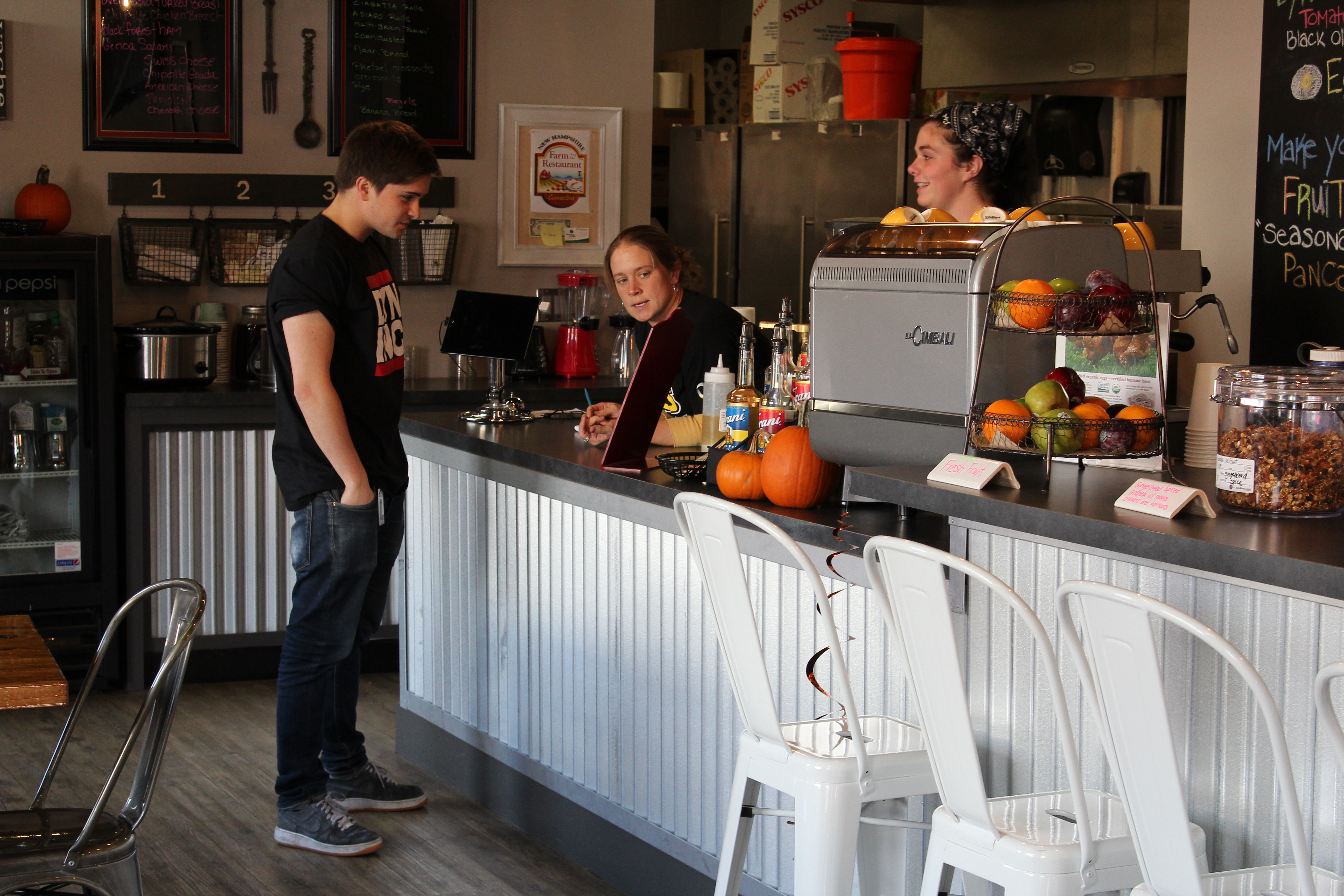
Four dollars. That is what employees at Dyn have to pay for a breakfast burrito made with bacon smoked in North Country, peppers grown in Chester, and a host of other local ingredients. That is, if they mosey across the street from their offices to the Dyn Cafe – an at-cost farm-to-table operation that Dyn opened in July. Sadly for the rest of us, the cafe is employees only.
Kevin Donahue was Executive Chef at XO on Elm before Dyn recruited him to run the Dyn Cafe.
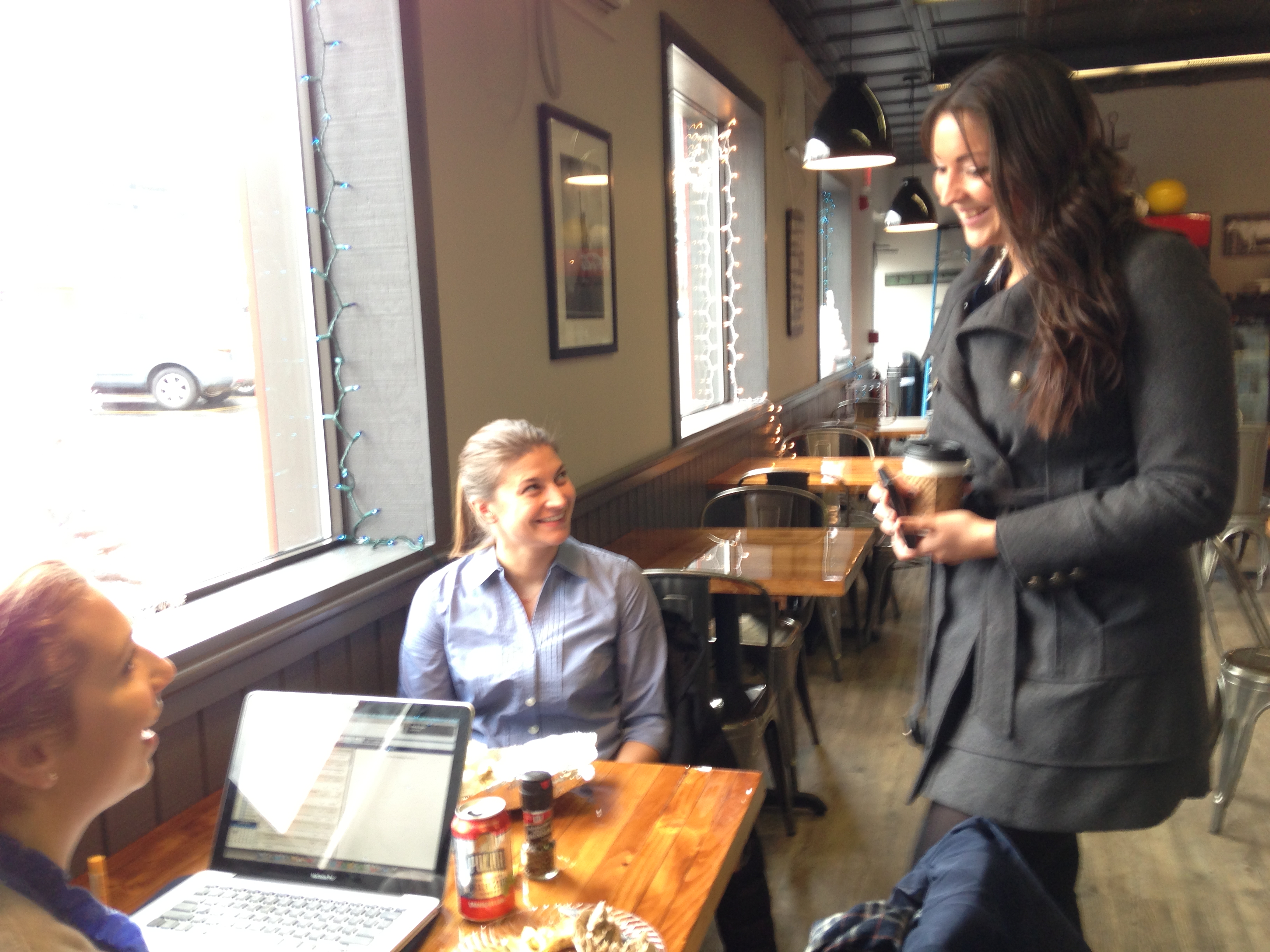
Administrative Specialist Amanda Murtha chats with colleagues at the Dyn Cafe.
Manchester’s Dyn, Inc has a farm to table menu for their employees
Dyn Cafe
Cafe employees take the order of a customer/colleague.
Dyn headquarters are across the street from the Dyn Cafe.
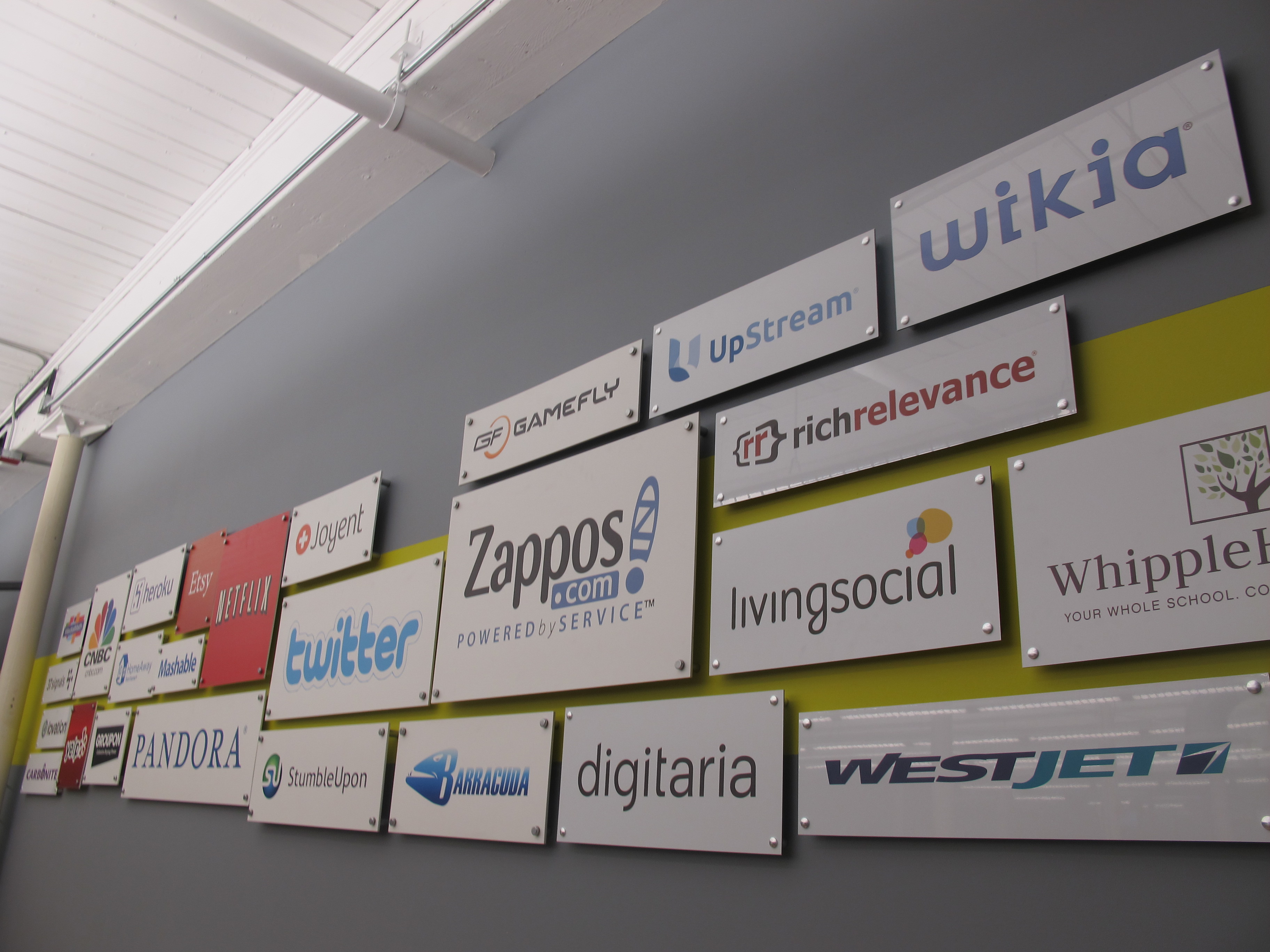
Dyn’s clients include Zappos, Twitter, Pandora, Netflix and Etsy.
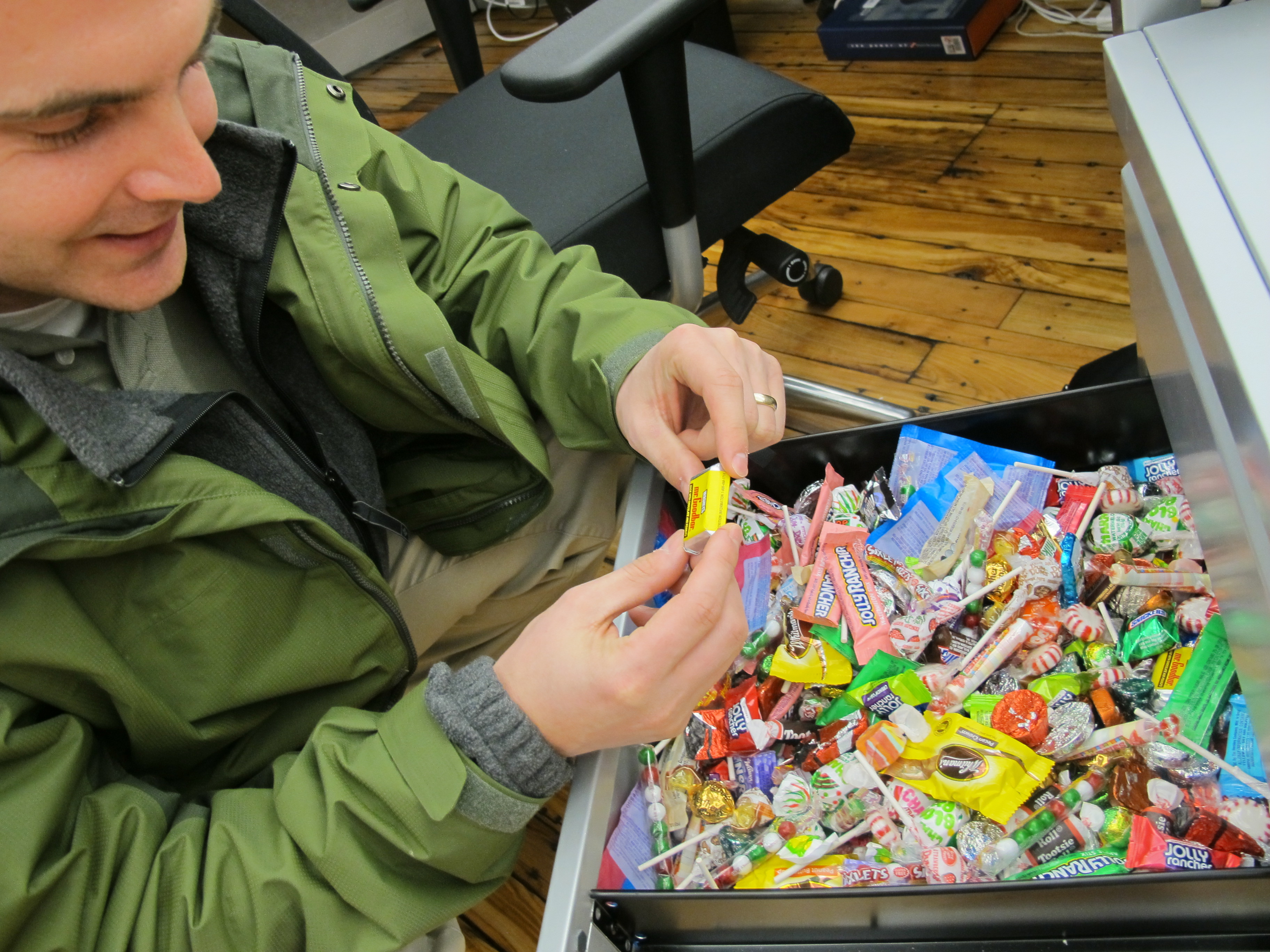
Adam Coughlin, Dyn’s media and content coordinator, makes a choice from another employee’s candy drawer.
Dyn is an internet infrastructure company in Manchester with a workforce of 190 people. The company spends about $18,000 per year, per employee on benefits, from health insurance to free gym memberships, unlimited time off, an indoor climbing wall, and now – an at-cost farm-to-table cafe.
What’s in it for Dyn?
Dyn has an expanding list of clients like Netflix, Etsy and Pandora, and requires an ever-increasing workforce of software engineers, tech-savvy salespeople and more.
The problem is, New Hampshire’s workforce is aging and shrinking. Young people have always left the state for college or job opportunities, often heading to Massachusetts, New York, and the south Atlantic states. For the first time, the in-migration of 30 and 40-somethings is slowing. While New Hampshire saw a net in-migration of 10,681 people in 2001, the state experienced a net out-migration of 2,329 individuals in 2010.
In order to compete for some of the country’s most sought-after skills in a place that isn’t Boston, Silicon Valley, or New York, Dyn has had to get creative about recruiting and retaining talent.
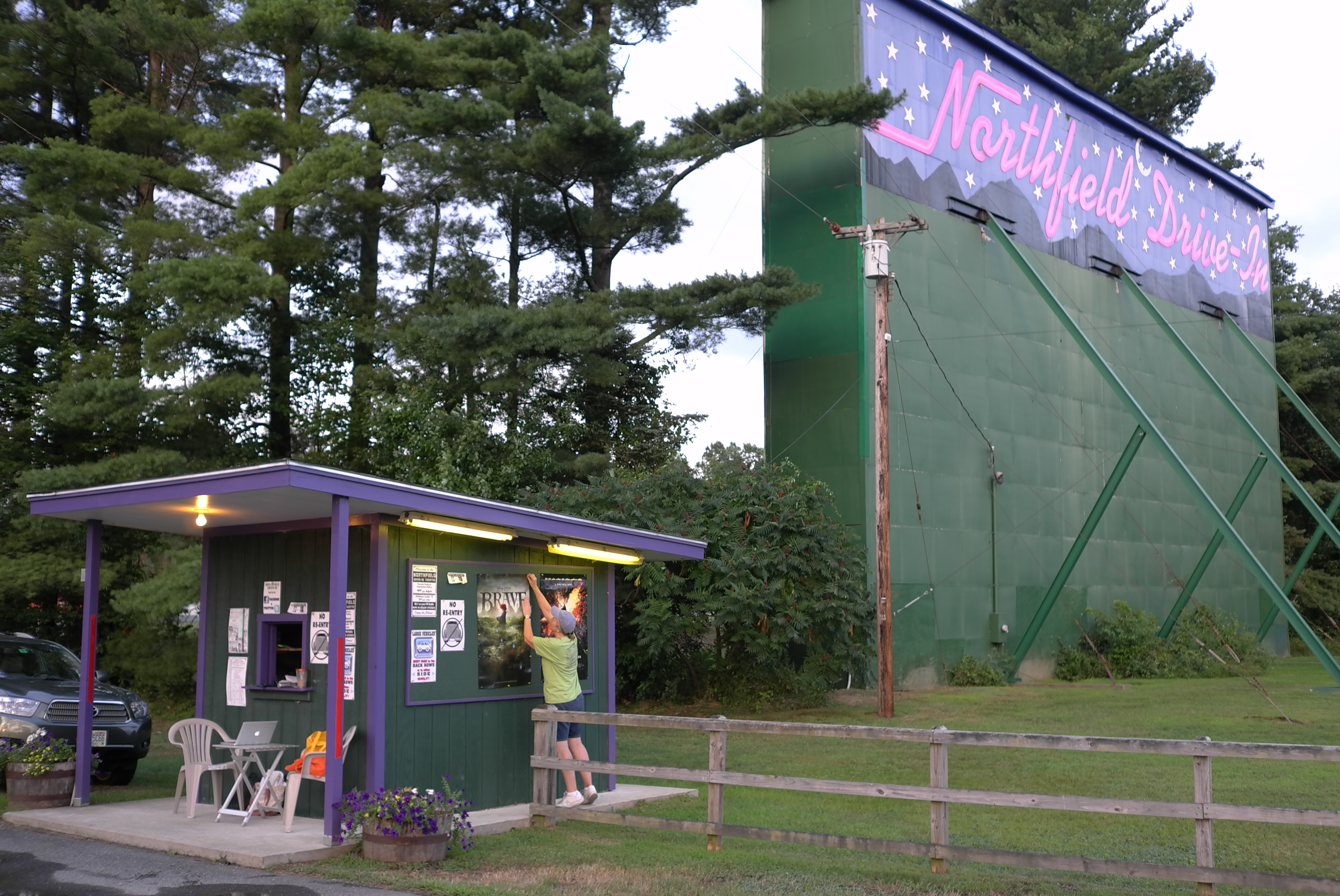
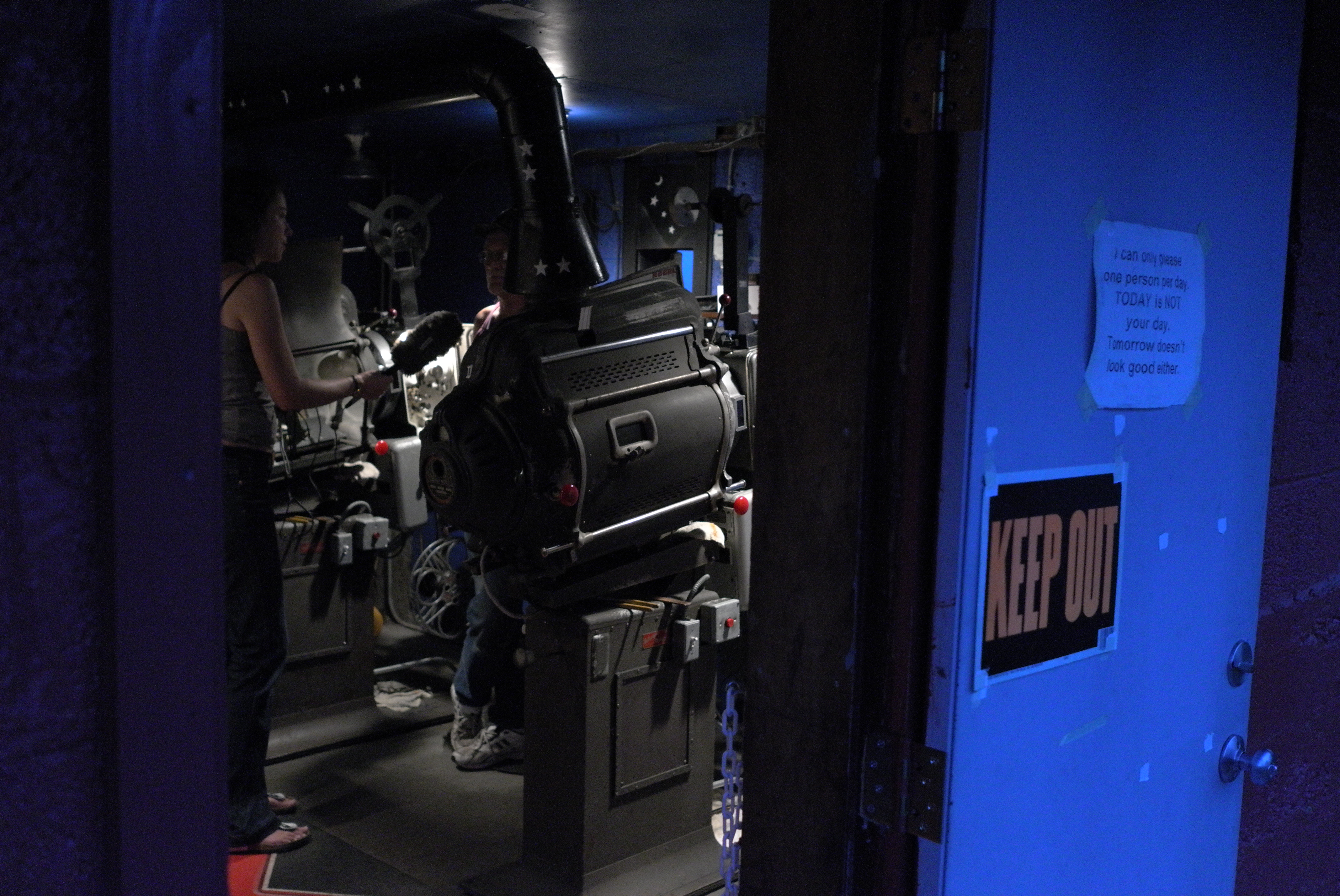
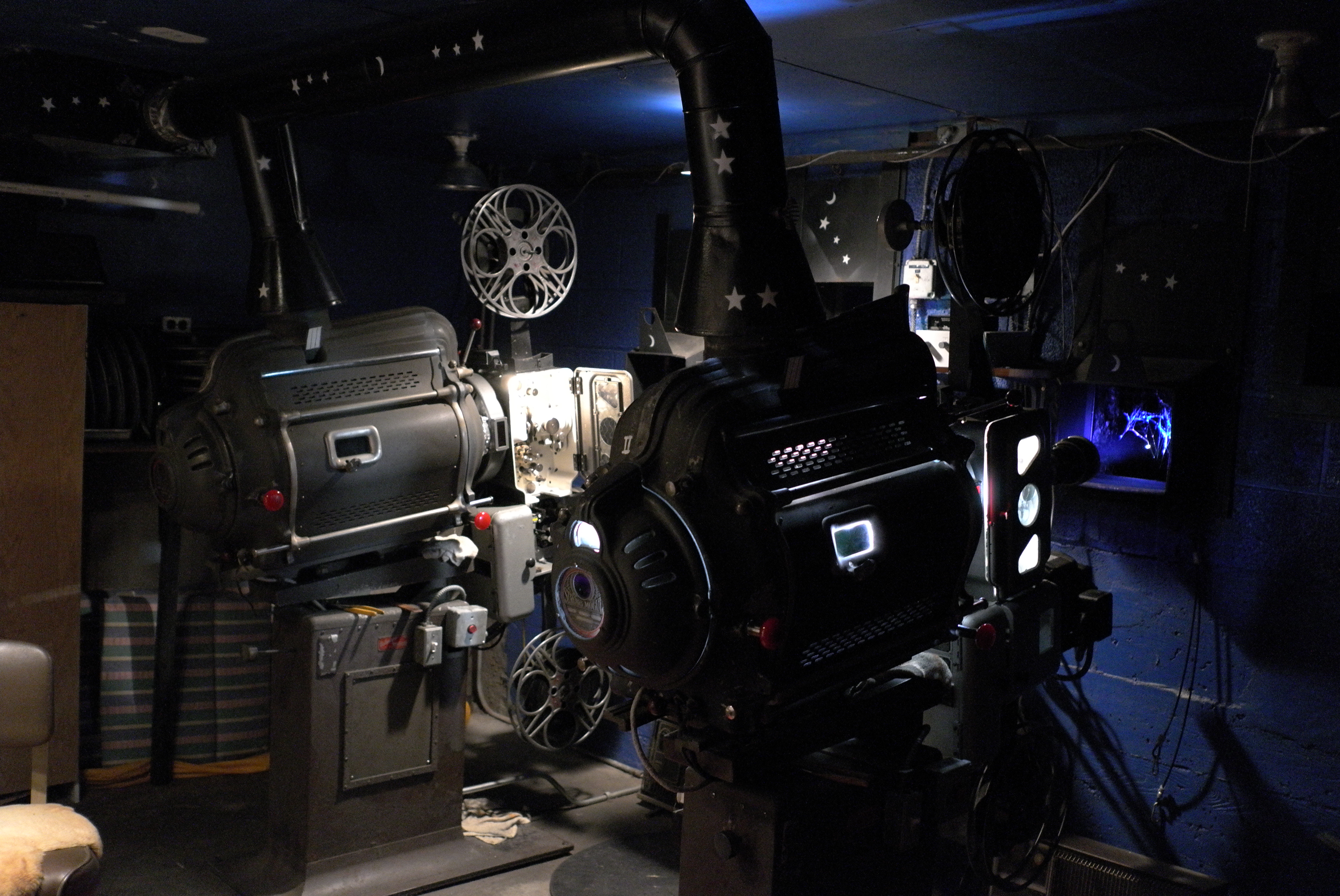
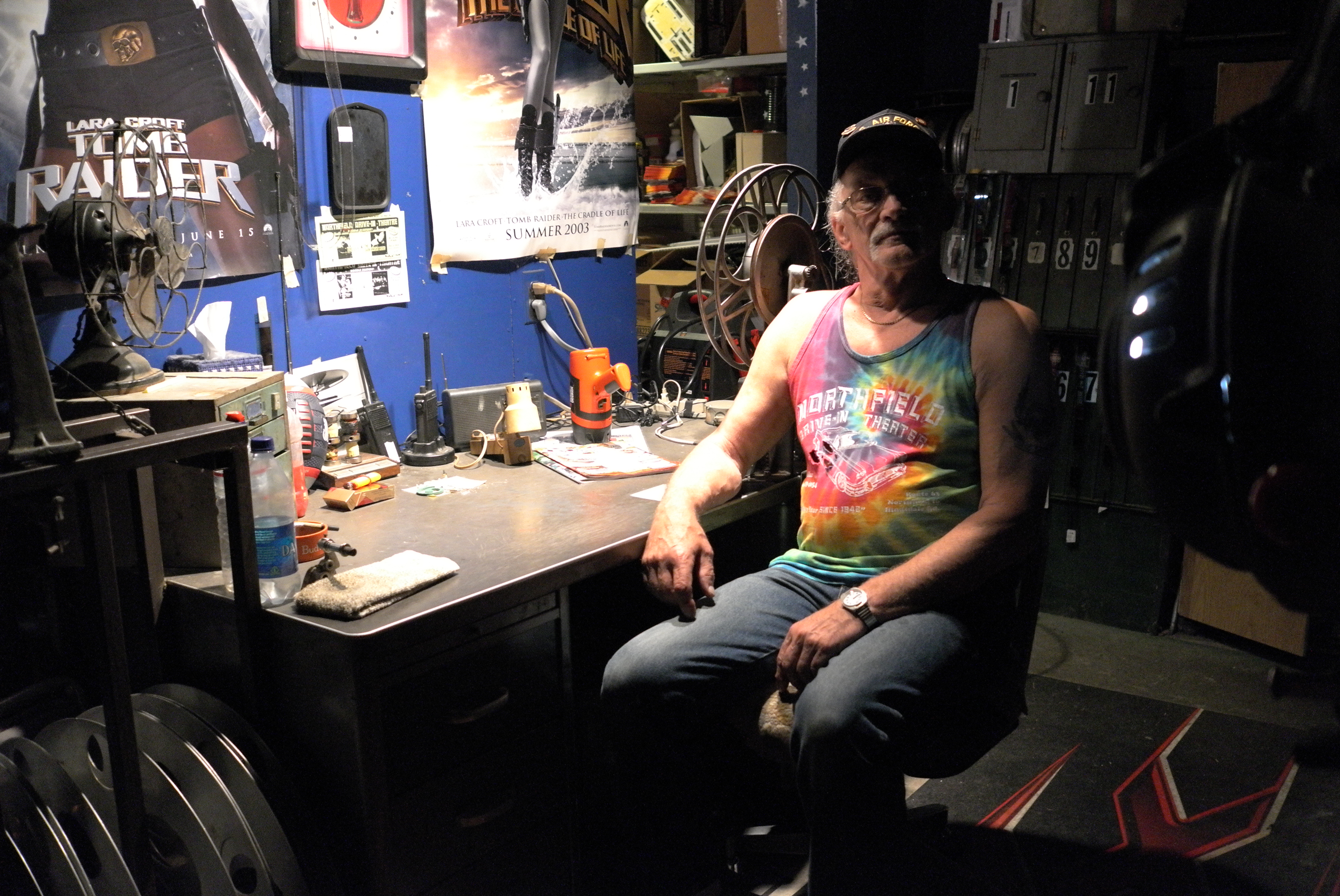
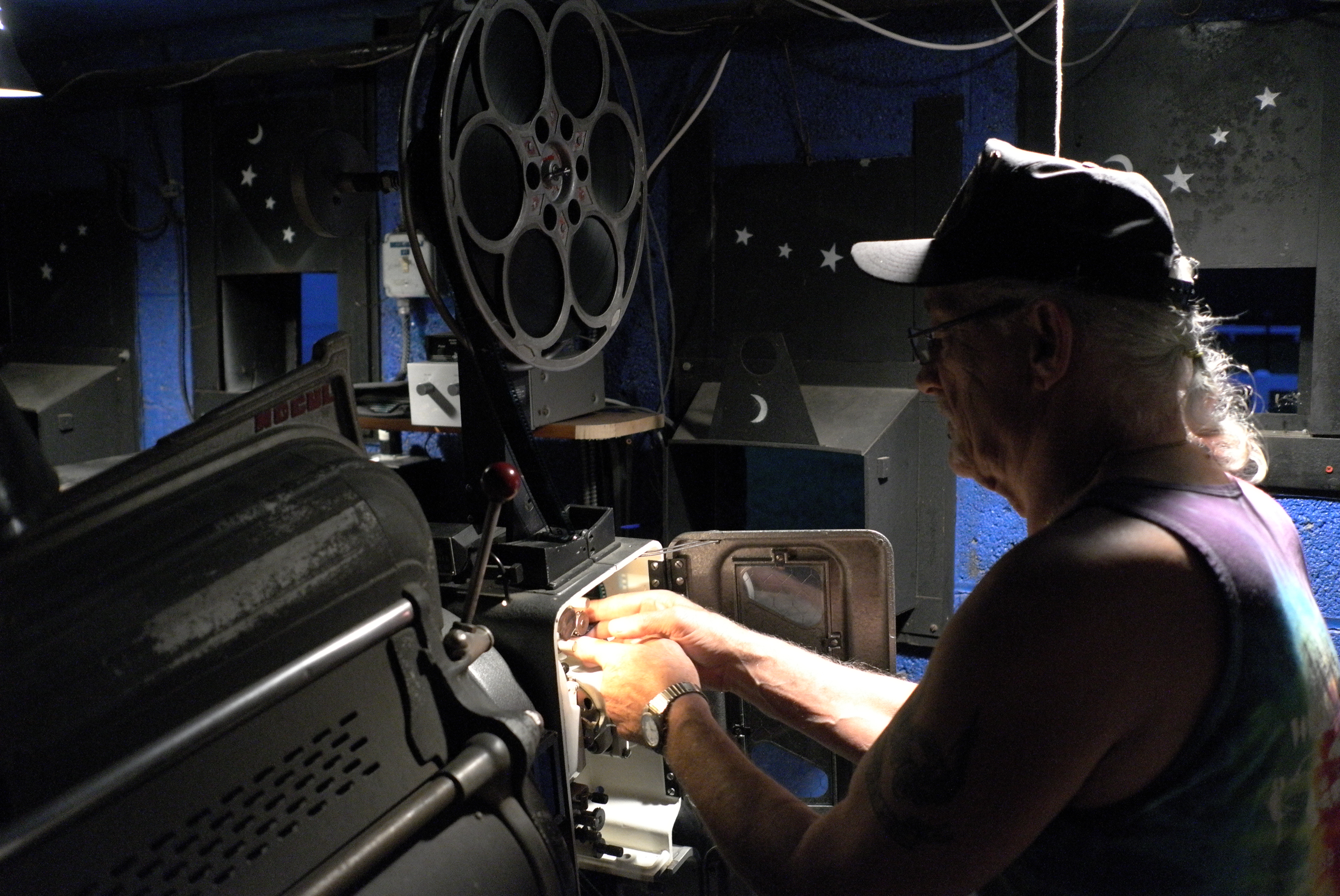
Labor Day weekend is traditionally the end of the season for New England’s summer drive-in movie theaters. This year, it’s also the end of an era. Hollywood movie studios have announced they’re going digital, and as of next year they will no longer distribute movies on 35 millimeter film. If theaters want to stay open, they’ll have to swap their old-fashioned film projection for computers, at a cost of tens of thousands of dollars. The Northfield Drive-In, on the state line between New Hampshire and Massachusetts, is one of those facing the future. Continue Reading →
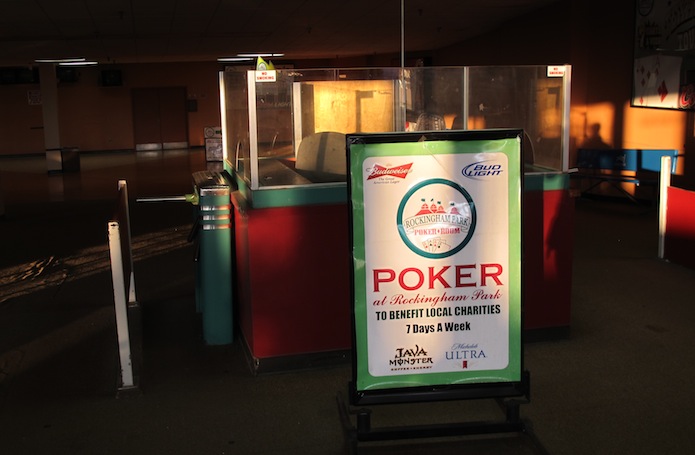
The entrance to Rockingham Park includes old-fashioned turnstyles.
Locals wager over a roulette table.
Money is transferred from gaming tables via a double-locked box. This is one of many security measures at Rockingham Park.
Mike, a poker dealer, awaits the next tournament.
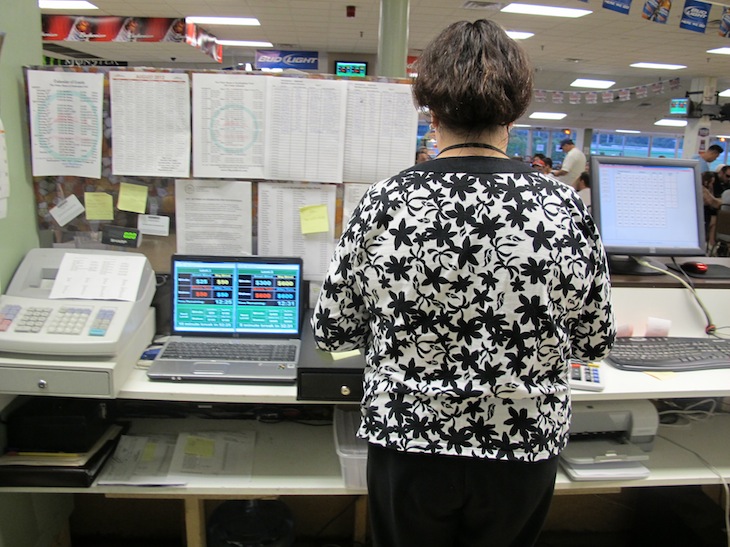
Behind the counter at Rockingham Park.
Rockingham Park president, Ed Callahan, uses ultraviolet light to identify counterfeit chips.
Money is collected and counted under security cameras.
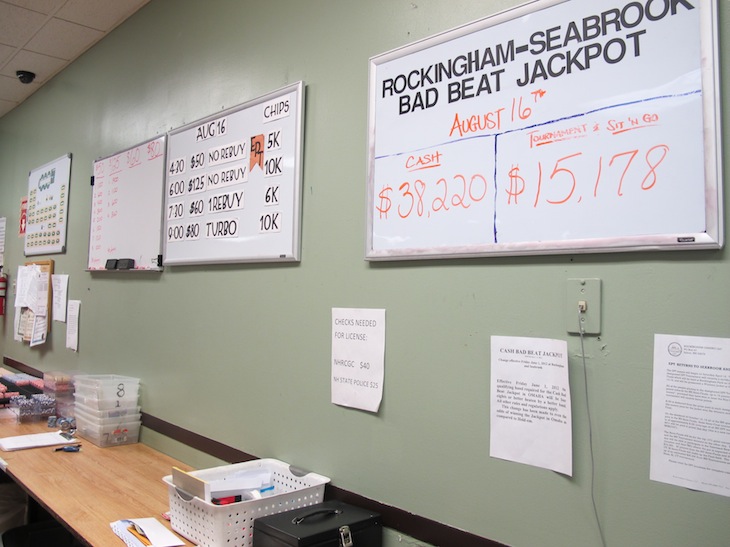
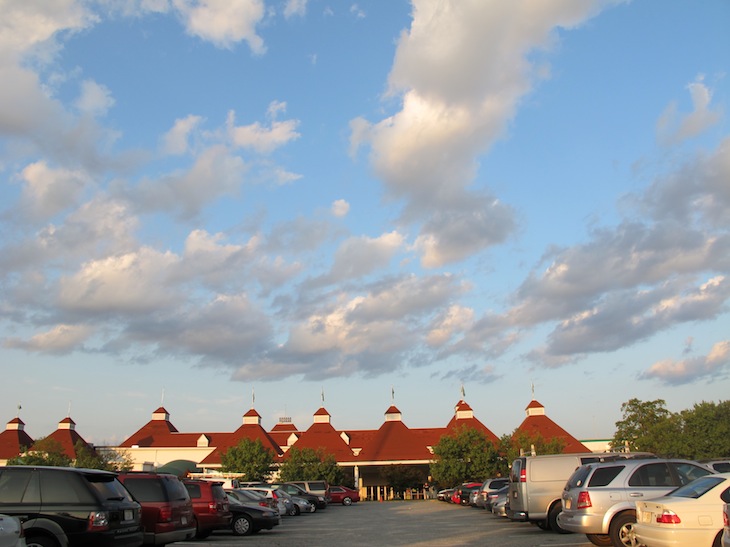
Rockingham Park racetrack and table gaming facility, Salem, N.H.
Imagine a high school cafeteria with painted concrete walls and linoleum floors. Then switch out the lunch-tables for blackjack and poker tables — and you’ve got Rockingham Park, the race-track turned gaming room at the epicenter of New Hampshire’s debate over expanded gambling.
Just about every year for the last 15 years, the legislature has voted on whether or not to expand gambling in New Hampshire. Every single bill has failed. But as the race for governor has gotten under way this season, all four major candidates have come out in favor of expanded gambling. Why? It has a lot to do with Massachusetts’ decision to open three casinos across the Bay State. Continue Reading →
About StateImpact
StateImpact seeks to inform and engage local communities with broadcast and online news focused on how state government decisions affect your lives. Learn More »