Justy Thomas graduated from Boise State University in 2011. In May 2013, she landed a permanent job in her degree field.
Two years, several temporary jobs, 15 interviews, and countless applications later, Justy Thomas has landed a permanent job. “I feel blessed I have a stable job,” she says. Thomas is now working in the human resources department of a local utility company.
As we reported back in 2011, Thomas was a month away from graduating from Boise State University with a degree in human resources and business management. Thomas decided to go to school after she was laid off in 2007 from her job in the mortgage industry.
“I wanted to do a reset. I wanted to change my career,” Continue Reading →
The PUC estimates Idaho will run out of 208 telephone numbers by 2019.
In less than a decade, Idaho will likely join the ranks of states with more than one area code. That’s right, Idaho’s 208 area code is quickly becoming an endangered species.
This isn’t a new story. Back in 2007, the Idaho Public Utilities Commission said the state would run out of 208 phone numbers within five years. That’s when number conservation and consolidation kicked in. The amount of phone numbers available expanded when the state changed the way it assigns them.
According to the North American Numbering Plan, Idaho has approximately 820,000 208 telephone numbers available. Today, there are about 3.4 million 208 numbers assigned to Idaho.
Based on the terminology associated with Idaho’s phone number planning, you’d think the state was prepping for a sci-fi invasion; “exhaust planning”, “contaminated numbers”, and the dreaded “jeopardy”. Continue Reading →
Data released today from the U.S. Bureau of Economic Analysis show personal income in Idaho hasn’t fully rebounded from the recession, though growth has been measured in the last two years.
The personal income data from 2007 through 2011 offers a closer look at real-time incomes in relation to the state-specific cost of goods and services during that same time period.
Idaho lawmakers have a new tool available to guide them in making tax policy decisions.
The Legislature’s Office of Performance Evaluations presented a 38-page report to the Joint Legislative Oversight Committee this morning. The study, a Guide to Comparing Business Tax Policies, was requested by the 2012 Legislature.
The report focuses on a couple of main ideas; tax rates are not the only thing (or most important thing) businesses consider when looking to expand or relocate in Idaho, and tax rate changes aren’t directly related to business investment.
“Although businesses generally seek to maximize their after-tax rate of return, the link between tax costs and a favorable business environment is not direct. Continue Reading →
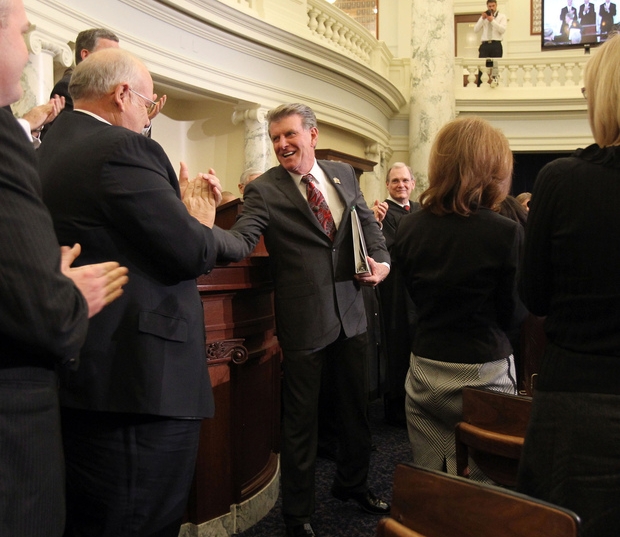
Gov. Otter talks with lawmakers at his annual State of the State address, Jan. 10, 2013.
Gov. C.L. “Butch” Otter is spending part of his week in Coeur d’Alene at Idaho’s largest business lobby’s annual convention. Gov. Otter’s spokesman says one of the administration’s main goals for the next legislative session is to pass a third-consecutive year of tax cuts.
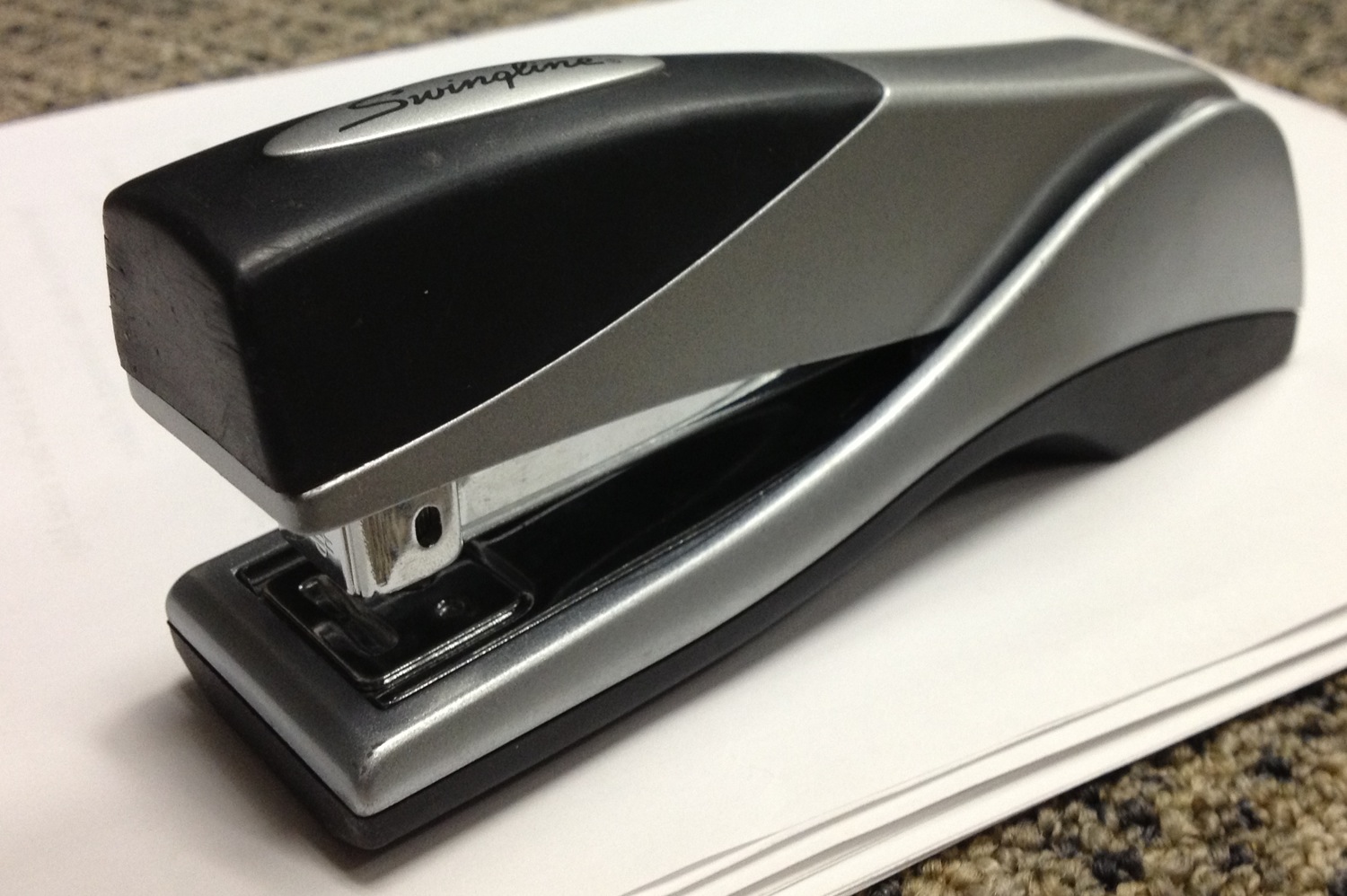
In some cases, office supplies like this stapler are taxed under Idaho's personal property tax.
Idaho’s largest business lobby is hosting its annual policy meeting in Coeur d’Alene this week. According to the Coeur d’Alene Press, Gov. C.L. “Butch” Otter is attending the Idaho Association of Commerce and Industry retreat, along with about 60 legislators and 130 IACI members.
Sure to be on IACI’s 2014 legislative agenda is a complete repeal of Idaho’s business equipment tax. It was partially repealed this year, exempting the tax for about 90 percent of small businesses while keeping the bulk of the revenue stream in-tact. Continue Reading →
Idaho’s real gross domestic product inched up less than a percentage point from 2011 to 2012.
New data released today by the U.S. Bureau of Economic Analysis show Idaho’s GDP grew four-tenths of a percent last year. Five states measured slower growth; Wyoming, New Mexico, South Dakota, Delaware, and Connecticut.
Connecticut was the only U.S. state that saw a decline in GDP last year. The state with the largest growth from 2011 to 2012 was North Dakota, with a whopping 13.4 percent increase. Continue Reading →
This Nampa neighborhood used to be dotted with foreclosures.
The Idaho Attorney General’s office says more than 6,000 Idahoans will receive checks under the historic national mortgage settlement this month.
As we reported last year, the $25 billion settlement was reached in February 2012. The borrowers who received “loan servicing errors” that may have led to foreclosures between 2008 and 2011, were eligible for these settlement payments. Continue Reading →
About StateImpact
StateImpact seeks to inform and engage local communities with broadcast and online news focused on how state government decisions affect your lives. Learn More »