Another way Florida has tried to help school prepare students for jobs is the Career and Professional Education Act. The law helps businesses create academies within public schools to train students and help them earn professional certifications. Those certifications can help students find a job or earn college credit.
So what kinds of certifications are Florida students earning?
Computer skills are a top choice, with students learning how to edit and manipulate images, create web sites and use basic office software. Food protection is the top career-specific certification, followed by several medical certifications.
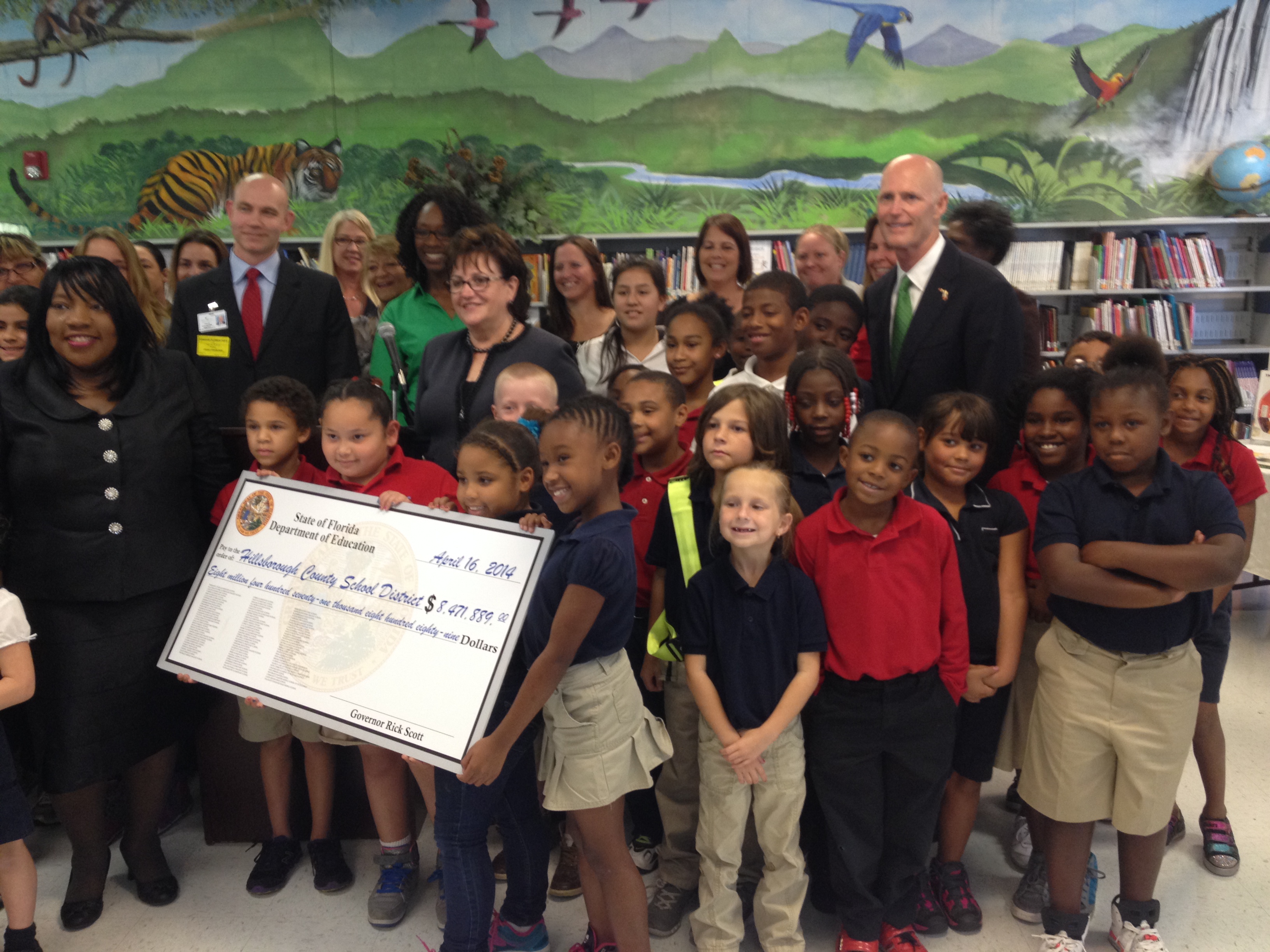
Gov. Rick Scott issued a record amount of budget vetoes Tuesday, including many education projects.
Gov. Rick Scott’s budget veto list broke records Tuesday, and education projects weren’t spared despite Scott’s emphasis on K-12 funding this year.
In total, Scott vetoed $461.4 million from the now $78.7 billion spending plan. Scott signed the plan in private Tuesday and the budget takes effect July 1.
Among the largest items Scott trimmed was $15 million for the University of Central Florida to build a campus in downtown Orlando. Many of the education cuts were for new campus buildings or renovations: $8 million to renovate Norman Hall at the University of Florida; $5 million to buy land for Florida International University; $3 million to treat mold at FIU; $3 million for a new southern campus for Hillsborough Community College.
Scott also eliminated money for programs K-12 school districts rely on, such as $1.5 million for Teach for America. Teach for America plucks recent college grads from campus and runs them through a boot camp training program. Critics say TFA provides inadequate training, but Miami-Dade and other large Florida districts rely on TFA to bolster their teacher roster.
Eight times Brandon Lewis has taken Florida’s Algebra I end-of-course exam. And eight times he’s failed it, once coming just two points short of passing.
Lewis is a junior at Miami’s Dr. Michael M. Krop High School. Lewis passed the class his first year, but Florida also requires that students pass a state exam in a handful of key courses, including Algebra I. He’s worried the test will keep him from graduating.
“It hurts when you’re isolated from the other group of kids,” Lewis says, “and you feel like you’re slow and that you can’t do anything to, like, pass that test.”
The new Florida Standards Assessments begin today. Most students will take the exam online, though some students will take a paper and pencil version of the writing exam.
At Miami’s iPrep Academy, getting ready for the state’s new standardized test includes rapping.
Two students are recording the daily announcements, telling classmates when and where they need to be starting today.
“Monday is ninth graders, with last name A to G,” one student raps, in a rhyme that’s no threat to Miami’s Rick Ross.
“On Tuesday, it’s ninth graders with last name H through Z,” his partner continues.
“All testing is in room 2 – 0 – 4!” they conclude together, Beastie Boys-style.
Today marks the start of testing season for Florida schools. Students have state exams scheduled every few weeks from now until the end of the school year. It’s the first time students will take a new test called the Florida Standards Assessments, or FSA, which replaces most FCAT exams.
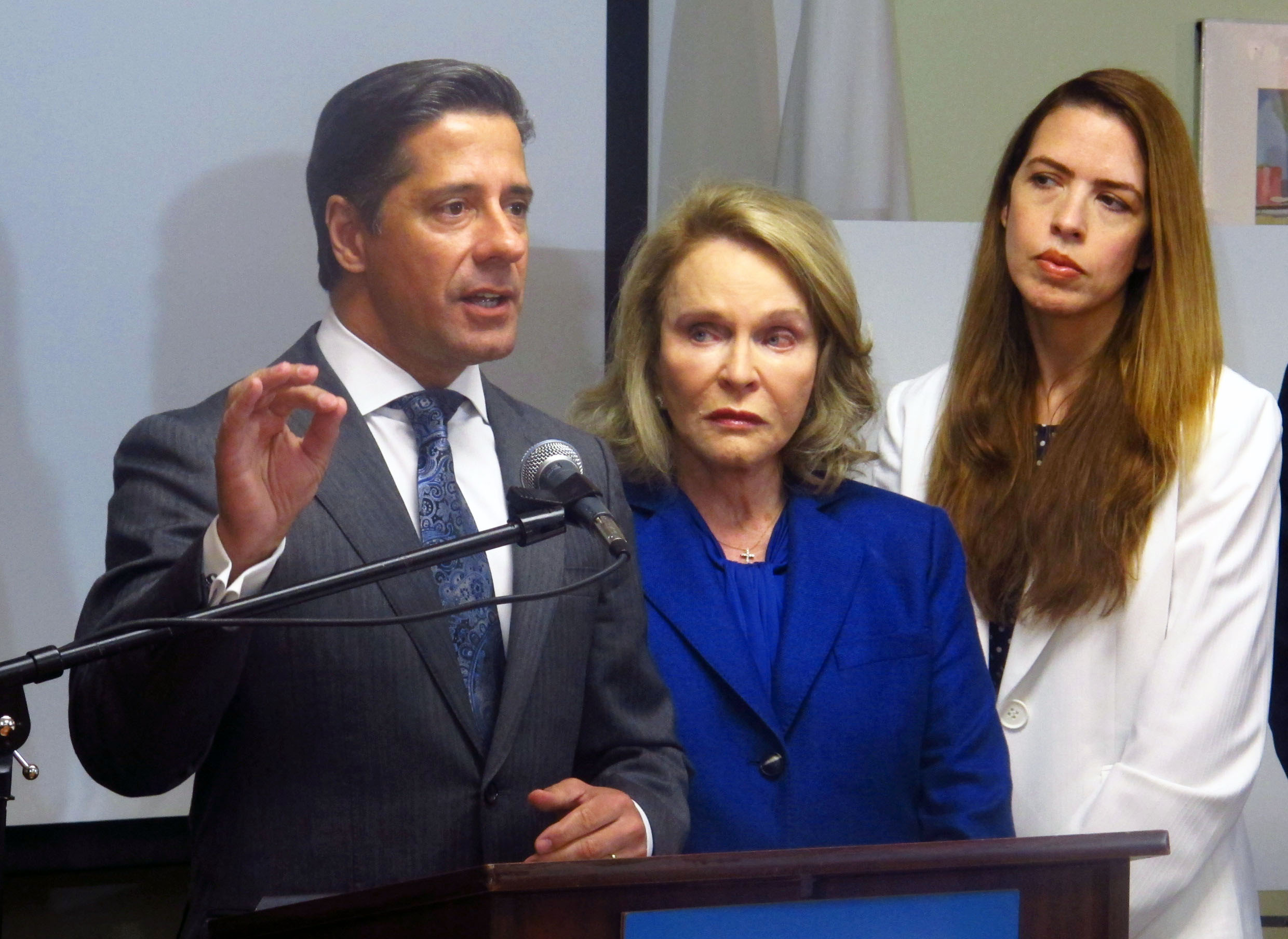
Superintendent Alberto Carvalho says vaccinations work and the district is tracking whether students get their required shots. Carvalho says 98 percent of Miami-Dade students have been vaccinated or are getting the shots now.
“We’ve seen recently what the outbreak of measles in Arizona can do to a community,” Carvalho says. “That can not be the case in Miami. So we are diligent in ensuring our children are properly immunized prior to beginning their school year.”
That includes 1,200 students new to the district this year, many escaping dangerous communities in Central America.
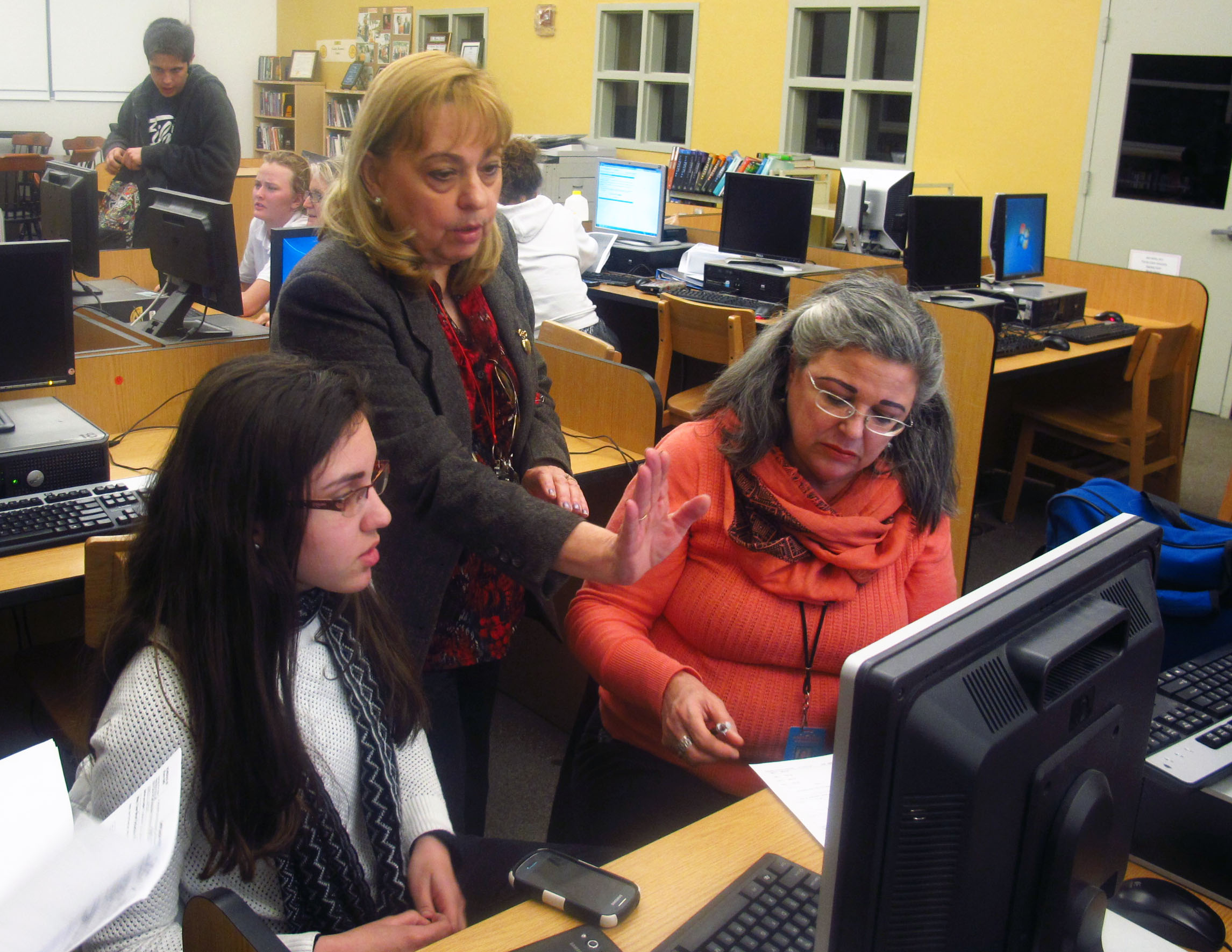
Miami Beach Senior High college adviser Maria Sahwell helps Anahi Hurtado, left, and her mother fill out the FAFSA.
It’s a midweek school night at Miami Beach Senior High School.
Students, their parents and siblings — roughly 80 people in all — are waiting in the school’s library to get on a computer and answer a lot of questions.
By this time of year many high school seniors have already sent in their first college applications. Now, the question is how to pay for it. And for most that means the FAFSA.
But half of Florida high school graduates don’t complete the form, losing out on at least $100 million dollars for college each year.
Anahi Hurtado wants to study political journalism. She and her mother, Susy Riener, quickly run into their first obstacle.
A parent asked us on Facebook: “Please find out for us parents of third graders, who face mandatory retention if they fail the new reading assessment this spring, how the state plans to deal with them. Will they return to 3rd grade after the cut scores are determined in Winter 2015?”
The bottom line: third graders can still be held back next year if they score the equivalent of a 1, out of 5, on the reading test. But those students are still eligible to to advance to fourth grade through one of state’s exemptions, including a portfolio or passing an alternative exam.
The math, reading and writing exam (reading and writing are combined as English language arts) is intended to measure how well students in third through eleventh grades understand Florida’s Common Core-based standards. The standards outline what students should know at the end of each grade.
We’ve pulled together the most important things to know about the new exam in this presentation. Click on the right or left side of the slide to advance or go back.
This is a sample math question from the Florida Standards Assessment. The questions asks students to fill in the blanks, but provides more possible choices than answer spaces.
This spring, Florida students will take a brand new test tied to the state’s new math, reading and writing standards.
What’s on the test won’t be the only thing different about the exam. Students will also find new types of questions.
We gathered your questions about the new exam from our Public Insight Network. Here’s what you you wanted to know — and what it’ll mean for students and schools.
Bill Younkin from Miami Beach is wondering about the fact that the exam’s online.
“What type of test will it be? How will it be administered?” he asks. “Will there be a paper and pencil alternative? What types of questions will it contain? How long will it take to administer?”
Last year, Florida students took 3.8 million tests using computers – so online exams are nothing new in Florida. But the Florida Standards Assessment is different from past exams
StateImpact seeks to inform and engage local communities with broadcast and online news focused on how state government decisions affect your lives. Learn More »